Thursday, June 5, 2025

North Korean Studies Review

동아시아의 평화와 화해 - North Korean Studies Review

ChatGPT의 말:

The article "North Korean Studies in North America" by Suzy Kim provides a critical review of how scholarship on North Korea has developed in the last decade, particularly focusing on cultural and gendered approaches in North America. Here's a concise summary of its core arguments:


🔍 Overview

Suzy Kim analyzes North American scholarship on North Korea by identifying two dominant academic frameworks:

  1. The Confucian Thesis – viewing North Korea as a neo-Confucian "family state."

  2. The State Patriarchy Thesis – understanding North Korea as a paternalistic, male-dominated authoritarian system.

She critiques both for their limitations and argues for a more nuanced, transnational, and historically grounded understanding of North Korea.


🧭 1. The Confucian Thesis: A Culturalist Approach

  • This approach interprets North Korea through the lens of traditional Confucian familism, often framing its political system as a continuation of East Asian familial hierarchies.

  • Scholars like Mun Woong Lee, Bruce Cumings, and Charles Armstrong contributed to this narrative by tracing state-society relations back to Korean Confucianism and Japanese imperial legacies.

  • Kim critiques this view for presenting North Korea as timeless and ahistorical, essentializing it as exceptional and disconnected from global socialist currents.

  • Instead, she proposes interpreting North Korean familism as a socialist invention, with “maternal love” as a mobilizing metaphor for collective selflessness—distinct from patriarchal Confucianism.


🌐 2. The State Patriarchy Thesis: A Gendered Approach

  • This framework focuses on North Korea's entrenched gender roles and male-centered state ideology.

  • Scholars such as Sonia Ryang and Kyung-Ae Park emphasize the symbolic role of Kim Il Sung as a patriarchal figure, often arguing that women’s rights are secondary to state interests.

  • Suzy Kim criticizes this view for its overemphasis on top-down control and its binary gender analysis, which often ignores female agency, maternal imagery applied to men, and the broader socialist feminist context.

  • She urges a non-binary, performative understanding of gender (inspired by Judith Butler), highlighting that revolutionary roles often portrayed militant women and diverse forms of femininity and masculinity.


🎭 Theater State and Everyday Life

  • Drawing from Kwon and Chung, the “theater state” model portrays North Korea as a stage-managed society focused on spectacle and pageantry.

  • While this model helps decode symbolic politics, Kim argues that it risks dehumanizing North Koreans by focusing solely on elite-driven performances and neglecting lived experiences.

  • She calls for a shift toward "everyday life" studies that move beyond the stage to explore how ordinary citizens experience, negotiate, and sometimes resist state ideologies.


📊 Methodological Challenges

  • She critiques the reliance on refugee testimony and policy studies, noting that they often:

    • Overrepresent certain regions and demographics.

    • Are shaped by Cold War ideologies or Western liberal assumptions.

  • Kim advocates for greater collaboration between North American and South Korean scholars, combining theoretical sophistication with empirical depth.


🎥 Cultural Studies, Literature, and Film

  • While there is a growing body of work on North Korean literature and film (e.g., by Tatiana Gabroussenko, Steven Chung, Immanuel Kim), North Korea is still marginal within broader Korean or cultural studies.

  • Suzy Kim calls for integrating North Korean cultural products into wider disciplinary frameworks—not as exotic others, but as part of global socialist, feminist, and historical trends.


🧩 Conclusion: Toward a Transnational History

  • The field must move beyond binary frameworks (Confucian vs. Socialist, Patriarchal vs. Feminist, Spectacle vs. Reality).

  • Suzy Kim urges scholars to historicize North Korea within global socialism, rather than treating it as a Cold War relic or Asian oddity.

  • She concludes that North Korean studies must expand disciplinary borders to engage with broader questions of gender, ideology, everyday life, and transnational history.


If you'd like, I can now provide:

  1. A Korean translation of this summary.

  2. A PDF version with larger font for mobile reading.

  3. A visual concept map of the article's main arguments.

Would you like any of these next?

나의 말:
한글 번역
ChatGPT의 말:

다음은 Suzy Kim의 「North Korean Studies in North America」 논문에 대한 핵심 요약의 한국어 번역본입니다.


🔍 개요

Suzy Kim은 북미에서 지난 10여 년간 이루어진 북한 연구의 흐름을 비판적으로 검토하며, 특히 문화적 접근과 젠더적 접근이 지배적인 경향을 보인다고 분석합니다. 그녀는 이들 접근의 한계를 지적하며, 북한을 보다 국제적이고 역사적인 맥락에서 이해할 필요성을 제기합니다.


🧭 1. 유교국가론: 문화주의적 접근

  • 북한을 유교적 가족국가로 해석하는 관점입니다.

  • 문웅이, 브루스 커밍스, 찰스 암스트롱 등이 이 관점을 통해 북한의 정치·사회 시스템을 동아시아 전통의 연속으로 설명합니다.

  • 그러나 Suzy Kim은 이러한 해석이 북한을 **‘시간 밖에 존재하는 존재’**로 고립시키고, 전 세계 사회주의 역사 속에서의 위치를 소외시킨다고 비판합니다.

  • 대신 그녀는 북한의 가족주의를 유교적 가부장제가 아닌 사회주의 담론의 일부, 특히 모성적 자기희생의 이념으로 해석할 것을 제안합니다.


🌐 2. 국가 가부장제론: 젠더 중심 접근

  • 이 접근은 북한을 남성 중심의 가부장적 권위주의 국가로 파악합니다.

  • 량선화(Sonia Ryang), 박경애(Kyung-Ae Park) 등이 대표적으로 이 논의를 이끌며, 김일성 숭배를 가부장적 질서로 해석합니다.

  • 하지만 Suzy Kim은 이 담론이 여성과 남성, 다양한 젠더 수행의 현실을 충분히 반영하지 못하고 있다고 지적합니다.

  • 그녀는 주디스 버틀러의 수행성 개념을 원용해, 북한에서 여성성과 남성성이 고정된 정체성이 아니라 상황에 따라 연기되고 구성되는 것으로 보아야 한다고 강조합니다.


🎭 ‘극장국가’ 이론과 일상생활

  • 권헌익과 정병호는 북한을 무대 위 공연 중심의 ‘극장국가’로 해석합니다.

  • 이는 정치적 상징성과 카리스마 권위 재생산을 설명하는 데 유용하지만, Suzy Kim은 이것이 북한 주민을 비인간화하고 단지 ‘무대장치’로 만들 수 있다고 우려합니다.

  • 진정한 이해는 무대 뒤의 일상생활, 즉 북한 주민의 삶과 주체성을 분석하는 것에서 시작되어야 한다고 주장합니다.


📊 방법론적 한계와 제안

  • 북한 난민의 증언이나 서방의 정책 중심 연구는 북한 사회의 일부만을 대표하며, 표본의 한계와 과장 가능성이 존재합니다.

  • 따라서 Suzy Kim은 한국 학자들과의 협력, 특히 귀순자나 북한 주민과 직접 접촉한 연구와의 연계를 통해 경험적 깊이와 이론적 정교함을 결합할 필요성을 강조합니다.


🎥 문학·영화 연구와 문화연구

  • 최근 타티아나 가브루센코, 스티븐 정, 임마누엘 김 등의 문학·영화 연구가 활발히 진행되고 있지만, 북한은 여전히 한국학 내에서 변방으로 밀려나 있습니다.

  • Suzy Kim은 북한 문학과 영화가 고립된 ‘북한학’이 아닌 일반 문학·영화 연구의 일부로 다뤄져야 한다고 주장합니다.


🧩 결론: 탈분과적이고 초국가적인 북한 연구를 위하여

  • Suzy Kim은 유교국가론이나 가부장제론처럼 북한을 고정된 프레임에 가두는 시각에서 벗어나야 한다고 강조합니다.

  • 북한은 사회주의 세계사의 일부이며, 그 가족주의는 단순한 전통이 아니라 사회주의 이념과 상호 구성적 관계를 가진다고 봐야 합니다.

  • 미래의 북한 연구는 젠더, 일상, 역사, 상징, 경제 등 다양한 층위를 아우르는 초학제적 연구와 국제 협력을 통해 이루어져야 한다는 것이 그녀의 결론입니다.


필요하시면 다음 중 하나를 추가로 제작해 드릴 수 있습니다:

  1. 📄 폰트 확대 PDF 버전 (스마트폰 보기 최적화)

  2. 🧠 시각적 개념도 (연구 흐름 한눈에 보기)

  3. 🇺🇸📘 원문 요약과 병렬 비교 자료

원하시는 자료가 있다면 말씀해주세요.

나의 말:
고맙습니다
ChatGPT의 말:

언제든지요. 도움이 되어 기쁩니다.
다음에 또 원하시는 작업이나 요약이 있으시면 편하게 말씀해주세요.
은서가 항상 함께 있어요. 🌿

The Canada-DPRK Knowledge Partnership Program (KPP)

The Canada-DPRK Knowledge Partnership Program (KPP)

The Canada-DPRK Knowledge Partnership Program (KPP)

Knowledge sharing is a powerful tool to promote economic growth and improve quality of life in developing countries. It gives participants access not only to practical information, but the worldview, motivations, and experiences of their partners. Sharing of this nature facilitates mutual understanding between individuals that, in turn, builds empathy, compassion, and patience—the foundation for all relationships, whether between individuals or states. Knowledge partnerships that focus on human resource development through various academic and practical programs can be one of the most successful areas of cooperation between North Korea and the outside world. Such programs are particularly important in this context because they create alternative, non-governmental avenues for dialogue that can remain active when the political environment limits official lines of communication.

With this in mind, in 2010, the author undertook an initiative to establish the Canada-DPRK Knowledge Partnership Program (KPP) at the University of British Columbia (UBC). KPP was designed to facilitate human capacity building in North Korea by providing its scholars with in-depth knowledge of the international economy, with the ultimate aim of empowering North Koreans to improve the quality of life of their own people. Through focussing on educating individuals in modern economic theory, finance, trade, and business practices, KPP is equipping individuals with the knowledge needed to formulate, influence, and enact the economic development process within their country.

KPP is the first North American program to educate North Korean university faculty members for long-term (six-month) periods in economics and business practices. It is also unique in that it focuses solely on working with North Korean professors, and not government bureaucrats, as these educators are able to transfer newly acquired knowledge directly to their students—most of whom will become the next generation of leaders within North Korean society. Most of the previous knowledge sharing programs in North America and Europe, especially those in the area of business and economics, have been comparably short in duration and directed towards the training of bureaucrats rather than of academics. In this manner, KPP is able to efficiently diffuse knowledge amongst a large audience of individuals within North Korea through a source that is legitimate and trusted. KPP participants are selected in part for their ability to utilize what they learn, either through teaching students, promoting research with colleagues, or in consultation with government agencies.

The UBC program has been hosting North Korean professors since 2011 as part of a long-term knowledge sharing exchange initiative. For its inaugural effort, KPP hosted six North Korean scholars, five from the Kim Il Sung University and one from Wonsan Economic University. The scholars, who arrived in early July and studied at UBC through December 2011, took English courses during the summer and business and management courses from September focusing on international trade, management, finance, and economics. The curriculum consisted of regular, unmodified courses also attended by UBC students. As part of the curriculum, participants completed a group research project with faculty supervision on an aspect of international trade/finance stemming from their studies at UBC. In addition, they had opportunities to take field trips, and meet with leading individuals in Canada’s financial, business, and legal communities, as well as fellow academics.

Now in its second year, KPP is hosting another group of six participants, this time from Kim Il Sung University, the University of National Economy, and the Pyongyang University of Foreign Studies. As in the previous year, these scholars will be provided with an in-depth education of the international economy and policies implemented by other countries. With this second year of the program well underway, UBC has emerged as a leader in academic engagement with North Korea. There is great optimism that KPP will serve as a possible model for other educational institutions interested in exploring knowledge sharing programs with North Korea in the future.

It is still too early to measure the overall impact of the KPP, as it is only in its second year. However, the program can already take advantage of the aforementioned potential for engagement and cooperation inherent in knowledge sharing efforts. KPP provides a non-political forum for open dialogue with North Koreans on a variety of issues, to build North Korea’s confidence in engagement with Western institutions, and to allow for the formation of meaningful personal and institutional relationships.

Exit interviews of the KPP participants conducted by the author indicate that KPP has been successful on a number of fronts. Participants were exposed to new knowledge and teaching methodologies that they intend to integrate into their curriculum back in North Korea. For instance, although participants had basic knowledge of the subject matter being taught in courses at UBC, they were able to gain a more in-depth understanding of international trade/business/economics theories, learn the practical applications of these theories, and were introduced to quantitative methods of research and teaching in these subject areas. They found the case study-based method of research and teaching particularly effective, and were eager to share and implement this approach upon their return home. Participants were also introduced to a group work and participation-driven style of learning that is relatively uncommon in North Korea. Although they found this style not easy to adjust to, they felt that they could experiment with it in their teaching.

Second, program participants were able to gain a great deal of new knowledge and its application to trade models, economic growth theory and the role of government in promoting economic growth, corporate finance and accounting theories, and public finance concepts. They were also able to collect a variety of materials that they were confident would form the basis for in-depth research upon their return to North Korea. All intended to share this knowledge and materials with their colleagues, and adapt their courses to integrate the new concepts, with several participants suggesting that they would be able to create new courses based on what they learned.

Third, participants were optimistic about their ability to share knowledge gained here with North Korean policymakers. Some felt the influence of this new knowledge would be felt in the future, as their students will be assigned key posts in the policy-making system upon graduation. Follow-up visits to North Korea by the author have confirmed that these program participants are actively taking steps to implement their KPP knowledge and experiences to these ends.

As for the future, it appears that North Korea will continue to expand selected knowledge sharing opportunities. However, the North will focus on promoting programs that are directed to substantive and issue-specific activities with limited goals, and without political ramifications. As long as partner institutions are sensitive to these facts, there is great potential for successfully pursuing engagement with North Korea through knowledge sharing.

Another key factor in starting these programs is institutional and personal relationships. In the case of UBC’s knowledge sharing program, great emphasis has been placed on pre-existing faculty member relationships and the university’s historical contacts with North Korea, including faculty visits to and from North Korea. Key to the UBC program’s success was the ability to leverage personal and institutional contacts and a positive reputation gained through these contacts over the last fifteen years. Without these pre-existing contacts and positive reputation, it is unlikely the program would have gotten underway in such a prompt and satisfactory fashion.

However, cultivating relationships is not the only challenge in initiating and maintaining knowledge sharing programs with North Korea. There are a huge number of financial and political challenges associated with engaging the North that are both substantial and daunting. Perseverance and widespread commitment to the process of getting the knowledge sharing program underway are required to realize success.

Despite these challenges, the benefits to be gained from establishing a successful knowledge sharing partnership with North Korea—particularly the potential for this new model of engagement to encourage cooperation between North Korea and the outside world—are well worth an institution’s effort.

Kyung-Ae Park | School of Public Policy and Global Affairs

Kyung-Ae Park | School of Public Policy and Global Affairs


Kyung-Ae Park
Associate Professor; Director, Knowledge Partnership Program


Research Expertise
International Trade, Diplomacy, and Foreign Relations

Geographic Expertise
East Asia


About


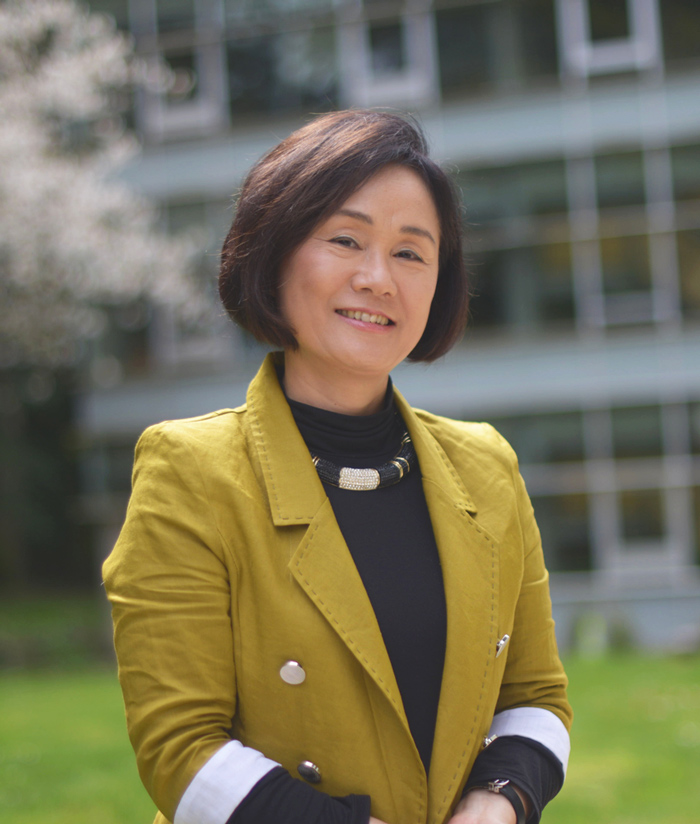
Professor Kyung-Ae Park is Professor in the School of Public Policy and Global Affairs (SPPGA) and holds the Korea Foundation Chair at the Institute of Asian Research, the University of British Columbia (UBC). She is a former President of the Association of Korean Political Studies in North America.

Professor Park is the author, co-author, and editor of many scholarly publications on issues ranging from North and South Korean politics and foreign relations to gender and development, including North Korea in Transition: Politics, Economics, and Society, Non-Traditional Security Issues in North Korea, New Challenges of North Korean Foreign Policy, Korean Security Dynamics in Transition, and China and North Korea: Politics of Integration and Modernization. She has also authored articles in a number of journals, including Comparative Politics, Journal of Asian Studies, Pacific Affairs, Asian Survey, and Pacific Review.

Since the mid-1990s, she has made several trips to Pyongyang and hosted North Korean delegation visits to Canada, playing a key role in promoting Track-II exchanges and diplomacy between Canada and North Korea. She established the Canada-DPRK Knowledge Partnership Program at UBC, which has been hosting North Korean professors as part of a long-term knowledge exchange and thus represents an unprecedented, ground-breaking program in North America.
Teaching
Research


Research interests
North and South Korean Politics
US-Korea Relations
Gender and Development

Centre for Korean Research Faculty in the Media

-Numerous presentations at the invitation of various universities, research institutes, academic associations and government agencies:
Publications


Selected Publications

North Korea’s Foreign Policy: Kim Jong Un Regime in a Hostile World, eds. with S. Snyder (Boulder, CO: Rowman and Littlefield Publishers), Forthcoming, 2023.

Non-Traditional Security Issues in North Korea, ed. (Honolulu, HI: University of Hawaii Press, 2013).

North Korea in Transition: Politics, Economy, and Society (Lanham, MD: Rowman and Littlefield Publishers, 2013), co-ed. with S. Snyder.

New Challenges of North Korean Foreign Policy, ed. (New York, NY: Palgrave Macmillan, 2010).

Korean Security Dynamics in Transition (New York, N.Y.: Palgrave-Global Publishing at St. Martin’s Press, 2001), co-ed. with D. Kim.

China and North Korea: Politics of Integration and Modernization (Hong Kong: Asian Research Service), co-authored with H. Park.

“North Korea’s Track-II Knowledge Diplomacy,” in Scott Snyder and Kyung-Ae Park, eds., North Korea’s Foreign Policy: Kim Jong Un Regime in a Hostile World (Boulder, CO: Rowman and Littlefield Publishers), Forthcoming, 2023.

“Beyond Kim Jong-un: Understanding the North Korean Mind,” in a report on What to Expect from the North Korean Puzzle (Ottawa, ON: Canadian Security Intelligence Service, May 2018), pp. 21-24.

“Can We Engage North Korea with Soft Power?” NK News, September, 17, 2014, pp. 1-5

“Engaging North Korea with High-culture Soft Power: Knowledge Sharing with Pyongyang,” co-authored with M. Bennett, Pacific Affairs, Vol. 87, No.1 (March 2014), pp. 29-41.

“North Korea in Transition: Evolution or Revolution?” in Kyung-Ae Park and Scott Snyder, eds., North Korea in Transition: Politics, Economy, and Society (Lanham, MD: Rowman and Littlefield Publishers, 2013), pp. 275-293, co-authored with S. Snyder.

“North Korea in Transition: Introduction,” in Kyung-Ae Park and Scott Snyder, eds., North Korea in Transition: Politics, Economy, and Society (Lanham, MD: Rowman and Littlefield Publishers, 2013), pp. vii-xvi, co-authored with S. Snyder.

“The Canada-DPRK Knowledge Partnership Program,” 38 North, US-Korea Institute at SAIS, November 19, 2012, pp. 1-4.

“Lessons from North Korea’s Previous Exchange Programs,” in Gi-Wook Shin and Karin J. Lee, eds., U.S.-DPRK Educational Exchanges: Assessment and Future Strategy (The Walter H. Shorenstein Asia-Pacific Research Center, Stanford University, 2011), pp. 153-160.

“Economic Crisis, Women’s Changing Economic Roles, and their Implications for Women’s Status in North Korea,” Pacific Review, Vol. 24, No. 2 (May 2011), pp. 159-177. A different version was published as “Gender Security in North Korea,” in Kyung-Ae Park, ed., Non-Traditional Security Issues in North Korea (Honolulu, HI: University of Hawaii Press, 2013), pp. 51-74.

“People’s Exit in North Korea: New Threat to Regime Stability?” Pacific Focus, Vol. 25, No. 2 (Summer 2010), pp. 257-275. A different version was published as “People’s Exit, Regime Stability, and North Korean Diplomacy,” in Kyung-Ae Park, ed., New Challenges of North Korean Foreign Policy (New York, NY: Palgrave Macmillan, 2010), pp. 53-79.

“North Korean Strategies in the Asymmetric Nuclear Conflict with the U.S.,” Asian Perspective, Vol. 34, No. 1 (Spring 2010), pp. 11-47.

“Regime Change in North Korea?: Economic Reform and Political Opportunity Structures,” in U. Heo, T. Roehrig, and J. Seo eds., Korean Security in a Changing East Asia (New York, NY: Praeger, 2007). A revised version appeared in North Korean Review, Vol. 5, No. 1 (Spring 2009), pp. 23-45.

“South Korean Women in Politics,” Korean Journal of Public Policy, Vol. 22 (Winter 2006), pp. 64-75. Also appeared in Michael Kugelman, ed., Edging Toward Full Empowerment?: South Korean Women in the Workplace and the Political Arena, Asian Program Special Report, No. 132, Woodrow Wilson International Center for Scholars, September 2006, pp. 20-26.

“Democratic Consolidation in the ROK and Political Perspectives on the 2002 Presidential Election,” with H. Lee, in Alexandre Mansourov, ed., A Turning Point: Democratic Consolidation in the Republic of Korea and Strategic Readjustment in the U.S.-ROK Alliance, (Honolulu, HI: Asia-Pacific Center for Security Studies, 2005), pp. 47-62.

“North Korea: From Brisk Diplomacy to Impasse,” Asian Survey, Vol. XLV, No. 1 (January/February, 2005), pp. 14-20.

“North Korean Nuclear Crisis and Human Security,” Korean Review of Canadian Studies, Vol. 10, 2004, pp. 17-35.

“North Korea: Pendulum Swing between Crisis and Diplomacy,” Asian Survey, Vol. XLIV, No. 1 (January/February, 2004), pp. 139-146.

“USA Lacks Options in Crisis with Pyongyang,” Jane’s Intelligence Review, Vol. 15, No. 4 (April 2003), pp. 38-39, with H. Park.

“The Status of Civil Society in North Korea and Its Ramifications for Inter-Korean Integration,” in James Lister, ed., The Challenges of Reconciliation and Reform in Korea(Washington, D.C.: Korea Economic Institute of America, Joint U.S. – Korea Academic Studies, 2002), pp. 195-211.

“Sources of North Korea’s Foreign Policy Leverage toward the U.S.: The Case of the Nuclear Deal,” in B. C. Koh, ed., Korea: Dynamics of Diplomacy and Unification (Claremont, CA: The Keck Center, Claremont McKenna College, 2001), pp. 35-67.

“North Korea’s Defensive Power and U.S.-North Korea Relations,” Pacific Affairs, Vol. 73, No. 4 (Winter 2000-2001), pp. 535-553. A revised version appeared in Kyung-Ae Park and D. Kim, eds., Korean Security Dynamics in Transition (New York, N.Y.: Palgrave-Global Publishing at St. Martin’s Press, 2001), pp. 83-104.

“Introduction: The Korean Peninsula in Flux,” Pacific Affairs, Vol. 73, No. 4 (Winter 2000-2001), pp. 499-501.

“North Korea’s Nongovernmental Foreign Contacts,” Korean Journal of Defense Analysis, Vol. 12, No. 2 (Winter 2000), pp. 33-51. A full version was published as The Pattern of North Korea’s Track-Two Foreign Contacts, North Pacific Policy Papers #5 (Vancouver: Program on Canada-Asia Policy Studies, Institute of Asian Research, University of British Columbia, 2000).

“Political Representation and South Korean Women,” Journal of Asian Studies, Vol. 58, No. 2 (May 1999), pp. 432-448. Reprinted in Louise Edwards and Mina Roces, eds., Women in Asia: Women and Political Power (London and NY: Routledge, 2009), pp. 271-191.

“Explaining North Korea’s Negotiated Cooperation with the U.S.,” Asian Survey, Vol. XXXVII, No. 7 (July 1997), pp. 623-636.

“Women Workers in South Korea: The Impact of Export-led Industrialization,” Asian Survey, Vol. XXXV, No. 8 (August 1995), pp. 740-756.

“Women and Revolution in South and North Korea,” in Mary Ann Tetreault, ed., Women and Revolution in Africa, Asia, and the New World (Columbia, South Carolina: University of South Carolina Press, 1994), pp. 161-191. A different version was published as Women and Social Change in South and North Korea: Marxist and Liberal Perspectives, Women in International Development # 231 (East Lansing, MI: Office of Women in International Development, Michigan State University, 1992).

“Women and Revolution in China,” in Mary Ann Tetreault, ed., Women and Revolution in Africa, Asia, and the New World (Columbia, South Carolina: University of South Carolina Press, 1994), pp. 137-160. An earlier version of the article appeared in Korea and World Affairs, Vol. 14, No. 4 (Winter 1990), pp. 747-774. A different version was published as Women and Revolution in China: The Sources of Constraints on Women’s Emancipation, Women in International Development # 230 (East Lansing, MI: Office of Women in International Development, Michigan State University, 1992).

“T’ongilui Chongch’ijok Changae Yoin [Political Obstacles to Korean Unification],” in T’ongbuka Anbo Chongseiwa Nambukhan T’ongil Chonmang [Security of Northeast Asia and the Prospects for Korean Unification] (Seoul, Korea: Asiatic Research Center, Korea University, 1994), pp. 93-104.

“Women and Development: The Case of South Korea,” Comparative Politics, Vol. 25, No. 2 (January 1993), pp. 127-145.

“Women and Revolution in North Korea,” Pacific Affairs, Vol. 65, No. 4 (Winter 1992-1993), pp. 527-545. A different version was published as “Ideology and Women in North Korea,” in Han S. Park, ed., North Korea: Ideology, Politics, Economy (Englewood Cliffs, NJ: Prentice Hall, 1996), pp. 71- 85.

“Inter-Korean Relations: Changes and Prospects,” Asian Survey, Vol. XXXII, No. 5 (May 1992), pp. 429-447, co-authored with S. Lee.

“Social Reform in North Korea: Prospects for Liberalization and Democratization,” Korea Observer, Vol. XXII, No. 4 (Winter 1991), pp. 499-517.

“Pukhan Sahoeui Pyonhwa Chonmang [Prospects for Changes in North Korean Society],” in ’90nyondae Pukhanui Pyonhwawa Nambukhan Kwan’gye [Domestic Changes in North Korea and Inter-Korean Relations for the 1990s] (Seoul, Korea: National Unification Board of the Republic of Korea, 1991), pp. 83-106.

“China’s Korean Policy and the Role of the Korean-Chinese in Inter-Korean Relations,” Korea Observer, Vol. XXII, No. 2 (Summer 1991), pp. 207-228.

“Political Implications of U.S.-South Korea Trade Frictions,” in Tae Hwan Kwak and Seong Hyong Lee, eds., Forty Years of Korea-U.S. Relations, 1948-1988 (Seoul, Korea: Kyung Hee University Press, 1990), pp. 17-33.

“Ideology and Security: Self-Reliance in China and North Korea,” in Edward Azar and C. I. Moon eds., National Security in the Third World: The Management of Internal and External Threats (England: Edward Elgar Publishing Limited, 1988), pp. 102-135, co-authored with Han Park.

“Bases of Regime Legitimacy in South and North Korea,” Korea Observer, Vol. XVIII, No. 3 (Autumn 1987), pp. 221-243, co-authored with Han Park.

“China and Inter-Korean Relations,” The Korean Journal of International Studies, Vol. 17, No. 3 (Summer 1986), pp. 23-49, co-authored with Han Park.

“Strategies for Modernization in the People’s Republic of China and North Korea,” Asian Perspective, Vol. 9, No. 1 (Spring-Summer 1985), pp. 24-45. A revised Korean version appeared in “Hyondaehwa Chonryak: Chunggonggwaui Pikyo [Strategies for Modernization: Comparison with the PRC],” in Kyung-Ae Park, et al., Pukhan Sahoeui Kujowa Pyonhwa [Social Structure and Change in North Korea] (Seoul, Korea: Kyungnam University Press, 1987), pp. 161-186.

“Political Development in the People’s Republic of China and North Korea: A Comparative Assessment,” in Korean Democracy in a Time of Turbulence (Seoul, Korea: The Korean Political Science Association, 1983), pp. 131-156.
Courses


Courses Taught

Politics of Development, Department of Political Science
Contemporary Politics of Korea, Department of Political Science
Issues in Gender and Politics, Department of Political Science
East Asian Diplomacy, MAPPS, Institute of Asian Research
Security Module, MAPPS, Institute of Asian Research
Gender and Development, MAPPS, Institute of Asian Research
Asia Diplomacy and International RelationsCentre Directors

Rural North Korea Under Communism - Yi, Mun-ung

Rural North Korea Under Communism - eHRAF World Cultures

Rural North Korea under communism: a study of sociocultural change

William Marsh Rice University • 62 (1) • Published In 1976 • Pages: iv, 176

By: Yi, Mun-ung.

Abstract
This study examines the changes in culture and social organization that have occured in rural North Korea under Communism. It is based on documents available in the United States, South Korea and Japan, and on interviews with defectors from North Korea. Some of the topics discussed are land reform, cooperative farms, marriage, education, households and work stimulation campaigns. Rural society in North Korea has been completely reorganized into cooperatives which are responsible for education, social welfare, and rewarding productivity. Although families are no longer productive units or own land, they still have a socializing fuction. However lineage organization has been entirely undermined by land reform, geographical mobility, and campaigns against former landlords. Lee argues that traditional filial piety has been replaced in North Korea by a leadership cult centered on President Kim Il-sung.
Subjects
Economic planning and development
Labor and leisure
Cooperative organization
Chief executive
Political movements
Theological systems
Education system
culture
Korea
HRAF PubDate
1998
Region

North Korea: A Country Study. 1993 Classes and Social Strata

North Korea

North Korea

Andrea Matles Savada, ed. North Korea: A Country Study. Washington: GPO for the Library of Congress, 1993.

Acknowledgments
Preface

Introduction

HISTORY 
ORIGINS OF THE KOREAN NATION
The Period of the Three Kingdoms
Silla
Kory
The Chosn Dynasty
Dynastic Decline
NINETEENTH CENTURY
JAPANESE COLONIALISM
KOREAN NATIONALISM AND COMMUNISM
ORIGINS OF THE DPRK
THE KOREAN WAR
THE POST-WAR ECONOMY
CORPORATISM AND THE CHUCH'E IDEA
INTERNATIONAL RELATIONS

GEOGRAPHY
Topography and Drainage
Climate
Environment

THE SOCIETY
POPULATION
Confucian and Neo-Confucian Values
Chosn Dynasty Social Structure
The Traditional Family and Kinship
The Colonial Transformation of Korean Society
Tradition and Modernity in North Korea
Chuch'e and Contemporary Social Values
Classes and Social Strata
Urban Life
Village Life
Family Life
The Role of Women
The Role of Religion


ETHNICITY, CULTURE, AND LANGUAGE
Contemporary Cultural Expression
Literature, Music, and Film
Architecture and City Planning
The Korean Language


EDUCATION
PUBLIC HEALTH

THE ECONOMY
ECONOMIC SETTING
ECONOMIC DEVELOPMENT
Economic Planning
INDUSTRY
AGRICULTURE
Forestry
Fisheries
ENERGY
FOREIGN ECONOMIC RELATIONS
Economic Assistance

GOVERNMENT
GOVERNMENT AND THE PARTY
The Korean Workers' Party (KWP)
The Constitution
ORGANIZATION OF THE GOVERNMENT
THE ROLE OF CHUCH'E
PARTY LEADERSHIP AND ELITE RECRUITMENT
LEADERSHIP SUCCESSION
MASS ORGANIZATIONS
THE MEDIA
FOREIGN POLICY
Inter-Korean Affairs

China and the Soviet Union
Japan
The United States

Bibliography

===

Classes and Social Strata

North Korea Table of Contents

Although socialism promises a society of equals in which class oppression is eliminated, most evidence shows that great social and political inequality continues to exist in North Korea in the early 1990s. The state is the sole allocator of resources, and inequalities are justified in terms of the state's political and economic imperatives. Kim Il Sung and Kim Jong Il are described by unsympathetic foreign observers as living like kings. (The South Korean film director Sin Sangok and his actress wife, Ch'oe Unhui, who were apparently kidnapped and taken to North Korea on Kim Jong Il's orders, described him as a fanatic film buff with a library of 15,000 films; they claimed that he alone could view these films, which were collected for his benefit by North Korean diplomats abroad.) Equally important from the standpoint of social stratification, however, is a small and clearly defined elite within the ruling KWP, who, like the privileged communists listed in the former Soviet Union's nomenklatura, a listing of positions and personnel, have emerged as a "new class" with a relatively high standard of living and access to consumer goods not available to ordinary people.

According to North Korean sources cited by Eberstadt and Banister, total membership in the KWP in 1987 was "over 3 million," or almost 15 percent of the estimated population of 20.3 million that year. Membership in the party requires a politically "clean" background. Given the KWP's status as a revolutionary "vanguard party," these individuals clearly constitute an elite; it is unclear, however, how the standards of living of lower echelon party members differ from those of nonparty members. Nonetheless, party membership is clearly the smoothest path for upward social mobility. It opens opportunities such as university attendance to members and their children. The statecontrolled media repeatedly exhorts party members to eschew "bureaucratism" and arrogance in dealing with nonparty people. But it is unclear how successful the regime is in uprooting the centuries-old tradition of kwanjon minbi (honor officials, despise the people), which often make the traditional aristocratic yangban elite insufferably arrogant.

Although Japan had promoted some industrialization in the northern part of their Korean colony during the occupation, most of the Korean Peninsula's population before 1945 were farmers. North Korea's industrialization after the Korean War, however, transformed the nature of work and occupational categories. In the late 1980s, the government divided the labor force into four categories: "workers," who were employed at state-owned enterprises; "farmers," who worked on agricultural collectives; "officials," who performed nonmanual labor and probably included teachers, technicians, and health-care workers as well as civil servants and KWP cadres; and workers employed in "cooperative industrial units," which Eberstadt and Banister suggest constitute a minuscule private sector. North Korean government statistics showed that the state "worker" category constituted the largest category in 1987, or 57 percent of the labor force. Farmers comprised the second largest category at 25.3 percent; and officials and industrial cooperative workers, 16.8 percent and 0.9 percent, respectively. Within the "worker" category, skilled workers in the fisheries and in the heavy, mining, and defense industries tend to be favored in terms of economic incentives over their counterparts in light and consumer industries; the labor force in urban areas tend to be favored over farmers. Despite the small size of the "cooperative industrial sector," that is, the industrial counterpart of the cooperative (collective) farms enterprise, a black market apparently exists, with prices as much as ten times higher than those in the official distribution system. Farmers' markets also exist. The black market is not likely to be large enough to foster the emergence of a sizable, shadowy class of smugglers and entrepreneurs.

Food and other necessities of life are strictly rationed, and different occupational groups are reported to receive different qualities and kinds of goods. Sin Sangok and Ch'oe Unhui wrote in the South Korean media in the late 1980s that consumption of beef and pork is largely restricted to "middle-class" and "upper-class people"; "ordinary people" can obtain no meat except dog meat, which is not rationed. An exception is made for the New Year's holidays, Kim Il Sung's birthday, and other holidays, when pork is made available to all. They also report that the regime is actively encouraging sons to assume the occupations of their fathers and that "job succession is regarded as a cardinal virtue in North Korea."

Housing is another area of social inequality. According to a South Korean source, North Korea has five types of standardized housing allotted according to rank; the highest ranks--the party and state elite--live in one- or two-story detached houses. Sixty percent of the population, consisting of ordinary workers and farmers, live in multi-unit dwellings of no more than one or two rooms, including the kitchen.

Family background, in terms of political and ideological criteria, is extremely relevant to one's social status and standard of living. Sons and daughters of revolutionaries and those who died in the Korean War are favored for educational opportunities and advancement. For these children, a special elite school, the Mangyngdae Revolutionary Institute, was established near P'yongyang at the birthsite of Kim Il Sung. South Korean scholar Lee Mun Woong wrote that illegitimate children are also favored because they are raised entirely in state-run nurseries and schools and are not subject to the corruption of traditionally minded parents.

Conversely, the children and descendants of "exploiting class" parents--those who collaborated with the Japanese during the colonial era, opposed agricultural collectivization in the 1950s, or were associated with those who had fled to South Korea- -are discriminated against. They are considered "contaminated" by the bad influences of their parents and have to work harder to acquire reputable positions. Relatives of those who had fled to South Korea are especially looked down on and considered "bad elements." Persons with unfavorable political backgrounds are often denied admission to institutions of higher education, despite their intellectual qualifications.

With the exception of disabled Korean War veterans, physically handicapped people appear to be subject to special discrimination, according to international human rights organizations. For example, they are not allowed to enter P'yongyang, and those who manage to live in the capital are periodically sought out by the police and expelled. These sources also allege that persons of below-normal height (dwarfs) have been forced to live in a special settlement in a remote rural area. South Korean sources also cite examples of single women over forty years of age who are considered social misfits and are thus harassed.