Sunday, May 5, 2019

1805 North Korea: UN gains 'unprecedented access' during visit - BBC News


North Korea: UN gains 'unprecedented access' during visit - BBC News


North Korea: UN gains 'unprecedented access' during visit

12 May 2018
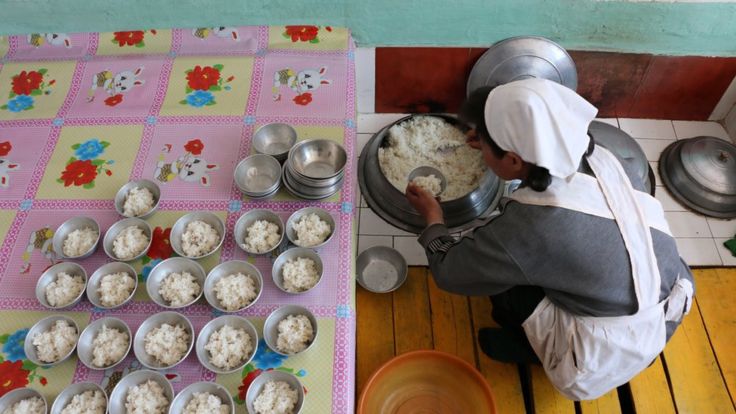
Image copyrightWFP/SILKE BUHRImage captionPeople are going hungry in North Korea, the head of the WFP said, but are not starving

The head of the UN's World Food Programme (WFP) believes there is a "sense of optimism" among North Korea's leaders after enjoying what he said was unprecedented access to the country.

David Beasley spent two days in the capital, Pyongyang, and two outside it, accompanied by government minders.

He said the country was working hard to meet nutritional standards, and hunger was not as high as in the 1990s.

"There is a sense of turning a new page in history," he told the BBC.

Relations between North Korea and the rest of the world have seen a dramatic shift.
Last year the North Korean government carried out a string of nuclear and missile tests.

But next month, its leader Kim Jong-un will meet US President Donald Trump, in what would be the first time a sitting US president has ever met a North Korean leader.

Confirmation of the meeting came after landmark talks between North and South Korea. Mr Trump announced the details of the meeting - in Singapore on 12 June - earlier this week, hours after he welcomed home three US detainees released from North Korea.
Will historic summit lead to peace?
The Koreas - the basics explained
What did the UN see in North Korea?

David Beasley visited North Korea from 8-11 May. The visit included trips to WFP-funded projects - a children's nursery in South Hwanghae province and a fortified biscuit factory in North Pyongyan province.

He told the BBC's Radio 4 programme Today that the farming he saw in the countryside reflected the fact that only about a fifth of the land is arable.

"One of the most powerful things that I saw was out in the countryside - it's spring, they're planting - there's not mechanisation, you've got oxen pulling ploughs, men and women in the fields," he said.Image copyrightWFP/SILKE BUHRImage captionDavid Beasley visited WFP programmes in the North Korean countryside

"It's very structured, very organised, every foot and inch of dirt is being toiled with rakes and hoes and shovels and they're literally planting crops up to the edge of the road, down embankments, using every available space, because it is a land that's mostly mountainous.

"I didn't see starvation like you had in the famine back in the 1990s, that's the good news. But is there a hunger issue, is there under-nutrition? There's no question about it."

Between 1994 and 1998, hundreds of thousands of people are believed to have died in North Korea in a widespread famine.

After drought last year, the UN said seven in 10 North Koreans were relying on food aid, while four in 10 were malnourished.
Two in five N Koreans 'undernourished'
UN sounds alarm over N Korea drought

Last month the UN requested $111m in aid funding to help people in North Korea. The US has offered to help rebuild the country, on condition of denuclearisation.
How do North and South Korean economies compare?

Daily life in the two countries couldn't be more different.
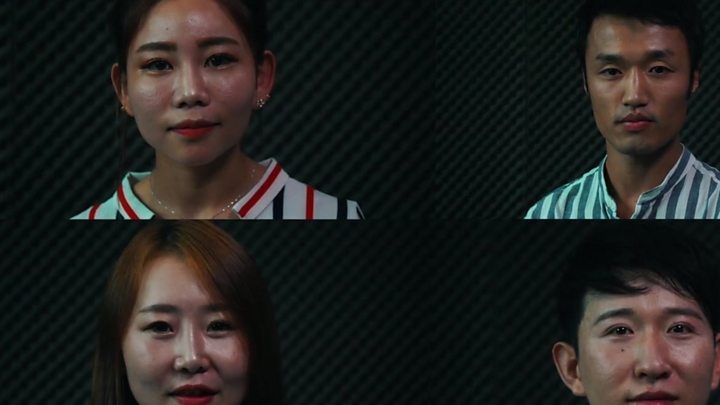


Media captionFour defectors talk about what life is like in North Korea

After the end of the Korean war in 1953 the South, an ally of the US, embraced a capitalist philosophy. It has developed into one of Asia's most affluent nations.

A government-sponsored industrial push in the 1960s led to huge corporations like Samsung and Hyundai being created.

Key figures:
Population: 51.2m in South Korea; 25.4m in North Korea
GDP: $1.4tn - South Korea; less than $20bn - North Korea
Life expectancy: 82 years - South Korea; 70 years - North Korea

South Korea is one of the world's top 20 economies, with GDP of $1.4tn (£1tn).

By contrast, North Korea's GDP is less than $20bn, placing it well outside the top 100 economies.
Reality Check: How North Korea does business
North Korea crisis in 300 words

It has a communist system, but capitalism is creeping into the country.

There are things to buy - but only for some people, those who have money. The majority of people in North Korea live in poverty.

Kim Jong-un has made clear that development is a priority.

Related Topics
North Korea

Share this story About sharing
Email
Facebook
Messenger
Twitter
Pinterest
LinkedIn

More on this story

US offers to help rebuild N Korea economy if it denuclearises
12 May 2018

Koreas summit: Will historic talks lead to lasting peace?
28 April 2018

Trump-Kim Jong-un summit set for Singapore on 12 June
10 May 2018

Korean meeting: How did we get here?
28 April 2018

North Korea hunger: Two in five undernourished, says UN
22 March 2017

North Korea drought: Children at risk in 'worst crisis since 2001'
20 July 2017


Asia

Saturday, May 4, 2019

통일뉴스 모바일 사이트, “북 자체집계 2018년 곡물생산량은 520만톤”


통일뉴스 모바일 사이트, “북 자체집계 2018년 곡물생산량은 520만톤”


“북 자체집계 2018년 곡물생산량은 520만톤”

기사승인 2019.05.04 14:43:26

- 이찬우 『북한경제와 협동하자』 출판 기념식 열려


<50만톤> 북한이 자체 추계한 식량과 에너지 부족량

▲ 이찬우 일본 테이쿄대학 교수가 3일 커뮤니티하우스 마실에서 열린 『북한경제와 협동하자』 출판기념회에서 강연하고 있다. [사진 - 통일뉴스 김치관 기자]


“북한은 곡물생산량이 정곡 기준으로 500만 톤이면 문제가 없다. 2018년 생산량은 북한 추정은 520만톤, 정곡 기준으로 환산하면 440만톤이다.”

북측이 자체로 집계한 2018년 곡물생산량이 정곡 기준으로 440만톤 수준이라는 사실과 올해 식량 부족분을 50만톤으로 추계하고 있다는 사실이 처음으로 확인됐다.

이찬우 일본 테이쿄대학(帝京大学) 교수가 3일 오후 7시 서울 명동 커뮤니티하우스 마실에서 열린 <라이프인> 창간 2주년 기념식 및 『북한경제와 협동하자』 출판기념회에서 밝힌 내용이다.

그는 북한의 식량 수요량을 1일 1만톤, 1년 365만톤을 기준으로 삼았고, 여기에 산업용 100만톤을 더하면 465만톤이 최저수요량이 된다. 따라서 지난해 생산량 440만톤은 2,30만톤이 부족한 것이지만, 정곡 500만톤을 기준으로 생산량 440만톤과 수입량 10만톤을 감안하면 50만톤이 부족할 것으로 추산했다.

그는 “작년에 자연재해가 있었다. 황해도에 가물이 들었다”며 “그래서 금년도에 중국으로부터 수입이 제대로 안 이뤄지면 식량에서 부족분이, 자기들 자체 판단으로는 50만톤이라는 계산이 나온다고 하더라”고 전했다.

▲ 이찬우 교수는 북한 식량 사정을 북측의 집계를 근거로 추산해 제시했다. [사진 - 통일뉴스 김치관 기자]


파악하기 어려운 북측 내부의 식량 사정을 확인할 수 있었던 것은 그의 특별한 이력 덕이다. 국내에서 대우경제연구소 연구위원 등을 역임하며 북한 실물경제를 연구했고, 1999년 일본으로 건너가 경제연구소들에 적을 두고 다양한 북측 자료를 접할 기회를 얻었다. 게다가 일본 국적을 얻어 북측과의 접촉을 유지하고 있기 때문.
그는 “‘최악의 상황이다’ 이렇게 자존심 상하는 말을 하지 말자”며 서로 상대를 이해하고 체면을 살려주면서 식량지원을 추진하길 바란다고 말했다.

식량과 함께 가장 관심을 끄는 북한의 에너지 사정에 대해서도 그는 석유가 연간 50만톤 정도 부족하다는 평가를 내놓았다.

북한의 연간 석유 수요량은 150만톤 수준이고, 중국에서 들여오는 원유 50만톤, 갈탄에서 뽑아내는 액화석유(인조석유) 10만톤, ‘탄소 하나’ 공법으로 석탄에서 뽑아내는 20만톤, 공식.비공식 수입 20만톤 정도로 추산하면 연간 100만톤 정도 수급되고 있고 50만톤 정도가 부족하다고 추산했다.

<돈주> “여성들이 가진 사회적 역할이 있다”

▲ 송경용 신부의 사회로 양동수 사회혁신기업 더함 대표, 김태현 시대의창 편집팀장과 더불어 대담이 진행됐다. [사진 - 통일뉴스 김치관 기자]


그는 북한 경제에서 ‘돈주’의 등장을 ‘사회적 경제’의 역할과 연관지어 해석해 눈길을 끌었다.

북한에서 유력한 가문의 남성들은 주로 군과 당에서 직책을 맡고, 여성들이 돈주로서 경제적 역할을 담당하는 사례가 많은 것으로 알려져 있으며, 그는 ‘10만 달러 이상의 사금융자금을 현금으로 유통할 수 있는 사람’을 ‘돈주’로 규정하고, 돈주들의 외화 유통자금은 30~50억 달러로 추산했다.

먼저 “북한의 돈주들이 대체로 5천명, 그 중에 80%인 4천명이 여성들이다. 북한의 돈주들은 여성들이 압도적이다”고 현황을 전하고 “어느 사회나 여성들이 가진 사회적 역할이 있다”며 “여성들은 돈을 자식을 위해서 쓰고, 가족을 위해서 쓰고, 이웃을 위해 쓴다”고 말했다.


“북한의 돈주들이 전체적으로는 국가가 제대로 기능하지 못한 부분들에 대해서 자발적으로 메꾸어 주는 기능들을 조선 여성들이기 때문에 하고 있다”는 것.

그는 책에서 돈주의 사회적경제 관점에서의 역할로 △사회적 금융 △주택자금 또는 생활자금 대출 △보건 위생 환경보호 분야 기부 △취약계층 원호, 교육 분야 기부 △지방기업 생산자금 대출 △협동단체 생산자금 대출을 꼽았다.

▲ 출판기념회에는 학계와 금융계, 사회적경제 관계자 등 100여 명이 참석했다. [사진 - 통일뉴스 김치관 기자]


그는 북한의 상업은행이 돈주들의 ‘사금융 양성화’ 형태라며 나진-선봉 지역의 경우 상업은행 이자율이 5~8% 수준이고 사금융은 보통 20% 수준이라고 전했다. 물론, 급전의 경우 3,40% 고금리가 적용되기도 한다고.

그러나 “그것이 아직 모델로 정착돼 있지 않다”며 “개인의 의지, 그리고 자기들이 사회주의로 교육받은 것에 따른 당연한 심리로 하고 있다”고 진단하고 “이것을 사회적 경제로 해석해주고 그것을 위한 제도적 장치를 마련하면서 환경 문제와 생태 문제, 거기에 건강권 문제, 이런 것들이 하루빨리 이루어져야 하는 것이 상당히 중요한 과제”라고 짚었다.

나아가 “그런 부분에 대해서 남쪽의 사회적 기업들이 더 큰 관심을 가져달라”며 “그것이 한반도에 같이 사는 사람들의 앞으로의 행복을 위한 나눔의 사업”이라고 의미를 부여했다.

<사회적경제> “시장이 아니라 공유경제를 보완하는 사회적경제”

▲ 송경용 <라이프인> 초대 발행인이 환영사를, 홍익표 더불어민주당 의원, 김홍일 민화협 대표상임의장이 축사를 했다. [사진 - 통일뉴스 김치관 기자]


그는 책에서 “사회주의경제에서 국가의 기능이 제힘을 발휘하지 못할 때 나타나는 대안적 기능의 하나는 시장 기능이며 다른 하나가 사회적경제 기능이라할 수 있다”며 “사유화로 가는 시장이 아니라 공유경제를 보완하는 사회적경제가 북한 사회주의경제에서 존재하고 있다”고 강조했다.

또한 “북한의 협동조합은 과거에도 있었고 지금도 있다. 돈주들의 사회적금융 기능도 나타나고 있다”며 “더 많은 조사가 필요하다”고 전제하고 “남북 간의 경제협력도 북한의 자생력과 지구력을 이해하면서 쌍방적인 접근을 추진해야 할 것”이라고 제안했다.

▲ 이찬우 교수의 『북한경제와 협동하자』는 지난해 인터넷신문 <라이프인>에 15회에 걸쳐 연재된 글을 시대의창에서 출간했다. [사진 - 통일뉴스 김치관 기자]


라이프인 사회적협동조합이 주최한 이날 기념식은 초대가수 한선희가 축가를, 송경용 <라이프인> 초대 발행인이 환영사를, 홍익표 더불어민주당 의원, 김홍일 민화협 대표상임의장이 축사를 했고, 송경용 신부, 양동수 사회혁신기업 더함 대표, 김태현 시대의창 편집팀장이 대담을 진행했다.

이찬우 교수의 『북한경제와 협동하자』는 지난해 인터넷신문 <라이프인>에 15회에 걸쳐 연재된 글을 시대의창에서 출간한 것으로 ‘북한경제의 자력갱생-자강력’, ‘사회적경제 관점’, ‘민족경제의 국제경제력’이라는 3가지 키워드를 제시하고 있다.


(수정3, 20:30)

김치관 기자 ckkim@tongilnews.com

Sunday, April 28, 2019

김일성주의와 근대천황제 - 서정민(徐正敏)|論座 - 朝日新聞社の言論サイト

김일성주의와 근대천황제 - 서정민(徐正敏)|論座 - 朝日新聞社の言論サイト

김일성주의와 근대천황제
북한의 종교적 가리스마는 「초종교」의 단계로 접어들었다.
서정민(徐正敏) 메이지가쿠인대학 교수(종교사), 그리스도교연구소 소장
2018年08月12日

金日成
ソーシャルリンクをとばして、このページの本文エリアへ


*이 기사는 필자가 한국어와 일본어 2개국어로 집필하였습니다. 일본어판 도 함께 읽어 주시기 바랍니다.


북한과 국경을 접하는 중국지역에서 판매되고 있는 김정은 뺏지(우), 좌는 김일성 뺏지

옴 진리교는 정치목표를 내걸었다


2018년 여름 '옴 진리교'의 옛 교주를 비롯한 간부들, 특히 '지하철 사린사건'(1995년 3월 20일 오전 8시 경, 옴 진리교가 도쿄 도심 지하철에서 화학적 살상 가스인 사린을 살포하여, 시민과 역무원 등 13명이 사망하고, 약 6,300명이 중경상을 입은 초유의 종교 테러사건) 관련자에 대한 사형집행이 진행되었다. 이로써 이 사건에 대한 법률적 처리, 정부로서의 정리 과제는 종결된 것으로 보인다. 무려 사건으로부터 23년여 만이다. 그러나 아직도 당시 목숨을 잃은 시민들의 유족, 부상을 입은 많은 이들, 정신적 '트라우마'를 겪고 있는 이들의 고통은 진행형이다. 더구나 최근 '옴 진리교'는 이름을 바꾼 몇 개의 분파 형태로 일부 계승자들이 포교를 지속하고 있다고도 전해진다. 이미 다 아는 사실이지만, '옴 진리교'의 일련의 사회적 충격사건은 사이비 종교집단에 의한 정치세력화 지향 과정에서 발생했다. 그들은 종교집단으로 출발했으나, 무모한 종말론적 혁명조직 실현이라는 정치적 목표를 설정했던 것이다.
홍수전(洪秀全)의 「태평천국」은 종교로부터 시작되었다


중국 청나라 말기 홍수전(洪秀全)은 이른바 계시를 받아, 종교단체를 조직하고 '태평천국' 운동을 전개했다. 그 모델은 기독교의 '지상천국설'이었으나, 곧바로 과격한 정치운동으로 변화했다. 홍수전을 천왕으로 옹립하고 청나라 군대와 대치하였다. 한 때 대규모 세력이 형성되어 난징(南京, 天京)을 태평천국의 수도로 삼고 거점을 확대해 나갔다. 차별철폐, 평등세계에 대한 열망으로 다수 민중, 여성의 지지를 받았다. 종교적 카리스마와 이상적 정치 이념을 일치시키며 당시 중국 사회에 큰 충격을 주었다. 그러나 청나라가 전열을 정비하여 대응했고, 내부의 대 분열로 몰락의 길을 걸었다. 홍수전이 죽은 후, 그의 후계자들도 체포되거나 전사했다. 1864년 태평천국의 수도 난징이 함락되면서 이 운동은 공식적으로 막을 내렸다.
역사상의 모든 종교는 정치지향적이다


先頭
前へ
1
2
3
4

일제 말 1944년 4월 박동기(朴東基)는 기독교계 신흥종교인 '시온산성일제국'을 창설했다. 장로회 전도사로 활동하던 그는 신사참배를 거부하다가 경찰의 수난을 받았고, 산속으로 피신하여 이른바 계시를 받았다고 했다. 그의 신흥종교 조직은 일본의 패망과 연합국의 승리를 선전하고, 독립투쟁을 선언했다. 그리고 '시온산제국헌법'을 선포하고 종파 조직 내에 정부조직을 구성했으며, 독립적 연호를 만들기도 했다. 해방 직전인 1945년 5월 박동기와 신도 33명이 조선총독부 경찰에 체포되었고, 단체는 해산되었다. 해방 후에 재건되었으나, 한국 정부와 국기배례 거부 등으로 다시 갈등을 빚었다.


이상의 역사적 예는 직접적인 종교의 정치지향 예이다. 그러나 이것은 동아시아에서 몇몇 사건화 된 사례일 뿐이다. 역사상, 혹은 현재의 대부분의 종교는 어떤 형태로든지 정치에 영향력을 행사하거나 관여하려는 관성을 지니고 있다. 그것이 세계적 종교이든, 혹은 지역을 중심으로 하는 토착적, 군소종교이냐는 별반 차이가 없다. 오직 특별한 내세지향, 피안적 신비주의 성향의 일부 수도자형 종교는 예외로 둘 수 있으나, 대부분의 역사상 종교는 정치지향적이다. 이런 면에서 본다면, 근대국가의 한 특징으로 자리하는 '정교분리'의 목표 항목은 단지 국가권력으로부터 종교와 신앙양심의 자유를 보장하고자 하는 원래의 목적이 중심이기는 하지만, 한편으로는 무분별한 종교집단의 정치세력화 현상을 경계하는 의미도 함축하고 있다고 볼 수 있다.


쇼와(昭和)천황의 야스쿠니신사(靖国神社)참배= 1938년 10월 19일

근대천황제는 '초종교'였다

앞에서 종교의 정치세력화 현상이나, 종교집단의 정치 지향목표의 예를 일부 살폈으나, 여기서 총체적으로 재론해야 하는 것은 역시 정치에서의 종교적 카리스마 이용의 문제이다.

일본의 근대국가 형성사에서 '근대 천황제 이데올로기'는 '초종교'로 규정되었다. 즉 천황제 국가의 정치적 카리스마가 분명히 종교적 성격을 강력히 표방했음에도 이는 다른 종교적 권위와 충돌을 빚는 수준의 것이 아니라는 것이다. '천황의 권위'와 '국가신도'는 모든 종교의 권위 위에 위치하는 것으로 종교신앙의 양심과 충돌하는 차원의 것이 아니라는 논의였다. 이러한 논리는 신사참배를 확대, 강제하는 시대에는 '신사비종교론'으로 전개되었고, 여기에 반대하는 크리스천을 비롯한 종교적 신념을 강하게 지닌 사람들을 설득하는 제일논리였다.


즉 천황의 신민인 일본국민은 비록 개인적으로 어떠한 종교신앙을 지녔더라도, '초종교'에 해당하는 '천황숭배'와 '국가신도' 참배는 자신의 종교신앙과 서로 충돌하거나 배치되는 것이 아니라는 것이다. 종교와 종교 간에는 서로 상충하거나 갈등할 수 있지만, '초종교'와 '종교'는 그것이 종적인 순번으로 위치하기 때문에 갈등이 초래될 이유가 없다는 것이다. 이러한 종교와 정치 카리스마의 재편 논의는 파시즘 절정기 일본 정치의 독특한 사례로 그 특징을 검토할 필요가 있다. 즉 대부분의 경우, 최고의 정치 카리스마를 종교의 차원으로까지 전개시키는 것이 보통의 경우이다. '정치의 종교화'라든지, '정치지도자의 신격화' 같은 개념이 대부분 거기에 속한다. 그러나 이 시기 일본의 정치적 카리스마는 종교적 차원을 넘어서 '초종교'의 위치까지 격상되는 것이다. 이는 정치 카리스마의 종교적 차원의 단계를 넘는 것으로, '초종교'의 위치에 선 정치 카리스마에 모든 종교 권위를 복속, 예속 시키는 차원이었다. 당시 일본기독교계의 '일본적 기독교', '일본신학'에게 부여된 엄밀한 의미의 과제는, '기독교'를 '천황제 이데올로기' 아래 원만히 예속시키는 목표 수행이었다. 물론 여기에 반대한 소수의 견해도 존재했음 또한 사실이다.


조선노동당 창건 60주년을 기념하여 메이데이 스타디움에서 열린 매스게임, 예술공연 「아리랑」, 군중 카드섹션으로 쓴 「아리랑」이라는 글자= 2005년 9월30일, 동아일보 제공

북한의 주체사상 역시 「초종교」이다

물론 근대 역사 속의 일본, 현재의 북한 정치만 종교적 카리스마와 관련 지어 볼 필요는 없다. 다수의 원리주의 이슬람 권 국가를 비롯, 지금도 종교와 정치가 불가분의 관계에 놓인 사례는 얼마든지 있다. 이미 언급했지만, 헌법적 가치로, 법률적 실제로 규정한 다수 근대국가의 '정교분리' 원칙 하에서도 복잡한 형식으로 종교와 정치는 상호 관여하고 영향을 주고 받는다. 그럼에도 불구하고 북한 정치의 '종교적 카리스마'로서의 특징은 두드러진다.


북한의 정치, 경제, 사회, 문화의 모든 측면에서 '김일성주의'로도 환언되는 '주체사상'이 그 기축인 것은 두 말할 필요가 없다. 결국 '주체사상'은 정치적 통치이념에서 출발한 것이지만, 이미 북한 현대사의 기저 사상의 위치로 확산되어 그 사회의 궁극적 바로미터가 되고 만 것이다. 굳이 비교를 해 보자면, 근대 이후 일본에서 성립되었던 '근대 천황제 이데올로기'의 실행, 구현 과정과 유사한 특징이 있다. 예를 들어 북한의 종교적 권위, 특히 어느 종교보다 신앙적 아이덴티티가 배타적이며, 강력하다고 할 수 있는 기독교에서마저도 '주체적 기독교'라는 용어를 발견할 정도이다. 다시 말하면, 북한의 기독교 신학의 여전한 과제는 '주체 기독교'의 성립, 지나치게 말하면, 기독교를 주체사상 아래 원만히 예속시키는 것에 있다고도 볼 수 있다. 이러한 측면을 고려하면, 뚜렷한 용어로 규정할 수는 없다고 해도, 북한의 종교적 정치카리스마는 이미 '초종교'의 단계로 이행되었는지 모른다. 바로 이러한 북한 정치의 특성을 객관적으로 파악하는 것이 남북 화해, 동아시아 평화구축을 위해서 각별하게 요구되는, 전 이해의 한 과제라고 할 수 있다.


김정은의 종교적 카리스마 - 서정민(徐正敏)|論座 - 朝日新聞社の言論サイト

김정은의 종교적 카리스마 - 서정민(徐正敏)|論座 - 朝日新聞社の言論サイト


김정은의 종교적 카리스마

북한정권을 떠받치고 있는 종교적 권위는 대일본제국에도 있었다
서정민 메이지가쿠인대학 교수(종교사), 그리스도교연구소 소장
*이 기사는 필자가 한국어와 일본어 2개국어로 집필하였습니다. 일본어판 도 함께 읽어 주시기 바랍니다.
拡大남북 군사분계선 상에 있는 판문점의 한국측 건물에서, 남북정상 간에 합의한 「판문점선언」에 서명하고 있는 김정은 북한 노동당위원장과 그를 돕고 있는 여동생 김여정= 2018년 4월 27일 한국공동사진기자단 촬영

극비 방중(訪中)의 신비주의


북한 김정은의 제1차 방중(2018년 3월25일-28일)은 그 선대 때와 마찬가지로 안개 속에서 비밀리에 이루어졌다. 특별열차가 북한에서 중국으로 들어갔다는 뉴스, 북경 일대에서 국빈 급의 삼엄한 경호가 감지되었다는 뉴스가 이어졌다. 그리고 조심스럽게 북한의 김정은이거나, 최소한 최고위급 인사가 중국을 방문한 것으로 추측하는 기사가 떴다. 그리고 마침내 김정은이 북경을 떠나 귀국길에 오른 이후인 3월 27일에야 그가 중국에 왔던 사실이 보도되기 시작했다. 이는 중국 미디어나 북한 미디어나 마찬가지였다.


왜 그렇게 했을까. 이는 김정은만의 사례가 아니다 그의 부친으로 제2대 세습의 절대권력자였던 김정일, 뿐만 아니라 김씨 권력의 제1대인 김일성 주석 시절에도 마찬가지였다. 그 이유로 대개는 절대 권력의 공백을 사전에, 혹은 실시간으로 공포한다는 위험성을 차단하기 위한 방법으로 말한다. 즉 최고 권력자가 수도 평양을 비운 사실을 비밀리에 부치는 것이 안전하다는, 권력 안위의 문제로서, 이를 북한으로서는 혈맹인 중국도 늘 양해해 온 사실이다. 그러나 여기에서 하나의 관점을 덧붙이자면, 종교적 특성을 강하게 지닌 절대권력의 '신비주의'요, 그러한 '카리스마' 행보이기도 하다.

정치적 권력과 종교적 권위

마침내 김정은의 제1, 2차 남북정상회담(2018년 4월, 5월), 제2, 3차 방중(2018년 5월, 6월), 그리고 드디어 북미정상회담(2018년 6월)에서 그의 행보는 완전히 공개되어 가기 시작했고 심지어 실시간으로 생중계를 탔다. 공개적으로 항공기를 이용한 이동방식도 특기할 사항이며, 동부인하여 외국의 정상을 부부가 같이 만난다는 사실도 북한 정권의 커다란 변화이다. 이를 '정상국가'로의 전환이라고 평했다.

'정상국가'의 의미를 여러 가지로 분석할 수 있지만, 여기서는 정치카리스마의 종교성 극복에 맞추어 들여다보자. 과연 30대의 김정은이 북한의 최고 권력을 차지한 것을 무엇으로 설명할 것인가. 그의 탁월한 능력이나, 리더십, 아니면 단순히 왕조세습과 같은 유형으로도 이해할 수는 있으나, 현대국가에서 그러한 일이 그렇게 용이한 것이 아니다. 그의 선대 김일성 주석이나 김정일 위원장의 통치시절과, 그들의 죽음 이후에 보인 북한 인민의 반응, 집단적 상실감의 표출이나 패닉 현상 등을 종합하면, 이는 철저한 종교적 카리스마 특성으로 이해할 수 있다. 북한 정치의 수뇌부는 정치적 집권 세력인 동시에 종교적 권위 구현의 구조이다. 이른바 '백두 혈통'이라고 부르는 젊은 김정은과 김여정의 절대적 권위와 실제적 힘의 행사, 더구나 김정은 집권 이후 이복 형인 김정남이 살해되었던 이유, 고모부 장성택의 처형마저도 단지 정치적 권력투쟁의 사례로만 볼 수 없다. 신성불가침의 권위를 계승하기 위한, 종교적 카리스마의 극단적 방식의 구현이었다. 종교적 카리스마는 절대적이며 무 제약적이지만, 때로는 초조하고, 민감하다. 그런 예는 가까운 역사에서도 쉽게 찾을 수 있다.


서울 중심부 남산에는 일제 식민지 시대, 천조대신(天照大神)과 메이지천황(明治天皇)을 모시는 조선신궁이 있었다.

"천황 폐하가 위인가, 예수 그리스도가 위인가?"

파시즘 절정기, 일본의 고등경찰은 기독교신앙에 철저하고, 특히 말세, 재림신앙에 투철한 기독교인들을 불러 심문하였다. 특히 이러한 일은 식민지 조선에서 비일비재하였다.

문: 천황 폐하도 예수에게 복종하지 않으면 안 되는가?

답: 이 세상 중의 인생, 인간 중에는 천황 폐하도 포함됩니다.

문: 도대체 왜 천황 폐하도 예수에게 복종하지 않으면 안 되는가?

답: 예수는 하느님의 아들로서 보통의 인류와 비교할 수 없습니다. 따라서 천황 폐하보다 위대한 존재로 생각합니다
.
(조선성결교회 신도 박윤상<朴允相>의 사법경찰심문조서 중, 1941년 8월 6일, 강원도 금화경찰서)

이미 당시의 천황제 이데올로기와 파시즘 정권은 정치의 종교화로 진행되어 있었고, 정치적 카리스마와 종교적 카리스마는 구별되지 않았다. 최고 권위는 하나이며, 그 아래 모든 것이 복속되는 것은 당연한 일이었다. 그렇기 때문에 '천황 폐하'와 '대일본제국'은 신성불가침의 가치로 신봉되었다. 거기에 어떠한 반기도 용납될 수 없으며, 그런 사상적, 신앙적 반동의 단서만으로도 '치안유지법', '불경죄관련법', 더구나 다음과 같은 '반전사상'(反戰思想)이 엿보일 시에는 '육군형법'으로도 그들을 치죄(治罪) 할 수 있었다.


위의 심문은 다음과 같이 이어 진다.

문: 말세라는 것이 무엇인가?

답: 이 세상의 종말을 뜻합니다.

문: 대일본제국이 지나(중국)와 전쟁 중이니, 지금이 바로 말세인가?

답: 중일전쟁만이 아니라, 유럽 각국도 전쟁 중이니 지금이 말세라고 생각합니다.

문: 피의자는 말세가 이 세상의 종말이라고 하니, 지금이 말세라면 곧 세상의 종말, 즉 전쟁 중의 각국이 멸망한다는 말인가?

답: 그렇습니다. 말세는 천지개벽의 사건이기 때문에 국가라는 것이 남아 있을 수 없으며 모두 망하고, 신천신지(新天新地)의 예수의 지상천국(地上天國)이 건설됩니다. 따라서 지금 전쟁 중인 나라들은 모두 멸망한다고 생각합니다. (위 같은 심문조서 중)


박윤상의 신앙기조는 현대로 보면, 특정한 종교, 종파의 '사설'(邪說)로 취급될 정도이기도 하다. 그러나 천황은 '현인신'(現人神)이요, '대일본제국'은 영원한 신성제국인 시대인식으로 보면, 극렬한 반동이며, 처단해야 할 위험사상이었다.


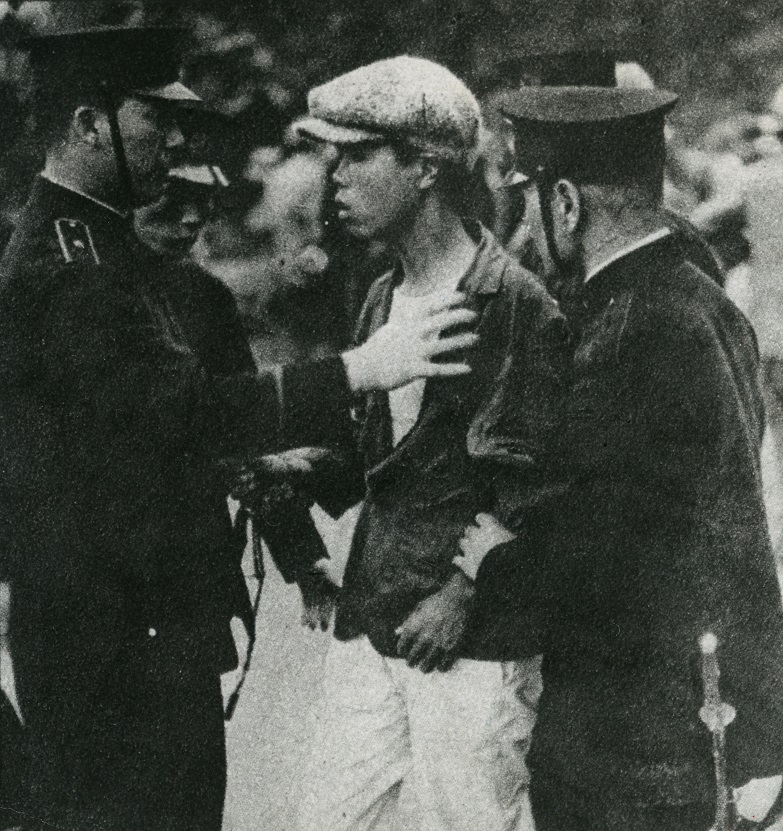
노동절(메이데이)행사 참가자를 몸수색하는 특고경찰(特高警察)= 1928년 5월 1일 도쿄 시바(芝)공원

종교적 카리스마를 내포하고 있던 대일본제국

같은 시대 한국 장로교 지도자인 손양원(孫良源)의 검찰심문에 대한 대답은 다음과 같았다.

"천조대신은 우리 나라의 신이라고 하나, 여호와 신의 명령 지배를 받아 일본국에 강림한 것입니다. 따라서 세계 인류의 시조는 여호와 신이며, 천조대신은 여호와 신의 지배 하에서 행동해 온 것입니다. ...... 천황 폐하는 인간입니다. ... 천황도 여호와로부터 목숨과 만물, 국토와 인민을 통치하는 천황의 지위와 통치 권력을, 여호와로부터 받은 것입니다. 현재 우리나라의 국체, 사유재산제도는, 예수의 초림(初臨)으로부터 재림(再臨)까지, 즉 말세기의 잠정적, 가정적(假定的)인 것으로 예수가 재림하면, 모두 파괴되고 소멸하여 무궁세계가 실현되는 것입니다. 천황을 '현인신'으로 보는 것은 불가합니다. 일본의 천황도 불신자라면 일반불신자와 같이 그리스도가 지상에 재림할 때 불신자 전부를 감옥에 , 가두고, 악마인 천황통치의 제도는 모두 없어지고 그리스도의 국가로서 변혁될 것이다."(손양원의 검찰 심문조서 중, 1941년 5월 24일)

손양원은 검사의 지속되는 질문에 당시로서는 목숨을 걸고 다시 다음과 같이 진술했다.

"천조대신 및 역대 천황은 신격(神格)이라고 하나, 여호와 신은 아닙니다. 따라서 그 신사에 참배하면, 여호와의 십계명을 지킬 수 없습니다. 지금의 천황 폐하는 신이 아니고, 훌륭한 존재로서 존경을 금할 수 없습니다. 최후의 심판에서 세계 각국은 멸망할 것이며, 일본국도 망할 것입니다. 따라서 천황 폐하도 불신자라면 그 지위를 상실하고, 다른 불신자와 함께 불타는 지옥에 들 것입니다." ( 위 같은 검찰 심문조서 중)

당시 일본의 정치는 종교적 카리스마가 근간이었다. 헌법과 법률로 신교(信敎)의 자유를 말하고 있었지만, 그것은 어디까지나 천황의 신민으로서의 의무와 사회치안의 유지에 방해가 되지 않는 조건 하에서만 가능한 것이었다.(일본 제국헌법, 1889, 제28조)


한국 기독교인들의 신사참배 반대 수난과 천황숭배 위배를 치죄한 것은, 한편으로 종교적 카리스마의 정치권력에의 강력한 반동 처단이기도 했다. 파시즘 절정기의 대일본제국의 정치권력은 근대 가장 대표적인 종교 카리스마였음에 틀림없다.


Saturday, April 27, 2019

Impossibilities Made Possible! Stephen and Joy Yoon


Impossibilities Made Possible!

https://medium.com/@pystephenjoy/impossibilities-made-possible-89d8afd60361

Stephen and Joy Yoon

Follow
Apr 27

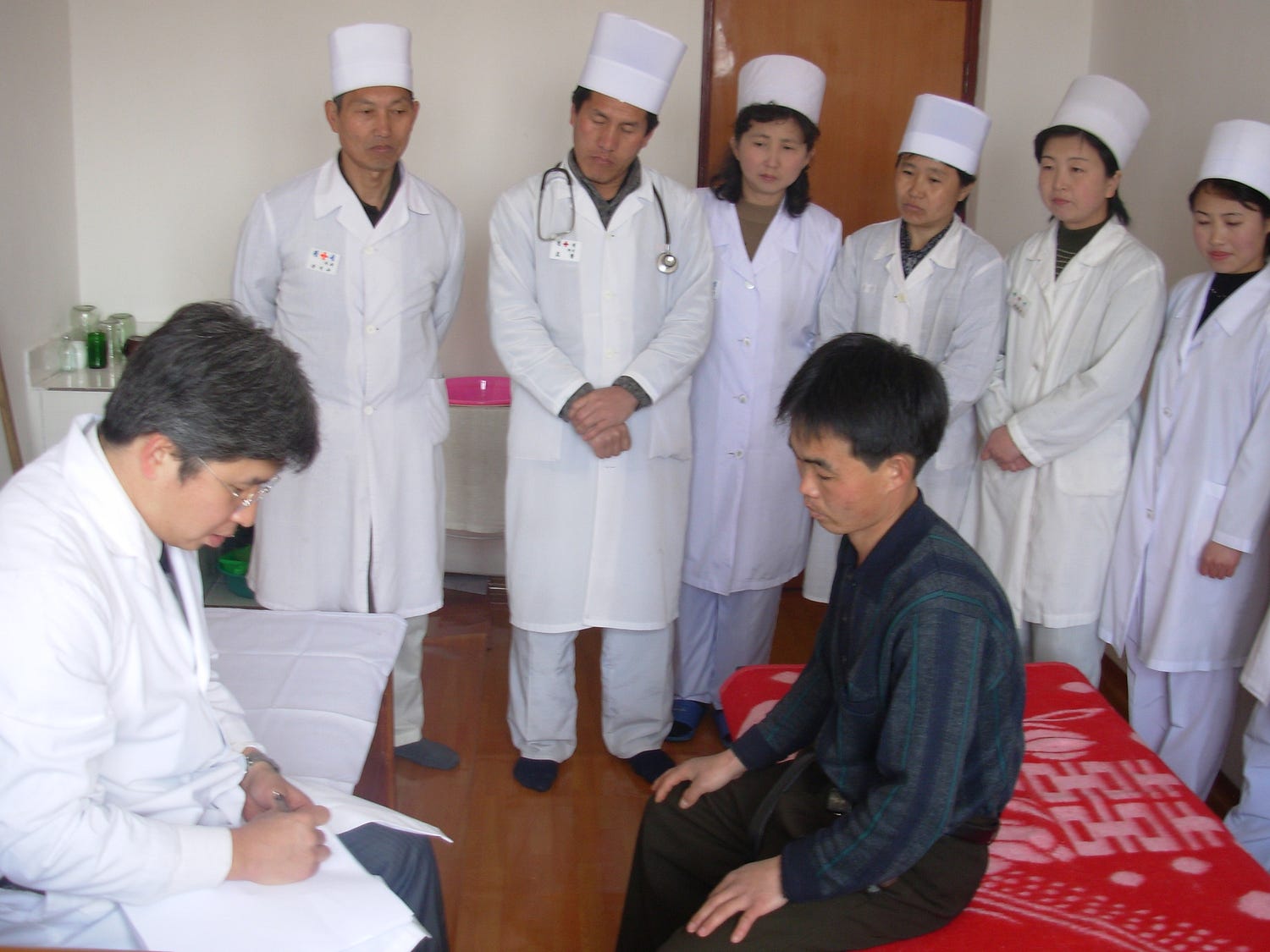
Ignis Community has been training a cohort of doctors in North Korea at the Pyongyang Medical School Hospital since 2012. Stephen Yoon, who is Ignis’ Rehabilitation specialist, is directing the development of the Pyongyang Spine Rehabilitation Center (PYSRC) for children with developmental disabilities in the DPRK. The PYSRC will become the first medical graduate specialty training center for children with cerebral palsy, autism, and other developmental disabilities in North Korea. Ignis Community is collaborating with the Ministry of Public Health and KIM IL SUNG University Pyongyang Medical School Hospital to begin two-year specialty post-graduate programs for DPRK medical doctors and develop treatment for children with developmental disabilities.

However, this progress did not occur overnight. It was a very gradual and tedious journey. More than five years of negotiations went into the project in addition to countless hours of treating patients, training doctors, and overseeing the construction of the Rehabilitation Center. There were multiple times along the way that we wondered if we would have to abandon the project all together. This is because it was not simple nor easy bridging the divide that separated our ways of thinking, our system of doing things, and our vision of what we were trying to accomplish.

In many ways, this project is a dream coming into reality. When we first started working in the NE Region of North Korea, we were told that foreign doctors usually do not have permission to treat common North Korean citizens. As a result, we actually did not have any expectations to be able to treat local people. However, soon after our first visit, about ten doctors were assigned to us to learn from the foreign doctor during treatment hours from 7:30 am to about 9 pm every day.

Stephen Yoon Treating Patients and Training Doctors in Northeast DPRK

As we were driving up to the clinic the following morning, a long line of people streamed all the way up and out from the clinic. We had hoped for young, healthy, acute patients, but nearly everyone who lined up for treatment was elderly and had chronic conditions.

A lady came in for treatment that day with a condition medical professionals would refer to as “frozen shoulders”. She was an elderly lady in her sixties and had not been able to move her shoulders for five years. Daily tasks such as feeding herself, changing her clothes, and any household chores were impossible for her to do. She was frail and weak, even with three or four layers of clothes on, her bony frame could be easily felt and seen. We explained to her that, “Even if we had the best technology and doctors working with us, we might be able to help you after several months of treatment. To be honest with you, we don’t know how much we can help you today, but we will try.” Stephen placed his hands on her shoulders.

The next day, the same elderly lady came back for a second treatment. Once again Stephen laid his hands on her. He treated her shoulders as best as he could with the knowledge and skills that he had. Then, by faith, he asked her to try to lift her shoulders. Slowly, but surely, the woman began to lift her arms higher and higher, almost parallel to her shoulders. Stephen and the eight to ten doctors surrounding him began to shout, “Oh, ooh, oooh! She’s lifting her arms! Their moving! Oh, I can’t believe it! Oh, ooh, oooh!”

It was nothing short of a miracle! Squeals of delighted laughter echoed down the hallway. Medically speaking, it was unexplainable. Who ever heard of five years- long frozen shoulders being healed after two treatments? And miraculously after the third treatment, both arms regained 75% their mobility.

In the same way, we believe that what was once deemed impossible can be transformed into the possible. We have seen it with our own eyes! From miraculous healings to unforeseen provision for our project, we have witnessed seemingly impossible circumstances open up into the possible.

How did these break-throughs occur? What helped us push through when it seemed like all odds were against us? Years of negotiations, lack of funding, political tensions and many other obstacles have been stacked against us. Yet, despite these challenges, there is light at the end of the tunnel, and it looks like our dream just might come to full fruition.

Three things are needed in working through difficult circumstances: patience, endurance, and faith. We like to think that nothing is impossible in North Korea. It just takes time. It may take so much time that your patience is tried again and again. Not only is the wait long but in the midst of waiting other obstacles and challenges pop up. Patience is not enough. Endurance to keep going and keep working despite all the odds is essential. Patience and endurance may be the most immediate qualities tried, but ultimately, it is up to our faith. We have to believe in what we are doing and for what purposes we are trying to accomplish it. All things are possible only to those who have faith!

Monday, April 22, 2019

China’s Health Care Crisis: Lines Before Dawn, Violence and ‘No Trust’ - The New York Times


China’s Health Care Crisis: Lines Before Dawn, Violence and ‘No Trust’ - The New York Times


China’s Health Care Crisis: Lines Before Dawn, Violence and ‘No Trust’
Video


9:16Inside China’s Predatory Health Care SystemHomemade cancer drugs, violence in hospitals, doctor shortages: We take you inside China’s broken health care system to reveal how dire the situation is for over a billion people.CreditCreditJonah M. Kessel/The New York Times


By Sui-Lee Wee
Sept. 30, 2018


79
阅读简体中文版閱讀繁體中文版


BEIJING — Well before dawn, nearly a hundred people stood in line outside one of the capital’s top hospitals.

They were hoping to get an appointment with a specialist, a chance for access to the best health care in the country. Scalpers hawked medical visits for a fee, ignoring repeated crackdowns by the government.

A Beijing resident in line was trying to get his father in to see a neurologist. A senior lawmaker from Liaoning, a northeastern province, needed a second opinion on her daughter’s blood disorder.

Mao Ning, who was helping her friend get an appointment with a dermatologist, arrived at 4 a.m. She was in the middle of the line.


ADVERTISEMENT


“There’s no choice — everyone comes to Beijing,” Ms. Mao, 40, said. “I think this is an unscientific approach and is not in keeping with our national conditions. We shouldn’t have people do this, right? There should be a reasonable system.”

The long lines, a standard feature of hospital visits in China, are a symptom of a health care system in crisis.

Dr. Ye Minghao, a family practitioner in Shanghai, sees up to 80 patients a day. He enjoys his work, he said, but is unhappy about the lack of respect for his field.CreditGilles Sabrié for The New York Times


ImageDr. Ye Minghao, a family practitioner in Shanghai, sees up to 80 patients a day. He enjoys his work, he said, but is unhappy about the lack of respect for his field.CreditGilles Sabrié for The New York Times


An economic boom over the past three decades has transformed China from a poor farming nation to the world’s second-largest economy. The cradle-to-grave system of socialized medicine has improved life expectancy and lowered maternal mortality rates.

But the system cannot adequately support China’s population of more than one billion people. The major gaps and inequalities threaten to undermine China’s progress, social stability and financial health — creating a serious challenge for President Xi Jinping and the Communist Party.


ADVERTISEMENT


Then, there are the scandals. In July, hundreds of thousands of children were found to have been injected with faulty vaccines. The news angered the public, rattling confidence in the government and amplifying frustration with the health care system.

While the wealthy have access to the best care in top hospitals with foreign doctors, most people are relegated to overcrowded hospitals. In the countryside, people must rely on village clinics, or travel hundreds of miles to find the closest facility.

The country does not have a functioning primary care system, the first line of defense for illness and injury. China has one general practitioner for every 6,666 people, compared with the international standard of one for every 1,500 to 2,000 people, according to the World Health Organization.

Instead of going to a doctor’s office or a community clinic, people rush to the hospitals to see specialists, even for fevers and headaches. This winter, flu-stricken patients camped out overnight with blankets in the corridors of several Beijing hospitals, according to state media.

Hospitals are understaffed and overwhelmed. Specialists are overworked, seeing as many as 200 patients a day.

Nurses reviewing the patient list at the Gaoqiao community health service center in Shanghai. Hoping to get more people to use local clinics instead of hospitals, the government is paying specialists subsidies to staff them.CreditGilles Sabrié for The New York Times


Image
Nurses reviewing the patient list at the Gaoqiao community health service center in Shanghai. Hoping to get more people to use local clinics instead of hospitals, the government is paying specialists subsidies to staff them.CreditGilles Sabrié for The New York Times


And people are frustrated, with some resorting to violence. In China, attacks on doctors are so common that they have a name: “yi nao,” or “medical disturbance.”


ADVERTISEMENT


In 2016, Mr. Xi unveiled the country’s first long-term blueprint to improve health care since the nation’s founding in 1949. Called Healthy China 2030, it pledged to bolster health innovation and make access to medical care more equal.

The deficiency in doctors has taken on more urgency as the Chinese government grapples with the mounting health problems of its vast population. Heart disease, strokes, diabetes and chronic lung disease account for 80 percent of deaths in China, according to a World Bank report in 2011.
Distrust of the medical system has led to violence, like this confrontation between nurses and the father of a young patient in Kunming, China, in 2012. CreditCreditVideo by BeijingCream


Mao Qun’an, the spokesman for the National Health and Family Planning Commission, acknowledged that the hospitals could no longer meet the public’s needs.

“If you don’t get the grass roots right, then the medical problems in China cannot be solved,” Mr. Mao said. “So what we’re doing now is trying to return to the normal state.”
A Lack of Respect

On some mornings, Dr. Huang Dazhi, a general practitioner in Shanghai, rides his motorbike to a nursing home, where he treats about 40 patients a week. During lunchtime, he sprints back to his clinic to stock up on their medication and then heads back to the nursing home.


ADVERTISEMENT


Afterward, he makes house calls to three or four people. On other days, he goes to his clinic, where he sees about 70 patients. At night, he doles out advice about high-blood-pressure medications and colds to his patients, who call him on his mobile phone.

Dr. Huang Dazhi, a general practitioner in Shanghai, is paid about $1,340 a month — roughly his starting pay as a specialist 12 years ago.CreditGilles Sabrié for The New York Times


Image
Dr. Huang Dazhi, a general practitioner in Shanghai, is paid about $1,340 a month — roughly his starting pay as a specialist 12 years ago.CreditGilles Sabrié for The New York Times


For all this, Dr. Huang is paid about $1,340 a month — roughly the same he was making starting out as a specialist in internal medicine 12 years ago.

“The social status of a general practitioner is not high enough,” Dr. Huang said, wearing a gray Nike T-shirt and jeans under his doctor’s coat. “It feels like there’s still a large gap when you compare us to specialists.”

In a country where pay is equated with respect, the public views family doctors as having a lower status and weaker credentials than specialists. Among nearly 18,000 doctors, only one-third thought that they were respected by the public, according to a 2017 survey by the Chinese Academy of Medical Sciences, Peking Union Medical College, Brigham and Women’s Hospital in Boston, Harvard Medical School, the Harvard T.H. Chan School of Public Health and the U.S. China Health Summit.

“There is no trust in the primary care system among the population because the good doctors don’t go there,” said Bernhard Schwartländer, a senior aide at the World Health Organization and its former representative to China. “They cannot make money.”

China once had a broad, if somewhat basic, primary health care system. “Barefoot doctors” roamed the countryside treating minor ailments. In the cities, people got their health care at clinics run by state-owned companies.

China’s “barefoot doctor” system was one of the Communist revolution’s most notable successes. In 1965, Chairman Mao, troubled by the lack of health care in the countryside, envisioned an army of people who spent half their time farming (many worked in the fields without shoes) and half their time treating patients. They weren’t doctors, but rather a sort of health care SWAT team. The authorities gave them a short training period — several months to a year — and a bag of limited medicine and equipment.


ADVERTISEMENT


Average life expectancy in China increased to 63 years in 1970 from 44 in 1960, according to Theodore H. Tulchinsky and Elena A. Varavikova, authors of “The New Public Health,” a book about global medical care. The maternal mortality rate in rural China fell to 41.3 per 100,000 people from 150 per 100,000 before 1949, according to a 2008 article published by the World Health Organization. In the same period, the infant mortality rate fell to 18.6 per 1,000 from 200.

A training session for family doctors at the Weifang community health service center in Shanghai.CreditGilles Sabrié for The New York Times


Image
A training session for family doctors at the Weifang community health service center in Shanghai.CreditGilles Sabrié for The New York Times


But the public was fed up that it could not get medical treatment whenever or wherever it wanted. People needed a referral to see a specialist in a hospital.

In the mid-1980s, the government lifted the barriers, allowing people to be treated in hospitals. At the same time, China began an economic overhaul that led to the dismantling of the entire system. Government subsidies were cut drastically, and hospitals had to come up with ways to generate profits.

As hospitals started investing in high-tech machines and expanded to meet their new financial needs, medical students were drawn to them. Many believed that being a specialist would guarantee them an “iron rice bowl,” a job that was secure with an extensive safety net that included housing and a pension.

Dr. Huang initially followed the more lucrative path. After graduating from medical school in 2006, he started working as an internist in a hospital in Shanghai.

But he kept seeing patients with simple aftercare needs like removing stitches, changing catheters and switching medication. “These things really should not be done by us specialists,” he said.


ADVERTISEMENT


When Dr. Huang saw a newspaper article about general practitioners, he decided to enroll in a training program in 2007. He was inspired by his aunt, a “barefoot doctor” in Mingguang, a city in Anhui Province, one of the poorest regions in China.

As a boy, he had followed his aunt as she went to people’s homes to deliver babies and give injections. “After becoming a doctor, I’ve realized that the people’s needs for ‘barefoot doctors’ is still very much in demand,” he said.

An electronic board at the entrance of Peking Union Hospital displays the number of doctors available and their specialty.CreditGilles Sabrié for The New York Times


Image
An electronic board at the entrance of Peking Union Hospital displays the number of doctors available and their specialty.CreditGilles Sabrié for The New York Times

Corruption and Backlash

In March, a doctor was killed by his patient’s husband. In November 2016, a man attacked a doctor after an argument over his daughter’s treatment. The month before, a father stabbed a pediatrician 15 times after his daughter died shortly after her birth. The doctor did not survive.

Dr. Zhao Lizhong, an emergency room doctor in Beijing, was sitting at a computer and writing a patient’s diagnosis when Lu Fu’ke plunged a knife into his neck in April 2012. Around him, patients screamed.

Hours earlier, Mr. Lu had stabbed Dr. Xing Zhimin, who had treated him for rhinitis, in the Peking University People’s Hospital and fled. Police officers arrested him in his hometown, Zhuozhou in the northern province of Hebei, later that month. Mr. Lu was sentenced to 13 years in jail.

“We know that this kind of thing can happen at any time,” Dr. Zhao said.

The root of the violence is all the same: a mistrust of the medical system.


ADVERTISEMENT


It goes back to the market reforms under Deng Xiaoping in the 1980s. After the government cut back subsidies to hospitals, doctors were forced to find ways to make money. Many accepted kickbacks from drug companies and gifts from patients.

In a survey of more than 570 residents in Beijing, Shanghai and Guangzhou conducted in 2013 by Cheris Chan, a sociology professor at the University of Hong Kong, more than half said they and members of their family gave “red envelopes” as cash gifts to doctors for surgery during 2000-12.

Dr. Yu Ying, who worked as an emergency room doctor at Peking Union Hospital, one of China’s top hospitals, said she was once a valiant defender of her profession. On her widely followed account on Weibo, China’s version of Twitter, she pushed back against critics who called doctors “white-eyed wolves.”

Dr. Yu Ying, who worked in Peking Union Hospital’s emergency room, said she had heard accounts of doctors who accepted thousands of dollars in kickbacks.CreditGilles Sabrié for The New York Times


Image
Dr. Yu Ying, who worked in Peking Union Hospital’s emergency room, said she had heard accounts of doctors who accepted thousands of dollars in kickbacks.CreditGilles Sabrié for The New York Times


“After I discovered the truth, I really had to give myself a slap in the face,” she said.

Dr. Yu said she had heard accounts from outpatient doctors who accepted thousands of dollars in kickbacks from drug companies — “cash that was bundled into plastic bags.”

“In the entire system, the majority of doctors accept red envelopes and kickbacks,” she said.

The corruption is endemic. GlaxoSmithKline paid a $500 million fine in 2014, the highest ever in China at the time, for giving kickbacks to doctors and hospitals that prescribed its medicines. Eli Lilly, Pfizer and other global drug giants have settled with regulators over similar behavior.

It all makes for a violent mix.

Many hospitals are taking measures to protect their workers. In the southern city of Guangzhou, the Zhongshan Hospital has hired taekwondo experts to teach doctors self-defense techniques. Hospitals in the eastern city of Jinan are paying private security companies for protection. Last year, the government pledged to station an adequate number of police officers in emergency departments, where most doctor-patient violence occurs.


ADVERTISEMENT


Mr. Mao, the spokesman for the health ministry, said that while the figures for attacks on medical personnel looked alarming, they needed to be put in context. Chinese patients sought medical help eight billion times in 2016, a number that is equivalent to the world’s population, according to Mr. Mao. There were roughly 50,000 medical-related disputes in that period, a tiny fraction of the total number of health visits.

“Therefore, our judgment is the doctor-patient relationship in reality isn’t tense,” Mr. Mao said.
On the Front Line

If Beijing hopes to overhaul health care, it needs to persuade a skeptical public to stop going to the hospital for the sniffles.

To help change the culture, China is pushing each household to sign a contract with a family doctor by 2020 and subsidizing patients’ visits. General practitioners will also have the authority to make appointments directly with top specialists, rather than leaving patients to make their own at hospitals.

Such measures would make it easier for patients to transfer to top hospitals without a wait, while potentially giving them more personalized care from a doctor who knows their history. It could also cut down on costs, since it is cheaper under government insurance to see a family doctor.

Dr. Zhu Min, who practices family medicine in Shanghai, splits her time between the local clinic, a hospital and patients’ homes.CreditGilles Sabrié for The New York Times


Image
Dr. Zhu Min, who practices family medicine in Shanghai, splits her time between the local clinic, a hospital and patients’ homes.CreditGilles Sabrié for The New York Times


After the government’s directive, Dr. Yang Lan has signed up more than 200 patients, and monitors their health for about $1,220 a month. From her office in the Xinhua community health center, a run-down place with elderly patients milling about in the corridors, she keeps track of her patients with an Excel sheet on her computer. She said she had memorized their medical history and addresses.

Dr. Yang, 31, said her practice was largely free of grumpy patients and, as a result, “yi nao.” She sees 50 to 60 patients in a workday of about seven and a half hours. In the United States, a family doctor has 83 “patient encounters” in a 45-hour workweek, according to a 2017 survey by the American Academy of Family Physicians. That’s about 16 patients in a nine-hour workday.


ADVERTISEMENT


The patients get something, too — a doctor who has time for them. Every three months, Dr. Yang has a face-to-face meeting with her patients, either during a house call or at her clinic. She’s available to dispense round-the-clock advice to her patients on WeChat, a popular messaging app in China. A patient is generally kept in the waiting room for a brief period and, if necessary, gets to talk with her for at least 15 minutes.

On a hot summer day, an elderly woman with white hair walked into Dr. Yang’s clinic. She has cardiovascular disease, and Dr. Yang told her to watch what she ate. Next, a man with diabetes dropped in. “Hey, you got a haircut!” Dr. Yang exclaimed. At one point, four retirees swarmed Dr. Yang’s room, talking over one another.

“I think she’s really warm and considerate,” said Cai Zhenghua, the patient with diabetes. He used to seek treatment at a hospital, he said, adding, “The time spent interacting with doctors here is much longer.”

The government aims to increase the number of general practitioners to two or three, and eventually five, for every 10,000 people, from 1.5 now. But to even have a chance of reaching its goals, China needs to train thousands of doctors who have no inkling of how a primary care system should function and little interest in leaving their cushy jobs in the public hospitals.

It is forcing hospital specialists to staff the community clinics every week and paying those doctors subsidies to do so. It is also trying to improve the bedside manner of doctors with government-backed training programs.

Patients waiting for lab results at the Weifang clinic.CreditGilles Sabrié for The New York Times


Image
Patients waiting for lab results at the Weifang clinic.CreditGilles Sabrié for The New York Times


In Shanghai, Du Zhaohui, then the head of the Weifang community health service center, introduced a test that uses mock patients to evaluate the care and skills of general practitioners. The doctors have 15 minutes to examine “patients.” The teachers use a checklist to grade the doctors on things like making “appropriate eye contact” and “responding appropriately to a patient’s emotions.”


ADVERTISEMENT


At a recent test, one doctor, wearing crystal-studded Birkenstock sandals, examined a patient who had insufficient blood flow to the brain by swinging a tiny silver hammer, the equipment that is used for testing reflexes.

“That isn’t the right way,” Li Yaling, head of the center’s science and education department, said with a sigh. She said the doctor was probably too nervous and should have used a cotton swab to stroke the soles of the patient’s feet instead.

Dr. Zhu Shanzhu, a teacher in the program, said one of the main problems was that doctors did too few physical examinations in the community clinics. Many of them lean toward prescribing medicine instead. Clinical reasoning, too, is poor, she said.

In 2000, Dr. Zhu designed a course to train general practitioners in Shanghai’s Zhongshan Hospital, at the request of its director. Her first course was free. No one showed up.

Nearly two decades later, Dr. Zhu, 71, says that training is still insufficient and doctors do not spend enough time studying the latest research and techniques in their field.

“If there’s more money, the good people will come,” she said. “And a high economic status will elevate the social status.”

The government has pledged to increase the salaries of family doctors. But Dr. Zhu isn’t optimistic.

“All these ministries need to coordinate among themselves,” she said. “Our country’s affairs, you know, they aren’t easy.”


Follow Sui-Lee Wee on Twitter: @suilee.

Research was contributed by Zhang Tiantian, Zoe Mou, Qi Xu, Tang Yucheng, Amy Cheng and Elsie Chen.


Friday, April 19, 2019

Evolutionary ethics - Wikipedia


Evolutionary ethics - Wikipedia


Part of a series on Evolutionary biology

Darwin's finches by John Gould

Key topics[show]

Processes and outcomes[show]

Natural history[show]

History of evolutionary theory[show]

Fields and applications[show]

Social implications[show]

Evolutionary biology portal
Category
Book
Related topics

=======================


Evolutionary ethics is a field of inquiry that explores how evolutionary theory might bear on our understanding of ethics or morality.[1]The range of issues investigated by evolutionary ethics is quite broad. Supporters of evolutionary ethics have claimed that it has important implications in the fields of descriptive ethics, normative ethics, and metaethics.

Descriptive evolutionary ethics consists of biological approaches to morality based on the alleged role of evolution in shaping human psychology and behavior. Such approaches may be based in scientific fields such as evolutionary psychology, sociobiology, or ethology, and seek to explain certain human moral behaviors, capacities, and tendencies in evolutionary terms. For example, the nearly universal belief that incest is morally wrong might be explained as an evolutionary adaptation that furthered human survival.

Normative (or prescriptive) evolutionary ethics, by contrast, seeks not to explain moral behavior, but to justify or debunk certain normative ethical theories or claims. For instance, some proponents of normative evolutionary ethics have argued that evolutionary theory undermines certain widely held views of humans' moral superiority over other animals.

Evolutionary metaethics asks how evolutionary theory bears on theories of ethical discourse, the question of whether objective moral values exist, and the possibility of objective moral knowledge. For example, some evolutionary ethicists have appealed to evolutionary theory to defend various forms of moral anti-realism (the claim, roughly, that objective moral facts do not exist) and moral skepticism.


Contents
1History
2Descriptive evolutionary ethics
3Normative evolutionary ethics
4Evolutionary metaethics
5See also
6Notes
7References
8Further reading
9External links


History[edit]

The first notable attempt to explore links between evolution and ethics was made by Charles Darwin in The Descent of Man (1871). In Chapters IV and V of that work Darwin set out to explain the origin of human morality in order to show that there was no absolute gap between man and animals. Darwin sought to show how a refined moral sense, or conscience, could have developed through a natural evolutionary process that began with social instincts rooted in our nature as social animals.

Not long after the publication of Darwin's The Descent of Man, evolutionary ethics took a very different—and far more dubious—turn in the form of Social Darwinism. Leading Social Darwinists such as Herbert Spencer and William Graham Sumner sought to apply the lessons of biological evolution to social and political life. Just as in nature, they claimed, progress occurs through a ruthless process of competitive struggle and "survival of the fittest," so human progress will occur only if government allows unrestricted business competition and makes no effort to protect the "weak" or "unfit" by means of social welfare laws.[2] Critics such as Thomas Henry Huxley, G. E. Moore, William James, and John Dewey roundly criticized such attempts to draw ethical and political lessons from Darwinism, and by the early decades of the twentieth century Social Darwinism was widely viewed as discredited.[3]

The modern revival of evolutionary ethics owes much to E. O. Wilson's 1975 book, Sociobiology: The New Synthesis. In that work, Wilson argues that there is a genetic basis for a wide variety of human and nonhuman social behaviors. In recent decades, evolutionary ethics has become a lively topic of debate in both scientific and philosophical circles.

Descriptive evolutionary ethics[edit]
See also: Evolution of morality

The most widely accepted form of evolutionary ethics is descriptive evolutionary ethics. Descriptive evolutionary ethics seeks to explain various kinds of moral phenomena wholly or partly in genetic terms. Ethical topics addressed include altruistic behaviors, an innate sense of fairness, a capacity for normative guidance, feelings of kindness or love, self-sacrifice, incest-avoidance, parental care, in-group loyalty, monogamy, feelings related to competitiveness and retribution, moral "cheating," and hypocrisy.

A key issue in evolutionary psychology has been how altruistic feelings and behaviors could have evolved, in both humans and nonhumans, when the process of natural selection is based on the multiplication over time only of those genes that adapt better to changes in the environment of the species. Theories addressing this have included kin selection, group selection, and reciprocal altruism (both direct and indirect, and on a society-wide scale). Descriptive evolutionary ethicists have also debated whether various types of moral phenomena should be seen as adaptations which have evolved because of their direct adaptive benefits, or spin-offs that evolved as side-effects of adaptive behaviors.

Normative evolutionary ethics[edit]

Normative evolutionary ethics is the most controversial branch of evolutionary ethics. Normative evolutionary ethics aims at defining which acts are right or wrong, and which things are good or bad, in evolutionary terms. It is not merely describing, but it is prescribing goals, values and obligations. Social Darwinism, discussed above, is the most historically influential version of normative evolutionary ethics. As philosopher G. E. Moorefamously argued, many early versions of normative evolutionary ethics seemed to commit a logical mistake that Moore dubbed the naturalistic fallacy. This was the mistake of defining a normative property, such as goodness, in terms of some non-normative, naturalistic property, such as pleasure or survival.

More sophisticated forms of normative evolutionary ethics need not commit either the naturalistic fallacy or the is-ought fallacy. But all varieties of normative evolutionary ethics face the difficult challenge of explaining how evolutionary facts can have normative authority for rational agents. "Regardless of why one has a given trait, the question for a rational agent is always: is it right for me to exercise it, or should I instead renounce and resist it as far as I am able?"[4]


Evolutionary metaethics[edit]

Evolutionary theory may not be able to tell us what is morally right or wrong, but it might be able to illuminate our use of moral language, or to cast doubt on the existence of objective moral facts or the possibility of moral knowledge. Evolutionary ethicists such as Michael Ruse, E. O. Wilson, Richard Joyce, and Sharon Street have defended such claims.

Some philosophers who support evolutionary meta-ethics use it to undermine views of human well-being that rely upon Aristotelian teleology, or other goal-directed accounts of human flourishing. A number of thinkers have appealed to evolutionary theory in an attempt to debunk moral realism or support moral skepticism. Sharon Street is one prominent ethicist who argues that evolutionary psychology undercuts moral realism. According to Street, human moral decision-making is "thoroughly saturated" with evolutionary influences. Natural selection, she argues, would have rewarded moral dispositions that increased fitness, not ones that track moral truths, should they exist. It would be a remarkable and unlikely coincidence if "morally blind" ethical traits aimed solely at survival and reproduction aligned closely with independent moral truths. So we cannot be confident that our moral beliefs accurately track objective moral truth. Consequently, realism forces us to embrace moral skepticism. Such skepticism, Street claims, is implausible. So we should reject realism and instead embrace some antirealist view that allows for rationally justified moral beliefs.[5]

Defenders of moral realism have offered two sorts of replies. One is to deny that evolved moral responses would likely diverge sharply from moral truth. According to David Copp, for example, evolution would favor moral responses that promote social peace, harmony, and cooperation. But such qualities are precisely those that lie at the core of any plausible theory of objective moral truth. So Street's alleged "dilemma"—deny evolution or embrace moral skepticism—is a false choice.[6]

A second response to Street is to deny that morality is as "saturated" with evolutionary influences as Street claims. William Fitzpatrick, for instance, argues that "[e]ven if there is significant evolutionary influence on the content of many of our moral beliefs, it remains possible that many of our moral beliefs are arrived at partly (or in some cases wholly) through autonomous moral reflection and reasoning, just as with our mathematical, scientific and philosophical beliefs."[7] The wide variability of moral codes, both across cultures and historical time periods, is difficult to explain if morality is as pervasively shaped by genetic factors as Street claims.

Another common argument evolutionary ethicists use to debunk moral realism is to claim that the success of evolutionary psychology in explaining human ethical responses makes the notion of moral truth "explanatorily superfluous." If we can fully explain, for example, why parents naturally love and care for their children in purely evolutionary terms, there is no need to invoke any "spooky" realist moral truths to do any explanatory work. Thus, for reasons of theoretical simplicity we should not posit the existence of such truths and, instead, should explain the widely held belief in objective moral truth as "an illusion fobbed off on us by our genes in order to get us to cooperate with one another (so that our genes survive)."[8]

Here again the central question is whether the influence of evolution on morality is as pervasive as the critics of moral realism claim. If, as seems likely, there are important aspects of morality that cannot be explained in genetic terms, appeals to moral truth may provide genuine explanation of these aspects.

Notes[edit]

^ William Fitzpatrick, "Morality and Evolutionary Biology." Stanford Encyclopedia of Philosophy Available online at: https://plato.stanford.edu/entries/morality-biology/.
^ Gregory Bassham, The Philosophy Book: From the Vedas to the New Atheists, 250 Milestones in the History of Philosophy. New York: Sterling, 2015, p. 318.
^ Richard Hofstadter, Social Darwinism in American Thought, rev. ed. Boston: Beacon Press, 1955, p. 203.
^ Fitzpatrick, "Morality and Evolutionary Biology," Section 3.2.
^ Sharon Street, "A Darwinian Dilemma for Realist Theories of Value." Philosophical Studies, 127: 109-66.
^ David Copp, "Darwinian Skepticism about Moral Realism." Philosophical Issues, 18: 186-206.
^ Fitzpatrick, "Morality and Evolutionary Biology," Section 4.1.
^ Michael Ruse and E. O. Wilson, "The Evolution of Ethics." New Scientist, 102: 1478 (17 October 1985): 51-52.

References[edit]

Huxley, Thomas Henry (1893). "Evolution and Ethics". In Nitecki, Matthew H.; Nitecki, Doris V. Evolutionary Ethics. Albany: State University of New York (published 1993). ISBN 0-7914-1499-X.
Ruse, Michael (1995). "Evolutionary Ethics: A Phoenix Arisen". In Thompson, Paul. Issues in Evolutionary Ethics. Albany: State University of New York. ISBN 0-7914-2027-2.

Further reading[edit]


External links[edit]