

The Working Group aims to improve relations and understanding between Australians and the Democratic People’s Republic of Korea.
Monday, March 16, 2020
2003 (LEAD) S. Korea to make preparations to expand health care cooperation with N.K. amid coronavirus spread | Yonhap News Agency
(LEAD) S. Korea to make preparations to expand health care cooperation with N.K. amid coronavirus spread | Yonhap News Agency
(LEAD) S. Korea to make preparations to expand health care cooperation with N.K. amid coronavirus spread
15:45 March 02, 2020
(ATTN: ADDS info on minister's address)
By Yi Wonju
SEOUL, March 2 (Yonhap) -- South Korea will make preparations to expand anti-epidemic cooperation with North Korea, the unification ministry said Monday, a day after President Moon Jae-in called for inter-Korean health care cooperation amid the global spread of the new coronavirus.
"Our government will prepare for inter-Korean cooperation in health care, prevention of diseases, natural disasters, climate change and other fields when conditions are ripe," Yoh Sang-key, the ministry's spokesperson, said in a regular press briefing earlier in the day.
On Sunday, Moon proposed health care cooperation with the North in an address commemorating the 1919 Independence Movement, saying the Korean people would be "safer" when the two sides respond together to infectious diseases and disasters in border areas as well as climate change on the Korean Peninsula.
"Our understanding is that President Moon has emphasized the need for cooperation with North Korea and neighboring countries like China, Japan and Southeast Asian nations in responding together to unconventional security threats such as the COVID-19 virus," the spokesperson said.
The official added, however, that there has been no request for assistance from the North and the two sides have not held discussions on the issue yet.
North Korea has claimed there have been no cases of coronavirus infection on its soil, but the country has been intensifying preventive efforts including tightening its border with virus-stricken neighboring China.
Concerns are growing that the North could be more vulnerable to the highly contagious virus that has killed more than 2,000 people in China alone, as it lacks key medical supplies to diagnose and treat infected people.
On Monday, Unification Minister Kim Yeon-chul also called for efforts to expand inter-Korean cooperation and dialogue in an address commemorating the 51st anniversary of the founding of the ministry.
"The situation on the Korean Peninsula is not easy as we face the COVID-19 virus situation amid a prolonged lull in relations between the two Koreas," he said. "However, peace is not given to us but rather something we must work to achieve."
The minister also stressed that the inter-Korean cooperation projects the ministry is promoting such as allowing individual trips to the North and reconnecting cross-border railways are "feasible and beneficial to both sides in the current situation."
julesyi@yna.co.kr
(END)
Friday, February 21, 2020
Delivering clean drinking water for children in DPR Korea | UNICEF Democratic People's Republic of Korea
Delivering clean drinking water for children in DPR Korea | UNICEF Democratic People's Republic of Korea
Korea
UNICEF inaugurates Gravity Fed Water Supply System in Myonggan County, DPR Korea
UNICEF DPR Korea

UNICEF DPR Korea
06 November 2019
“Even when your hands are not dirty, wash it with soap and sufficient quantity of running water especially before meals and after using toilet”
These were the words of student prefect Kim Dae Bong in his speech to school children at Myonggan Primary School during the celebration of Global Handwashing Day 2019. He highlighted the importance of clean drinking water and handwashing with soap in preventing deadly diseases like diarrhoea, sharing the story of a time when he once got badly sick when he ate rice cake without washing hands after playing.
Thanks to a new water system powered only by gravity, about 16,000 people, eight nurseries and kindergartens, six schools and two health facilities including the county hospital now have access to safe and reliable piped drinking water. Families, school children and health workers will no longer to have fetch water from shallow wells or walk a long distances to collect water.

UNICEF DPR Korea
Kindergarten children in Myonggan county washing hands at the handwashing facility
As part of the celebrations, Dr. Myo-Zin Nyunt, UNICEF Representative in DPRK, along with Mr. Kim Chol Man, Director of Urban Management and Mr. Jang Dong Ho, Chairman of People’s Committee, inaugurated the UNICEF-supported Gravity Fed System (GFS) built by the local community in Myonggan county in North Hamgyong Province.
The celebration was also used to increase awareness on the importance of handwashing with soap by the school children of Myonggan Primary School.
UNICEF DRPK aims to deliver safe drinking water to one million people by 2021, and has already delivered safe drinking water to over half a million people through rehabilitation and installation of longer-term new gravity fed systems. In mountainous countries with many springs and streams, gravity systems are particularly cost-effective and convenient way of delivering water to families across the country.
According to the 2017 DPRK Multiple Indicator Cluster Survey (MICS), only 61 per cent of households in DPRK and 44 per cent of rural households have access to safely managed water. In seven out of 10 households without water the burden of fetching water overwhelmingly falls on women and children, who spend at least 30 minutes per daily round trip carrying 10‑20 kg of water. Further Analysis of MICS showed that the stunting prevalence among those children living in households without access to an improved drinking water source is 60 per cent higher than of children living in households using an improved drinking water. Reported episodes of diarrhoea among under five children was 11 per cent.
Delivery of reliable and safe drinking water will improve the quality of life and reduce the risk of diarrhoea, undernutrition and preventable deaths especially among more vulnerable newborns and children under five. The UNICEF DPRK WASH programme will continue to support the government in delivery of safely managed drinking water services to another half a million people ensuring water quality while promoting safely managed sanitation services and hygiene practices in homes, nurseries, kindergartens, schools and health facilities while continuing to focus on current humanitarian priorities in the country.

UNICEF DPR Korea
Joint inauguration of the new Gravity Fed Water supply system.

UNICEF DPR Korea
Senior government officials, senior diplomats in DPRK and UNICEF staff at the water source of the new GFS
First resident Danish NGO in DPRK opens an office in Pyongyang « NKhumanitarian
First resident Danish NGO in DPRK opens an office in Pyongyang « NKhumanitarian
First resident Danish NGO in DPRK opens an office in Pyongyang

MISSION EAST GENERAL SECRETARY KIM HARTZNER
In Summer 2019, Mission East opened a country office in Pyongyang making it the first resident Danish NGO in the DPRK. Although Mission East has been operating in DPRK since 2011, it says the new office means that Mission East can be more engaged in ongoing projects and react faster to the needs of the populations we support with future initiatives.
The original focus of its work was on food distributions. Mission East has, at various points since 2011, provided food assistance to tens of thousands of young North Korean children through kindergartens, nurseries, orphanages and pediatric hospitals, filling in essential nutrients to balance their diet at this critical stage of physical and psychological growth. Three orphanages in the country’s southern Hwanghae province received regular support for several years, including protein supplements, clothing, stimulating toys and stationery.
On November 6, 2019 the UN Security Council 1718 Sanctions Committee granted a sanctions exemption for the purposes of “[p]rocurement and import of agricultural machinery into the DPRK required for a Mission East project aimed at improving food security for vulnerable populations suffering from acute food shortage in rural DPRK, with the overarching objective to improve the food security of the cooperative farm Chimgyo Ri in North Hwanghae Province. The exemption will allow the import to the DPRK of large agricultural machinery which is normally prohibited by sanctions.”
The sanctions exemption will last for 6 months until May 6, 2020 (see exemption request and approval letter + annex as a PDF file).
The annex to the exemption request lists the main items to be imported over the next six months as:
three rice threshers,
two rice processors/millers,
four maize shellers, and
three maize mills.
The annex also includes an assortment of steel bars, PVC piping, and other construction materials to be used to build potato storages plus greenhouses/sprouting rooms on four farms.
In its September 2019 press release announcing the opening of its new office in the DPRK, the Mission East Country Director, Sakari Koivula, said that “We have now taken an important step towards increasing the assistance to the North Korean population, which is characterized by long-term malnutrition.”
“Mission East’s food assistance and assistance to sustainable and climate-adapted agriculture are absolutely crucial. Not only do we provide emergency assistance as needed, but we also strengthen local village communities so that they can feed themselves.”
Share this
:
1910 JOY ELLEN YOON — Why Don't You Blame North Korea for the Humanitarian Crisis?
JOY ELLEN YOON — Why Don't You Blame North Korea for the Humanitarian Crisis?October 23, 2019
Why Don't You Blame North Korea for the Humanitarian Crisis?
As our delegation is preparing to present a report on “The Human Costs and Gendered Impact of Sanctions on the North Korea” to the United Nations in New York City, this is the question that is on everyone’s mind. Is North Korea not to blame for the current humanitarian crisis in their country?
I am not an expert in Korean politics, history, or even culture. What I am is a humanitarian worker that has lived and worked in North Korea for over a decade. While living in the DPRK, I have made some keen observations that will help answer this question appropriately.
First, I want to examine a holistic view of the humanitarian crisis on the Korean Peninsula. From the North Korean perspective, their priority is national defense. Their mindset is to protect their country at all costs. Since there has been no peace treaty from the Korean War, both South and North Korea live under constant threat of mass casualties if they cannot militarily protect their nations. In fact, up to 20% of North Korea’s population died as a result of carpet bombing during the Korean war, and most of these casualties were civilians! As a result, the DPRK government prioritizes national defense over food security and other programs.
Yes, it is true that North Korea is financially capable of feeding its entire population. A simplistic view would blame North Korea for spending their national budget on nuclear weapons rather than providing food for their people. After all, the Korean War was initiated by the North, and therefore, couldn’t the UN and U.S. negate responsibility for mass civilian casualties in the Korean War?
However, we also have to remember the fact that it was the U.S. and Russia who divided Korea into two nations. Without the Allied Forces separating the country at the end of World War II, Korea would have never been divided, and the Korean War would have never broken out.
Many factors have gone into the humanitarian crisis on the Korean Peninsula. These factors include not only the Korean War but also the collapse of the Soviet Union and communism in other countries, which reduced North Korea’s trading power and resulted in a drastic economic decline in the country. It includes the misallocation and use of agricultural land in the DPRK because of the lack of arable farmland. (Historically, the mountainous North was an industrial center not agricultural land.) The humanitarian crisis today also includes the fact that both U.S. and UN sanctions impede the delivery of medical equipment and much-needed humanitarian assistance into the country.

Typical countryside landscape in North Korea
As a humanitarian worker, my job is to save lives. Through our non-profit organization known as Ignis Community, I have been fortunate to be a part of saving the lives of children with developmental disabilities in North Korea. Children with cerebral palsy, autism, and other developmental disabilities now have hope for a future through our developing rehabilitation center on the campus of the Pyongyang Medical School Hospital.
In order for this project to be successful, we have had to illicit the cooperation of the U.S., South Korean, and North Korean governments. The U.S. Department of State, Treasury Department, and Commerce Department have given Ignis Community the necessary licenses to continue our life-saving work in North Korea. South Korea’s Department of Unification has supported pediatric rehabilitation centers in three rural Children’s Provincial Hospitals, and the Ministry of Public Health in the DPRK is now working to establish pediatric rehabilitation centers in all ten Children’s Provincial Hospitals as well as ensuring the development of this specialty in all 11 medical schools in the country in cooperation with Ignis Community.
My hope is that Ignis Community’s collaboration with these three governments can be an example of positive humanitarian strides in the DPRK. Humanitarian engagement with any country, regardless of politics, should be fueled by the desire to save lives. The value of human life should always supersede the state of diplomatic relations with any country. Working together we can impact health policy and save the lives of thousands of children with developmental disabilities throughout the nation of North Korea.
1909 Only 17 pct of fund needed for humanitarian aid to N.K. donated: OCHA | Yonhap News Agency
Only 17 pct of fund needed for humanitarian aid to N.K. donated: OCHA | Yonhap News Agency
Only 17 pct of fund needed for humanitarian aid to N.K. donated: OCHA
14:24 September 26, 2019
LIKE SAVE FONT SIZE
facebook twitter more
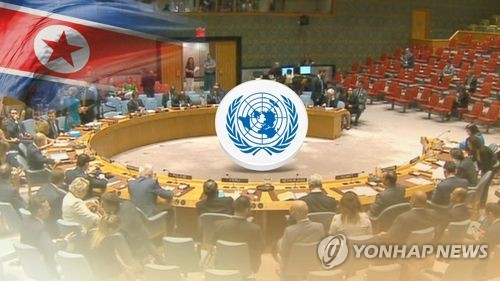
SEOUL, Sept. 26 (Yonhap) -- Only 16.7 percent of the funding required for U.N. agencies' humanitarian activities in North Korea this year has been donated so far, U.N. data showed Thursday.
Of the total US$120.3 million required to carry out humanitarian projects in the North, $20 million, or 16.7 percent of the total, has been funded, according to the data released by the U.N. Office for the Coordination of Humanitarian Affairs (OCHA).
By sector, the fund's largest share of $17.4 million went to nutrition projects amid chronic food shortages in the impoverished country.
According to a report by the World Food Program and the Food and Agriculture Organization in May, the North's crop output last year hit the lowest level since 2008, with an estimated 10 million people, or about 40 percent of its population, in urgent need of food.
 zoom in/out
scaaet@yna.co.kr
(END)
JOY ELLEN YOON — Wait! Back-up! What's So Hard About Humanitarian Aid to North Korea?
JOY ELLEN YOON — Wait! Back-up! What's So Hard About Humanitarian Aid to North Korea?
JOY ELLEN YOON
Wait! Back-up! What's So Hard About Humanitarian Aid to North Korea?
For the past two years, as our family has been sharing about Ignis Community’s work in North Korea, the response to our story usually goes something like this:
“Wait, you said that the U.S. government made you leave North Korea?”
Even for U.S. citizens, most people are unaware of the geographic travel ban that was instituted by the U.S. State Department on September 1, 2017. Those working in Washington D.C. encouraged us by explaining that if the State Department did not proactively initiate this travel ban then Congress could have passed a law banning Americans from traveling into North Korea for five years! As it is, the U.S. State Department re-evaluates the DPRK and U.S. relationship every year. Thus far, the travel ban has been renewed twice. This is the third year that U.S. citizens are restricted from traveling into North Korea.
This comes as a shock not only to the average American, but it was a shock to our family, as well. We had been working in North Korea for ten years when the travel ban was implemented. Working in North Korea is not easy. It requires a lot of patience, perseverance, and flexibility. But never in a million years did we expect that our own government would force us to leave our humanitarian work in North Korea. We always thought that if anyone would ask us to leave the country, it would be the DPRK government.
The travel ban came about as a direct response to the tragic death of Otto Warmbier. After traveling into North Korea on a tourist visa, Otto was detained in the country and sentenced for alleged crimes against the DPRK government. While serving out his sentence in prison, Otto’s health drastically declined. No one knows the full story behind his tragedy. All we know is that by the time the North Korean government alerted the U.S. of Otto’s declining health, it was too late. He was evacuated back to the U.S. only to pass away shortly after.
Otto’s death was extremely unfortunate and tragic. Our family has only sympathy for his family and remorse for what happened.
However, it is because of this one incident that all Americans, including most humanitarian aid workers, are now restricted from entering North Korea. Primarily for limited humanitarian work, the State Department issues Special Validation Passports to a restricted degree. First of all, any humanitarian purpose for traveling into North Korea has to be in the interest of the U.S. government. Secondly, humanitarian workers must be providing urgent, life-saving aid to the people of North Korea in order obtain Special Validation Passports.

The two of us traveling into Pyongyang
My husband and I have been fortunate enough to receive these Special Validation Passports as well as several others within Ignis Community. But in two year’s time, we have only received these passports for four trips into North Korea. It has considerably restricted the work we are able to do inside the nation.
The travel restriction is only pertaining to entering North Korea, though. As explained in “Overcoming Obstacles to Provide Humanitarian Aid to the DPRK”, our non-profit organization, Ignis Community, first had to obtain permission from the U.S. Treasury Department to continue channeling funds into our Pyongyang Spine Rehabilitation Center (PYSRC). Then, in order to ship necessary medical equipment for the treatment of children with developmental disabilities, we had to obtain a U.S. Commerce License (BIS) and UN Sanctions Exemption Permission. The process of obtaining these three licenses took three years.
There were several reasons for why these licenses took so long. First, Ignis Community is a non-profit organization that focuses on work on the field. We had to build up the connections and network in Washington D.C. in order to learn how to navigate all of these requirements. Secondly, the U.S. Treasury License (OFAC License) alone took one year to obtain. Third, because of the political climate and current UN Sanctions, donors stopped supporting the PYSRC. It took two years to raise the funds necessary to complete the PYSRC and ship medical equipment to Pyongyang. Once the PYSRC was nearing completion, then we applied for the U.S. Commerce License and UN permits that allow shipments to go into the DPRK.
Indeed, the current political climate is the greatest challenge to continuing our humanitarian work in North Korea. Specifically, UN Resolution #2397 that restricts all metal from entering North Korea is the biggest challenge for the PYSRC. This resolution is the reason why we had to apply for a UN Sanctions Exemption. Without it, we would not be able to ship any stethoscopes, needles, gait trainers, walkers, or many other medical and rehabilitation supplies. But when considering overall humanitarian work in North Korea, the largest obstacle to overcome for American organizations is the U.S. geographic travel restriction.
Long-term presence on the ground is necessary for any humanitarian work in North Korea to be effective. Originally, we had several U.S. citizens on the ground living in North Korea. Ignis Community was able to monitor day in and day out how supplies were be distributed, who was receiving the aid, and what the greatest needs were. More than anything, it allowed Ignis Community to develop trusting relationships with North Korean counterparts. This opened up doors to providing humanitarian assistance in both the medical field and disaster relief areas to a greater extent than we otherwise would have had the opportunity to do so.
As it is, we are awaiting our fifth application for Special Validation Passports to continue our work in Pyongyang. Although we are grateful for these valuable passports, the application process slows the progress and development of the PYSRC, and as a result, much-needed life-saving treatment for children with developmental disabilities in North Korea. The fact is that without timely medical intervention, children with developmental disabilities in the DPRK often do not survive.
Every year our goal is to open the PYSRC to full capacity. Once the building is completely equipped and the doctors are fully trained, the PYSRC will have the capacity to treat 450 out-patients and 40 in-patients daily. It will be the first training and treatment center of its kind for children with developmental disabilities, such as cerebral palsy and autism, in the entire nation of North Korea.
It is beginning to look like next year our dream may finally become a reality. If the medical and rehabilitation equipment is able to successfully make its way to Pyongyang, we can potentially open the PYSRC. Of course, all of this is dependent upon many factors. We never know how the political tides may turn, but we do hope and trust that as the U.S. State Department continues to engage in discussions with the DPRK, the current difficulties for humanitarian workers in the DPRK will steadily improve.
Australia North Korea Peace Support Group | Australia Yearly Meeting
Australia North Korea Peace Support Group | Australia Yearly Meeting
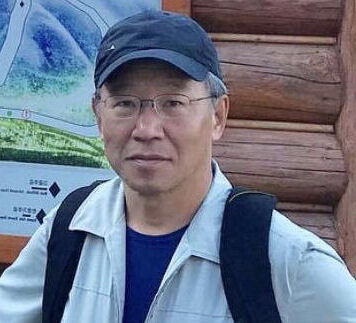 Sejin Pak is an Australian citizen who was born in South Korea, leaving when he was 15 year of age. He then lived in Brazil, Canada, the USA and Japan. His initial studies were in physics but hearing that his lost grandfather was alive in DPRK he was moved to change academic discipline as kinship ties gave him a desire for peace with DPRK.
Australia North Korea Peace Support Group
Purpose
The North Korea Working Group is helping Sejin Pak of Adelaide Meeting to forward his Concern for better relations with and greater knowledge of the Democratic People’s Republic of Korea (DPRK - North Korea).
Origin of the Working Group
Sejin Pak is an Australian citizen who was born in South Korea, leaving when he was 15 year of age. He then lived in Brazil, Canada, the USA and Japan. His initial studies were in physics but hearing that his lost grandfather was alive in DPRK he was moved to change academic discipline as kinship ties gave him a desire for peace with DPRK.As a consequence he completed a PhD in Sociology at Harvard and then for 24 years he lectured at the University of Adelaide. His research and teaching was in industrial and development sociology, East Asian political economy, and Japanese society. In 2016 he retired and so he has time to seriously engage in the issue of peace in the Korean Peninsula, an issue close to his heart as like millions of North and South Koreans he too has a wish for peace.
Sejin has visited the DPRK on a couple of occasions. Following discussions with him at Yearly Meeting in 2017 and 2018 a group of 11 other Friends 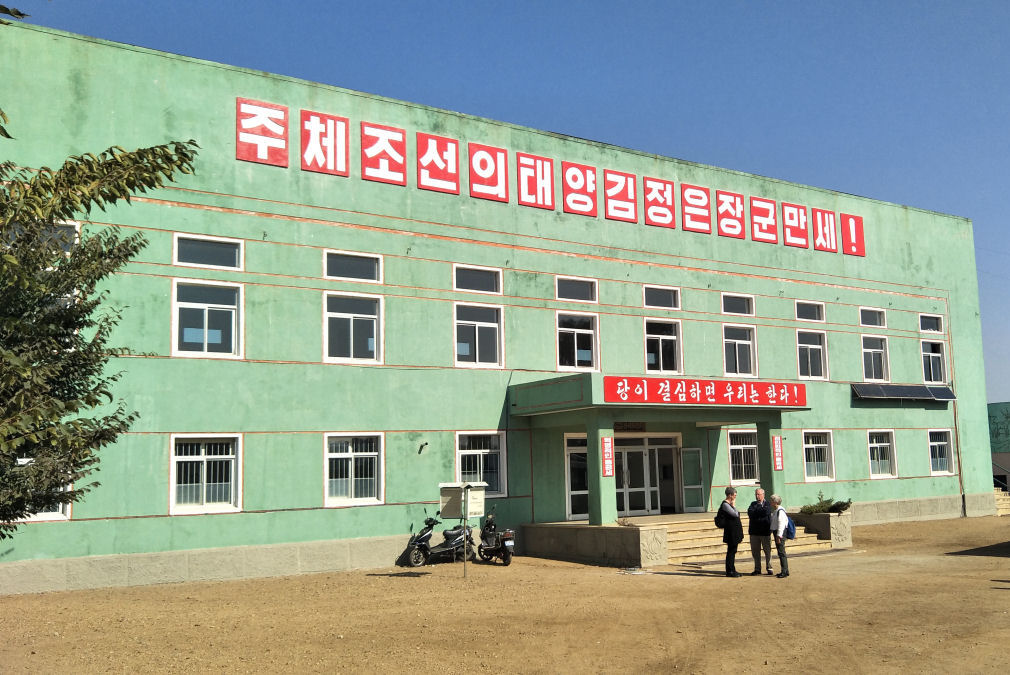 went with him on a study tour to the DPRK for a week in October 2018.
went with him on a study tour to the DPRK for a week in October 2018.The American Friends Service Committee (AFSC) has a long history of involvement in Korea over many years. Their current program helps farmers in the DPRK raise farm productivity. The study group were able to see one of the cooperative farms that American Quakers have helped in the past and to contact senior officials in the DPRK Department of Agriculture.
Following the tour, nine of the Friends formed the North Korea Working Group to forward Sejin’s Concern and to develop further actions relating to the DPRK.
The Tour
The tour took place from 13 to 20 October 2018 and details can be found on the Tour page. Because of the previous humanitarian work carried out by the American Friends Service Committee for several decades, Quakers are known to the DPRK authorities. This meant that we went to a number of non-tourist places and met with officials from the DPRK Ministry of Agriculture. We also realised that thousands of tourists visit the DPRK each year, mainly from China and Taiwan.
Are you interested in the next tour?
We are hoping to arrange another tour in 2020, possibly in May or later in the year. If you interested in being kept in touch, please email us using the button at the top of the page and we will put you on our mailing list. Even if you can't go on the next tour you are welcome to go on our list so we can keep you up to date on developments.
Further developments
On their return, nine of the tour group formed the North Korea Working Group to look at further activities. These have included
- discussions on whether Australian Quakers could assist sustainable agricultural practices, possibly with a farm in the DPRK
- talking to the Department of Foreign Affairs and Trade about their negative travel warnings on their website and Australia’s attitude to the United Nations sanctions on the DPRK
- giving talks in Australia about our trip and publicising possible peace activities in the DPRK
- looking at organising future tourist trips to the DPRK.
At the Yearly Meeting of Quakers in Australia in July 2019 the Group was supported and became an official Working Group of Quakers in Australia .
Links
Our links page provides more information about the DPRK. If you would like to be on our mailing list for further information, please email us.
The Members of the Working Group are:
Sejin Pak, Wilma Davidson, Sue Ennis, Adrian Glamorgan, Dale Hess, Rae Litting, Rowe Morrow, Roger Sawkins and David Swain.
Subscribe to:
Posts (Atom)