Wednesday, July 24, 2019

Online Courses - Engage Korea


Online Courses - Engage Korea

ONLINE COURSES


We run online courses to train the next generation of leaders on health and humanitarianism and economic development in the DPRK.

Our first online course on health was run in 2015, and it received applications from worldwide and convened the top lecturers in health and humanitarianism on the DPRK. In 2019, we ran the online health course for the second time in collaboration with the University of Turku, as part of the heath course on health in East Asia. This course will run annually.

Our premier course on economics in the DPRK started in 2016, and ran again in 2018, and convened very knowledgeable professionals on the topic. This course will be offered annually.

The cost of each DPRK Webinar Series Short Course is $5.00, which will be collected through PayPal to help cover online programming costs and administrative fees. Any remaining funds will be used to help Engage Korea further its educational efforts. For more information about the course and to apply, please complete the online application in advance of the noted deadline.

Applications for the “Considering Economic Engagement” course is now open and can be accessed at this link.

Dates for the course: Monday Aug 5th to Sept 29th

Questions? Please contact ​engagekorea@gmail.com

Applications are due by Wednesday July 31st

Read statements from previous students below!

“This online class encouraged me to continue my North Korea study and supported me academically and emotionally. I want to express my appreciation again!”

“Finally, can I thank you both for putting this course together and for accepting my application – I really can’t stress enough how much I enjoyed the course and the huge amount I learnt whilst taking part and hopefully the opportunity will arise such that our paths cross again!”

“I can’t find the right words to describe my amazement from attending your course. I feel very lucky to attend your course as an observer. At the beginning I was very skeptical, but after watching and participating in the Q&A with all the well-known scholars and practitioners, I must admit that I have learnt a lot about North Korea. I want to thank you for allowing me to participate in this course.”


Any inquiries ?
engagekorea@gmail.com

----------------


Tuesday, July 2, 2019

YM19 Peace Report North Korea Working Group

YM19 Peace Report   North Korea Working Group

PART A: REPORT
Achievements/Activities
At Yearly Meeting in both 2017 and 2018 Sejin Pak, an Attender at Adelaide RM, held information sessions on the subject of North Korea.  Sejin, who was born in South Korea, was concerned that the Democratic People’s Republic of Korea (DPRK) received an unjustifiably bad press which could lead to acceptance of catastrophic conflict with a country which was previously regarded as the “Axis of Evil”. To counter this, he wished to take a group of Quakers to North Korea to see the country for themselves and to look for ways of better relating to the people of that country.
That tour took place in October 2018 and a dozen Australian Friends went on a special study tour for a week. We visited three farm cooperatives, one of which had been assisted by the American Friends Service Committee in the past, and met officials of the Ministry of Agriculture in North Korea. We also had a fascinating time seeing many of the conventional tourist sites.
Following the tour, nine of us formed the North Korea Working Group to forward Sejin’s Concern. We have been meeting on a regular basis via Zoom and various of us have given talks to our Regional Meetings and to other groups. There have also been reports in the Australian Friend and in various newsletters.
We obtained the support of QPLC who then arranged a meeting with two officials from the Australian Department of Foreign Affairs and Trade in Canberra to explore the government’s attitude to the UN Sanctions and travel to North Korea. One of the officials also attended the presentation about the tour given by Roger Sawkins in Canberra in January 2019.
At Standing Committee in January, we gave a report of the tour and of our other plans, which include arranging a second trip by four of our members which is mentioned below. Standing Committee noted our Working Group and supported the proposed trip. Sejin has also requested support from SANTRM for his Concern which we hope will be forthcoming at the time of this report.
Issues/Analysis:
It is clear that North Korea is suffering severely from the sanctions imposed by the United Nations (and supported by Australia). They are unable to produce sufficient food for their basic needs, as well as equipment and other facilities. They have very high infant mortality and general malnutrition. The general population are suffering because of overseas political posturing. Information about many of the issues, and ways to overcome them, are on our Quaker website page (www.quakersaustralia/DPRK)
The proposed trip
We are planning for Sejin Pak, Rowe Morrow, David Swain and Rae Litting to go to the DPRK for about two weeks in June. The hope is that they can visit the farm which the authorities think we may be able to help and have other discussions to see what may be feasible.
Whilst we have initiated discussions with the person who arranged the previous trip with the DPRK authorities the process is a slow one and at the date of this report we don’t have any information on whether the trip will be possible. However, we are very grateful that the AYM Peace and Social Justice Fund and SANTRM have indicated they are willing to provide up to $18,000 funding for the trip.
We hope the trip will happen before Yearly Meeting so that they can report there.
Other discussions
The Group has discussed other ways in which we can forward the Concern. We have some pages on the Quaker website (www.quakersaustralia/DPRK) which include links to further information. We have also been investigating organisations which may run tours to the DPRK which we may be able to publicise to Friends and others.
We encourage Friends to make their own enquiries and to consider a trip to North Korea to experience the situation for themselves. Tourism is one way in which the DPRK can obtain money to purchase necessary equipment and skills from overseas.
Our relationship to Australia Yearly Meeting
We established ourselves quite informally as the North Korea Working Group and that arrangement was noted by Standing Committee in January 2019. We have had subsequent discussions about the relationship with AYM and have decided to request that we become the AYM North Korea Committee.
As it happens, the nine members of the Working Group come from all Regional Meetings except Tasmania and so we would presumably be regarded as an “expert” committee in AYM terms.
We have alerted the AYM Nominations Committee to our request.
PART B: FOR CONSIDERATION
  • Does Yearly Meeting accept that we become the AYM North Korea Committee?
  • We ask all Regional Meetings to publicise the Concern as widely as possible and to offer assistance to any Friends who wish to become involved
Committee members: Sejin Pak (SANTRM), Wilma Davidson (CRM), Sue Ennis (VRM), Adrian Glamorgan (WARM), Dale Hess (VRM), Rae Litting (NSWRM), Rowe Morrow (NSWRM), Roger Sawkins (QRM), David Swain (NSWRM)

Wednesday, June 19, 2019

한국JTS - 위키백과, 우리 모두의 백과사전


한국JTS - 위키백과, 우리 모두의 백과사전


한국JTS
위키백과, 우리 모두의 백과사전.

둘러보기로 가기검색하러 가기


한국JTS(Join Together Society)는 정토회의 승려 법륜(현재 JTS 이사장)이 기아, 질병, 문맹 퇴치를 목적으로 설립한 국제구호 비정부 기구이다.


목차
1설립
2활동
2.1인도
2.2필리핀
2.3긴급구호
3특징
4같이 보기
5외부 링크
설립[편집]

1991년 불교성지를 순례하기 위해 인도를 방문한 법륜은 전정각산을 찾아 둥게스와리의 마을을 방문했을 때 200여명의 아이들이 길가에 늘어서 구걸하는 모습을 보고 구호사업을 결심하여, 1993년 8월 인도 콜카타 근교 보탈라(Botalla)에 의료 캠프를 개설하고 구호활동을 시작했다. 이때 설립된 인도JTS를 시작으로 1994년 뉴욕에 JTS가 설립되었고, 이어 1996년 8월에는 보건복지부로부터 사단법인 한국JTS 설립을 인가받아 본격인 구호활동을 시작했다.

2007년 1월에 국제 연합 경제사회이사회(UN ECOSOC)로부터 특별 협의 지위를 받았다.
활동[편집]

아시아 지역을 중심으로 "아시아의 빈곤과 아픔은 아시아의 손으로 해결하자"는 목표로 갖고 활동하는 단체이다. 북한, 인도, 필리핀, 캄보디아, 스리랑카, 인도네시아. 미얀마, 라오스 등지에서 구호 및 개발 사업을 진행했거나 진행하고 있다.
인도[편집]

불가촉천민들이 집단 거주하는 둥게스와리 지역에 수자타 아카데미를 설립하여 운영하고 있으며, 집단 콜레라 발병을 계기로 세워진 지바카 병원도 무료로 운영하고 있다.
필리핀[편집]

분쟁의 땅으로 알려진 민다나오 섬에서 사업장을 운영하고 있으며, 알라원 마을을 비롯한 주변 오지 마을에 학교를 짓고 교재를 지원하는 교육사업을 진행하고 있다. 더불어 민다나오의 평화 정착과 전통문화 계승을 위한 사업도 진행하고 있다.
긴급구호[편집]

북한 룡천 열차폭발 사고의 복구를 지원하기도 했으며, 아프가니스탄 전쟁의 피난민 캠프에 식량과 교육기자재를 지원하거나 2008년 파키스탄 지진이 일어나자 피해지역에 파키스탄 군 헬기를 동원하여 구호물자를 전달하기도 했다. 2011년 도호쿠 지방 태평양 해역 지진 피해를 입은 이와테현과 미야기현에 구호물자를 지원하였고, 태풍 하이옌에 피해를 입은 필리핀 레이테 섬 타나우안에서 긴급구호를 실시하고 사마르 섬 2014년부터 사마르 섬 마라붓 지역에서 조기복구사업을 진행하여 교실 86칸을 복구했다.
특징[편집]
운영 및 파견인력 전원이 무급 자원봉사자로 구성되어서 인건비 지출이 없기 때문에, 운영비 지출이 상대적으로 적은 편이다.
학교건축 등 개발사업은 JTS가 자재를 제공하고, 주민은 노동력을 제공하며, 정부에서는 기술자 임금을 제공하는 방식으로 주민참여를 강조한다.
국가나 다른 단체의 지원과 관심을 받는 지역 보다는, 가능하면 알려지지 않고 조금이라도 더 어려운 지역을 찾아 서비스를 제공한다.
같이 보기[편집]
수자타 아카데미
협의 지위
외부 링크[편집]
한국JTS 공식 홈페이지
이 글은 사회에 관한 토막글입니다. 여러분의 지식으로 알차게 문서를 완성해 갑시다.

분류:
1996년 설립
인도주의 단체
사단법인 (보건복지부 소관)


둘러보기 메뉴

로그인하지 않음
토론
기여
계정 만들기
로그인

문서
토론

읽기
편집
역사 보기

검색


대문
사용자 모임
요즘 화제
최근 바뀜
모든 문서 보기
임의 문서로
도움말
기부

도구

여기를 가리키는 문서
가리키는 글의 최근 바뀜
파일 올리기
특수 문서 목록
고유 링크
문서 정보
위키데이터 항목
이 문서 인용하기

인쇄/내보내기

책 만들기
PDF로 다운로드
인쇄용 판

언어

링크 추가

이 문서는 2018년 2월 11일 (일) 15:39에 마지막으로 편집되었습니다.

Korean Buddhist Humanitarian Organization JTS Offers Relief for Typhoon Mangkhut Victims in the Philippines
By Craig Lewis
Buddhistdoor Global | 2018-09-27 |
https://www.buddhistdoor.net/news/buddhist-humanitarian-organization-jts-offers-relief-for-typhoon-mangkhut-victims-in-the-philippines


117
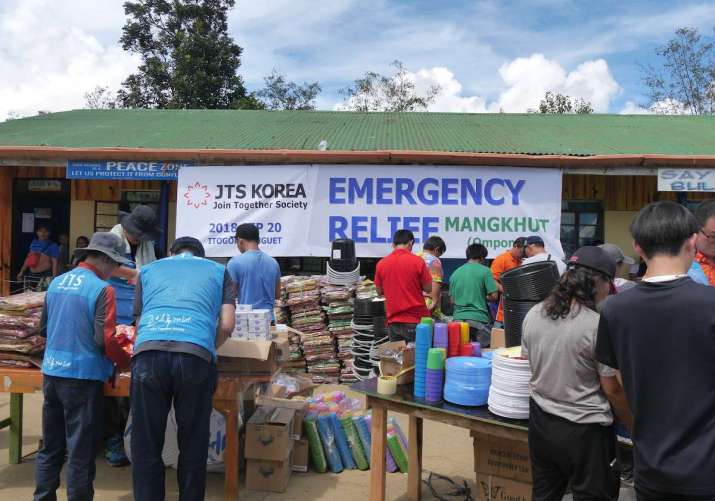
JTS Philippines distributes relief supplies in the wake of Typhoon Mangkhut. Image courtesy of Join Together Society

Soon after the powerful Typhoon Mangkhut slammed into Luzon, the largest and northernmost island in the Philippine archipelago, on 14 September, the Korean Buddhist humanitarian NGO the Join Together Society (JTS) rapidly deployed a team of volunteer relief workers to provide aid and assistance to communities affected by the super typhoon.

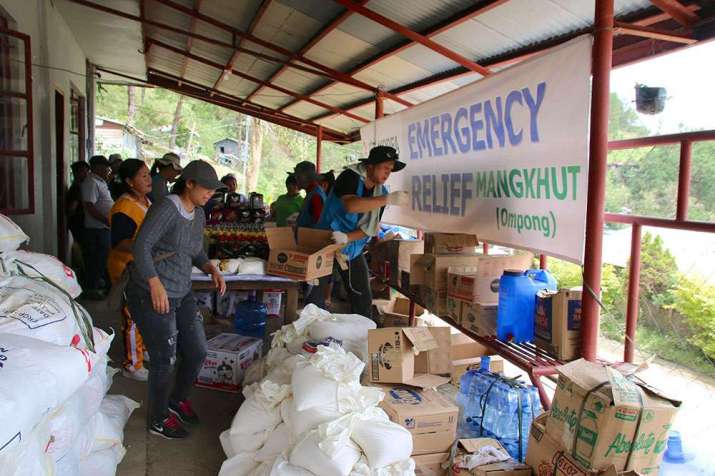
Led by field office head Lee Wonjoo, three JTS Philippines staff members traveled to Benguet Province from the JTS center in Libona Municipality in northern Mindanao, where they were joined by a team of six Korean volunteers to extend aid to the stricken area. Once in the field, the team surveyed the impact of the typhoon, and set up distribution system to supply local residents with basic staples and relief goods, such as rice and other food products, and essential household items, including mosquito nets, plates, spoons, cups, soap, stationery, and cooking utensils. The JTS volunteers were able to bring material relief assistance to some 440 households in Itogon, and a further 65 households in nearby Loacan.
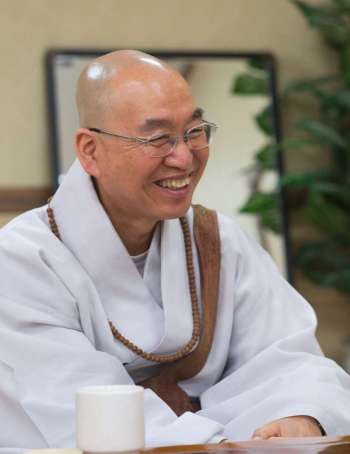
Join Together Society founder Korean Seon master Pomnyun Sunim.* Photo by Jihea Kim

The Philippine’s National Disaster Risk Reduction and Management Council (NDRRMC) reported on 22 September that at least 95 people were killed by Typhoon Mangkhut (known in the Philippines as Typhoon Ompong), including 80 who perished in a mine collapse in the town of Itogon in Benguet Province.

“Although our relief activities have already concluded, the precious experience of helping these suffering communities remains with me,” JTS Philippines staff member Park Sihyun told Buddhistdoor Global. “On the first day, we visited and surveyed the areas affected by Typhoon Mangkhut. On the second day, we brought in relief supplies, and distributed them on day three.”

Founded as an expression of the compassion of engaged Buddhism and the belief that helping others is the best way to enrich one’s own life, Join Together Society International was established in 1993 by the Korean Seon (Zen) master Venerable Pomnyun Sunim.* Headquartered in Seoul, JTS operates program offices in South Korea, Germany, and the US, along with field offices in India and the Philippines.


Charged with bringing hope, empowerment, and self-reliance to underprivileged communities in developing countries, JTS is run and manned by unpaid volunteers, which ensures that all donations go toward benefitting the marginalized communities with which the organization works. JTS has already completed humanitarian projects in Cambodia, Laos, Myanmar, North Korea, and Sri Lanka.

According to an announcement by an adviser to Philippine President Rodrigo Duterte, some 5.7 million people in the Philippines were affected by the huge storm, with Luzon taking the brunt of the Impact. Damages were reportedly more than double the government’s worst-case-scenario expectation—the NDRRMC gave a preliminary estimate of the damage cost in the Philippines of US$392 million as of 25 September.
Coordinating the relief effort. Image courtesy of Join Together Society
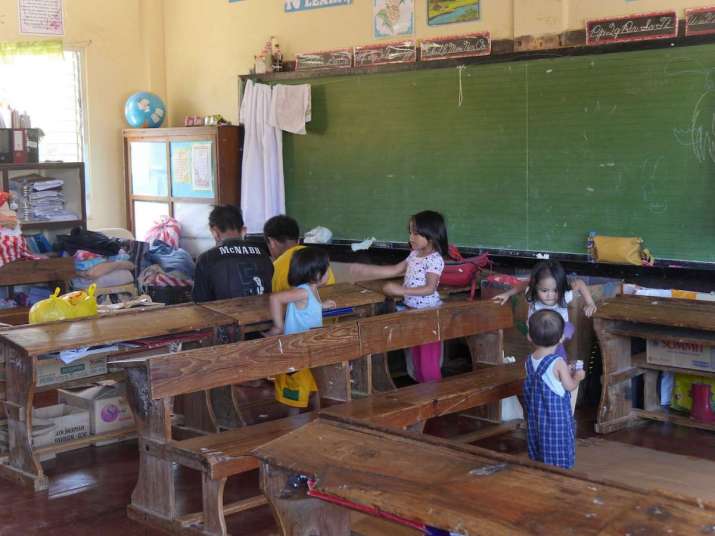

“Local residents said their community had been left heartbroken by the loss of family members and homes to landslides caused by the Typhoon Mangkhut, yet they told us that the relief supplies provided by JTS were a great comfort,” said Park. “I still remember the grateful smiles we received while distributing aid, and I’ll never forget the enthusiasm of the volunteers. I hope from the bottom of my heart that the affected communities can be rehabilitated and returned safely to their homes as soon as possible.”

JTS Philippines, established in 2002, operates 51 project areas in 19 cities and municipalities in six provinces. It is engaged in a variety of humanitarian initiatives, including building schools, providing school supplies for disadvantaged students (such as uniforms, stationery, bags, and umbrellas), teacher-training programs, and community leadership training.

Typhoon Mangkhut, was a Category 5 super typhoon that emerged on 7–9 September, making landfall in Guam, the Philippines, Taiwan, Hong Kong, and Macau, before dissipating over Guangxi Zhuang Autonomous Region in southern China on 17 September. Reaching a peak intensity of 285 kilometers per hour Mangkhut was the strongest tropical cyclone in the world, year to date, leading to the deaths of some 127 people and causing more than US$1.35 billion in damage to populated areas.
Evacuation center. Image courtesy of Join Together Society


* Engaging with Suffering, Realizing Freedom: An Interview with Ven. Pomnyun Sunim (Buddhistdoor Global)

See more

Join Together Society
JTS Philippines (Join Together Society)
JTS Philippines (Facebook)
Pomnyun

Related news from Buddhistdoor Global

Korean Buddhist Monk Runs for Peace and Reconciliation with Vietnam
Kenya Prison Uses Mindfulness to Reduce Violence and Bridge Gap Between Guards and Inmates
Korean Buddhist Monk Offers Refuge from Suffering with School for Broken Hearts
International Network of Engaged Buddhists Announces SENS 2019 Transformative Learning Program

Related features from Buddhistdoor Global

Engaging with Suffering, Realizing Freedom: An Interview with Ven. Pomnyun Sunim
Surviving the Typhoon Inside Our Mind
Sea of Suffering: The Rohingya and the Conundrum of Buddhist Terror
Compassion and Kalyana-mittata: The Engaged Buddhism of Sulak Sivaraksa


Tags:
Benguet Province
buddhism in korea
disasater response
disaster relief
engaged buddhism
Itogon
Join Together Society
JTS
JTS Philippines
korea
Korean Buddhism
Lee Wonjoo
Luzon
mahayana buddhism
natural disasters
NGO
philippines
Pomnyun Sunim
seon buddhism
social engagment
southeast asia
Typhoon Mangkhut
zen buddhism
Categories:Korea / Japan Southeast Asia Social Engagement
Comments:
Wong Weng Hon
Annual landfalls of Typhoon in Asia and hurricanes in North America are annual massive destructions of human lives ,and other human and natural assets. They are conditioned by climate change , the number one enemy of UN Climate Taskforce . Military Wars are already very destructive . The massive strikes of annual Typhoons and Hurricanes are even more destructive . Only more God or Dharma or Tao or Brahman or Allah in inspired human beings will reduce the annual massive destructions caused by natural environment by environmentally unfriendly and selfish entreprenuers . Human minds must be reformed through religious education to reduce human wrecks upon the eco-system balance . Chinese Taoist Sage ,Men-Tzu says, " More Tao more help; less Tao less help ." It means that more God more help; less God less help. Many of us know this Law of Boomerang. But the noble or divine practice is not there.
reply | 27 September 2018, 7:54pm
Wong Weng Hon
I implore all victims of Typhoon in Asia and Hurricane victims in North America to stay calm .The ought to appreciate the compassionate humantarian aids rendered by their governments and charitable NGOs. All members of UN of the 2015 Paris Climate Deal ought to honestly fulfill their promised commitments to fight Climate Change together . Rich nations should reduce their budgets on arm races . They ought to spend more on climate races. All developing and underdeveloped economies should strive more diligently to develop their own strong national economies so that their national economies enjoy lasting economy independences .
28 September 2018, 6:55am
Share your thoughts:

Thursday, June 13, 2019

North Korea Working Group PART B: FOR CONSIDERATION

North Korea Working Group
PART B: FOR CONSIDERATION

 Does Yearly Meeting accept that we become the AYM North Korea Committee?
 We ask all Regional Meetings to publicise the Concern as widely as possible and to offer assistance to any Friends who wish to become involved

CRM: We are unsure about the appropriateness of the North Korea Working Group becoming an AYM Committee at this time. We hope that this will receive further exploration at YM19. 

NSWRM: We are not in unity with the working group’s request to become a Committee of Yearly Meeting. A travelling minute or Letter of Greetings could offer the same status of representing Friends that a committee would provide. We ask our newsletter and e-newsletter editors to promote the working group’s concerns regarding North Korea to Friends.

QRM: Whilst we appreciate the issues of whether the North Korea group continue as a working group or as a committee, we acknowledge that being a committee of AYM may assist them in dealing with humanitarian help for North Korea and in discussions with Department of Foreign Affairs.

SANTRM: SANTRM supports the establishment of an AYM committee on North Korea, but asks that this group commits to consulting with others who already operate in our region, such as those involved in AWPS (including Korean Friends), Quaker Service Australia or the Friends Peace Teams. We ask that Sejin provide regular updates to Walking Cheerfully, along with a continued invitation to participate.

TRM: TRM notes that we do not have committees for other areas of concern, such as Palestine, and feel that this should remain a working group that reports to a relevant committee.

VRM: We recognise the concern of working in North Korea and agree that the North Korea Working Group should become the AYM North Korea Committee. We appreciate learning about North Korea through the Regional Meeting newsletter.

WARM: We are unclear of the grounds by which a working group becomes an AYM Committee and the implications of this for AYM.

Sunday, May 5, 2019

1805 North Korea: UN gains 'unprecedented access' during visit - BBC News


North Korea: UN gains 'unprecedented access' during visit - BBC News


North Korea: UN gains 'unprecedented access' during visit

12 May 2018

Image copyrightWFP/SILKE BUHRImage captionPeople are going hungry in North Korea, the head of the WFP said, but are not starving

The head of the UN's World Food Programme (WFP) believes there is a "sense of optimism" among North Korea's leaders after enjoying what he said was unprecedented access to the country.

David Beasley spent two days in the capital, Pyongyang, and two outside it, accompanied by government minders.

He said the country was working hard to meet nutritional standards, and hunger was not as high as in the 1990s.

"There is a sense of turning a new page in history," he told the BBC.

Relations between North Korea and the rest of the world have seen a dramatic shift.
Last year the North Korean government carried out a string of nuclear and missile tests.

But next month, its leader Kim Jong-un will meet US President Donald Trump, in what would be the first time a sitting US president has ever met a North Korean leader.

Confirmation of the meeting came after landmark talks between North and South Korea. Mr Trump announced the details of the meeting - in Singapore on 12 June - earlier this week, hours after he welcomed home three US detainees released from North Korea.
Will historic summit lead to peace?
The Koreas - the basics explained
What did the UN see in North Korea?

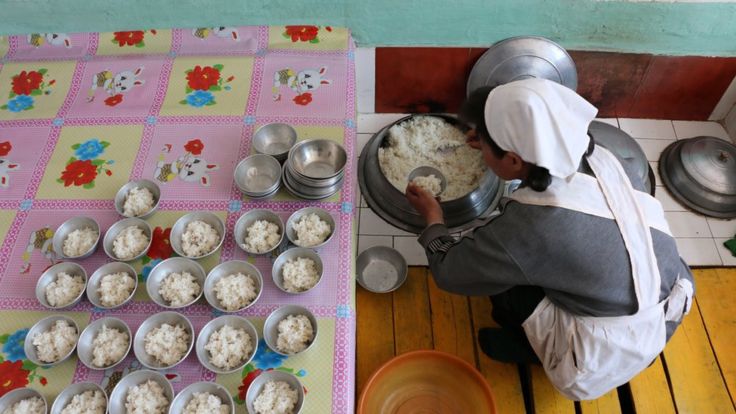
David Beasley visited North Korea from 8-11 May. The visit included trips to WFP-funded projects - a children's nursery in South Hwanghae province and a fortified biscuit factory in North Pyongyan province.

He told the BBC's Radio 4 programme Today that the farming he saw in the countryside reflected the fact that only about a fifth of the land is arable.

"One of the most powerful things that I saw was out in the countryside - it's spring, they're planting - there's not mechanisation, you've got oxen pulling ploughs, men and women in the fields," he said.Image copyrightWFP/SILKE BUHRImage captionDavid Beasley visited WFP programmes in the North Korean countryside

"It's very structured, very organised, every foot and inch of dirt is being toiled with rakes and hoes and shovels and they're literally planting crops up to the edge of the road, down embankments, using every available space, because it is a land that's mostly mountainous.

"I didn't see starvation like you had in the famine back in the 1990s, that's the good news. But is there a hunger issue, is there under-nutrition? There's no question about it."

Between 1994 and 1998, hundreds of thousands of people are believed to have died in North Korea in a widespread famine.

After drought last year, the UN said seven in 10 North Koreans were relying on food aid, while four in 10 were malnourished.
Two in five N Koreans 'undernourished'
UN sounds alarm over N Korea drought

Last month the UN requested $111m in aid funding to help people in North Korea. The US has offered to help rebuild the country, on condition of denuclearisation.
How do North and South Korean economies compare?

Daily life in the two countries couldn't be more different.


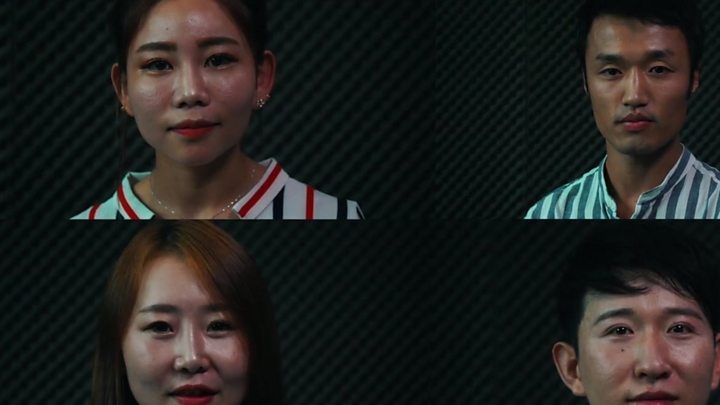
Media captionFour defectors talk about what life is like in North Korea

After the end of the Korean war in 1953 the South, an ally of the US, embraced a capitalist philosophy. It has developed into one of Asia's most affluent nations.

A government-sponsored industrial push in the 1960s led to huge corporations like Samsung and Hyundai being created.
Key figures:
Population: 51.2m in South Korea; 25.4m in North Korea
GDP: $1.4tn - South Korea; less than $20bn - North Korea
Life expectancy: 82 years - South Korea; 70 years - North Korea

South Korea is one of the world's top 20 economies, with GDP of $1.4tn (£1tn).

By contrast, North Korea's GDP is less than $20bn, placing it well outside the top 100 economies.
Reality Check: How North Korea does business
North Korea crisis in 300 words

It has a communist system, but capitalism is creeping into the country.

There are things to buy - but only for some people, those who have money. The majority of people in North Korea live in poverty.

Kim Jong-un has made clear that development is a priority.

Related Topics
North Korea

Share this story About sharing
Email
Facebook
Messenger
Twitter
Pinterest
LinkedIn

More on this story

US offers to help rebuild N Korea economy if it denuclearises
12 May 2018

Koreas summit: Will historic talks lead to lasting peace?
28 April 2018

Trump-Kim Jong-un summit set for Singapore on 12 June
10 May 2018

Korean meeting: How did we get here?
28 April 2018

North Korea hunger: Two in five undernourished, says UN
22 March 2017

North Korea drought: Children at risk in 'worst crisis since 2001'
20 July 2017


Asia

Saturday, May 4, 2019

통일뉴스 모바일 사이트, “북 자체집계 2018년 곡물생산량은 520만톤”


통일뉴스 모바일 사이트, “북 자체집계 2018년 곡물생산량은 520만톤”


“북 자체집계 2018년 곡물생산량은 520만톤”

기사승인 2019.05.04 14:43:26

- 이찬우 『북한경제와 협동하자』 출판 기념식 열려


<50만톤> 북한이 자체 추계한 식량과 에너지 부족량

▲ 이찬우 일본 테이쿄대학 교수가 3일 커뮤니티하우스 마실에서 열린 『북한경제와 협동하자』 출판기념회에서 강연하고 있다. [사진 - 통일뉴스 김치관 기자]


“북한은 곡물생산량이 정곡 기준으로 500만 톤이면 문제가 없다. 2018년 생산량은 북한 추정은 520만톤, 정곡 기준으로 환산하면 440만톤이다.”

북측이 자체로 집계한 2018년 곡물생산량이 정곡 기준으로 440만톤 수준이라는 사실과 올해 식량 부족분을 50만톤으로 추계하고 있다는 사실이 처음으로 확인됐다.

이찬우 일본 테이쿄대학(帝京大学) 교수가 3일 오후 7시 서울 명동 커뮤니티하우스 마실에서 열린 <라이프인> 창간 2주년 기념식 및 『북한경제와 협동하자』 출판기념회에서 밝힌 내용이다.

그는 북한의 식량 수요량을 1일 1만톤, 1년 365만톤을 기준으로 삼았고, 여기에 산업용 100만톤을 더하면 465만톤이 최저수요량이 된다. 따라서 지난해 생산량 440만톤은 2,30만톤이 부족한 것이지만, 정곡 500만톤을 기준으로 생산량 440만톤과 수입량 10만톤을 감안하면 50만톤이 부족할 것으로 추산했다.

그는 “작년에 자연재해가 있었다. 황해도에 가물이 들었다”며 “그래서 금년도에 중국으로부터 수입이 제대로 안 이뤄지면 식량에서 부족분이, 자기들 자체 판단으로는 50만톤이라는 계산이 나온다고 하더라”고 전했다.

▲ 이찬우 교수는 북한 식량 사정을 북측의 집계를 근거로 추산해 제시했다. [사진 - 통일뉴스 김치관 기자]


파악하기 어려운 북측 내부의 식량 사정을 확인할 수 있었던 것은 그의 특별한 이력 덕이다. 국내에서 대우경제연구소 연구위원 등을 역임하며 북한 실물경제를 연구했고, 1999년 일본으로 건너가 경제연구소들에 적을 두고 다양한 북측 자료를 접할 기회를 얻었다. 게다가 일본 국적을 얻어 북측과의 접촉을 유지하고 있기 때문.
그는 “‘최악의 상황이다’ 이렇게 자존심 상하는 말을 하지 말자”며 서로 상대를 이해하고 체면을 살려주면서 식량지원을 추진하길 바란다고 말했다.

식량과 함께 가장 관심을 끄는 북한의 에너지 사정에 대해서도 그는 석유가 연간 50만톤 정도 부족하다는 평가를 내놓았다.

북한의 연간 석유 수요량은 150만톤 수준이고, 중국에서 들여오는 원유 50만톤, 갈탄에서 뽑아내는 액화석유(인조석유) 10만톤, ‘탄소 하나’ 공법으로 석탄에서 뽑아내는 20만톤, 공식.비공식 수입 20만톤 정도로 추산하면 연간 100만톤 정도 수급되고 있고 50만톤 정도가 부족하다고 추산했다.

<돈주> “여성들이 가진 사회적 역할이 있다”

▲ 송경용 신부의 사회로 양동수 사회혁신기업 더함 대표, 김태현 시대의창 편집팀장과 더불어 대담이 진행됐다. [사진 - 통일뉴스 김치관 기자]


그는 북한 경제에서 ‘돈주’의 등장을 ‘사회적 경제’의 역할과 연관지어 해석해 눈길을 끌었다.

북한에서 유력한 가문의 남성들은 주로 군과 당에서 직책을 맡고, 여성들이 돈주로서 경제적 역할을 담당하는 사례가 많은 것으로 알려져 있으며, 그는 ‘10만 달러 이상의 사금융자금을 현금으로 유통할 수 있는 사람’을 ‘돈주’로 규정하고, 돈주들의 외화 유통자금은 30~50억 달러로 추산했다.

먼저 “북한의 돈주들이 대체로 5천명, 그 중에 80%인 4천명이 여성들이다. 북한의 돈주들은 여성들이 압도적이다”고 현황을 전하고 “어느 사회나 여성들이 가진 사회적 역할이 있다”며 “여성들은 돈을 자식을 위해서 쓰고, 가족을 위해서 쓰고, 이웃을 위해 쓴다”고 말했다.


“북한의 돈주들이 전체적으로는 국가가 제대로 기능하지 못한 부분들에 대해서 자발적으로 메꾸어 주는 기능들을 조선 여성들이기 때문에 하고 있다”는 것.

그는 책에서 돈주의 사회적경제 관점에서의 역할로 △사회적 금융 △주택자금 또는 생활자금 대출 △보건 위생 환경보호 분야 기부 △취약계층 원호, 교육 분야 기부 △지방기업 생산자금 대출 △협동단체 생산자금 대출을 꼽았다.

▲ 출판기념회에는 학계와 금융계, 사회적경제 관계자 등 100여 명이 참석했다. [사진 - 통일뉴스 김치관 기자]


그는 북한의 상업은행이 돈주들의 ‘사금융 양성화’ 형태라며 나진-선봉 지역의 경우 상업은행 이자율이 5~8% 수준이고 사금융은 보통 20% 수준이라고 전했다. 물론, 급전의 경우 3,40% 고금리가 적용되기도 한다고.

그러나 “그것이 아직 모델로 정착돼 있지 않다”며 “개인의 의지, 그리고 자기들이 사회주의로 교육받은 것에 따른 당연한 심리로 하고 있다”고 진단하고 “이것을 사회적 경제로 해석해주고 그것을 위한 제도적 장치를 마련하면서 환경 문제와 생태 문제, 거기에 건강권 문제, 이런 것들이 하루빨리 이루어져야 하는 것이 상당히 중요한 과제”라고 짚었다.

나아가 “그런 부분에 대해서 남쪽의 사회적 기업들이 더 큰 관심을 가져달라”며 “그것이 한반도에 같이 사는 사람들의 앞으로의 행복을 위한 나눔의 사업”이라고 의미를 부여했다.

<사회적경제> “시장이 아니라 공유경제를 보완하는 사회적경제”

▲ 송경용 <라이프인> 초대 발행인이 환영사를, 홍익표 더불어민주당 의원, 김홍일 민화협 대표상임의장이 축사를 했다. [사진 - 통일뉴스 김치관 기자]


그는 책에서 “사회주의경제에서 국가의 기능이 제힘을 발휘하지 못할 때 나타나는 대안적 기능의 하나는 시장 기능이며 다른 하나가 사회적경제 기능이라할 수 있다”며 “사유화로 가는 시장이 아니라 공유경제를 보완하는 사회적경제가 북한 사회주의경제에서 존재하고 있다”고 강조했다.

또한 “북한의 협동조합은 과거에도 있었고 지금도 있다. 돈주들의 사회적금융 기능도 나타나고 있다”며 “더 많은 조사가 필요하다”고 전제하고 “남북 간의 경제협력도 북한의 자생력과 지구력을 이해하면서 쌍방적인 접근을 추진해야 할 것”이라고 제안했다.

▲ 이찬우 교수의 『북한경제와 협동하자』는 지난해 인터넷신문 <라이프인>에 15회에 걸쳐 연재된 글을 시대의창에서 출간했다. [사진 - 통일뉴스 김치관 기자]


라이프인 사회적협동조합이 주최한 이날 기념식은 초대가수 한선희가 축가를, 송경용 <라이프인> 초대 발행인이 환영사를, 홍익표 더불어민주당 의원, 김홍일 민화협 대표상임의장이 축사를 했고, 송경용 신부, 양동수 사회혁신기업 더함 대표, 김태현 시대의창 편집팀장이 대담을 진행했다.

이찬우 교수의 『북한경제와 협동하자』는 지난해 인터넷신문 <라이프인>에 15회에 걸쳐 연재된 글을 시대의창에서 출간한 것으로 ‘북한경제의 자력갱생-자강력’, ‘사회적경제 관점’, ‘민족경제의 국제경제력’이라는 3가지 키워드를 제시하고 있다.


(수정3, 20:30)

김치관 기자 ckkim@tongilnews.com