Thursday, May 12, 2022

북한, 이례적으로 코로나19 발병 공개... 외신들 '주목' - 오마이뉴스

북한, 이례적으로 코로나19 발병 공개... 외신들 '주목' - 오마이뉴스

북한, 이례적으로 코로나19 발병 공개... 외신들 '주목'"백신 안 맞고 의료 체계 열악한 북한... 심각한 사태 올 수도"
22.05.12 
윤현(yoonys21)


▲ 북한의 코로나19 오미크론 유입 발표를 보도하는 미 CNN 방송 갈무리.
ⓒ CNN

관련사진보기

북한이 코로나19 오미크론 변이 바이러스 발병을 처음으로 공식 인정하면서 국제사회가 향후 행보에 주목하고 있다.

북한 정치국은 12일 회의를 열고 "2020년 2월부터 오늘에 이르는 2년 3개월에 걸쳐 굳건히 지켜온 우리의 비상 방역 전선에 파공이 생기는 국가 최중대 비상 사건이 발생했다"라며 코로나19 유입을 공개했다.

김정은 북한 국무위원장은 회의에서 "전국의 모든 시, 군들에서 자기 지역을 철저히 봉쇄하고 사업 단위, 생산 단위, 생활단위별로 격폐한 상태에서 사업과 생산활동을 조직해 악성 바이러스의 전파 공간을 빈틈없이 완벽하게 차단"하라고 강조했다.

주요 외신은 지금까지 국제사회의 코로나19 백신 지원도 거부하고, 경제 상황과 의료 체계도 열악한 북한에서 발병이 확산하면 심각한 사태가 벌어질 것으로 우려했다.

코로나19 발병 없다던 북한... 왜 공개했나


미 CNN 방송은 "북한이 지금까지 코로나19 발병을 인정하지 않았지만, 북한의 2500만 명 인구가 세계적으로 수많은 사람이 걸린 바이러스를 피해서 갔다고 믿는 사람은 거의 없을 것"이라며 "북한 인구 대부분이 백신을 접종하지 않았다고 가정할 때 코로나19 발병은 재앙(disastrous)이 될 것"이라고 전했다.

또한 "검사 역량과 의료 체계가 열악하고, 국제사회와 격리된 북한에서는 단숨에 치명적인 일이 될 것"이라며 "김 위원장이 회의에서 '국가방역사업을 최대비상방역체계로 이행할 것'이라고 했는데, 그 내용도 구체적이지 않다"라고 지적했다.

지금까지 코로나19 환자가 한 명도 없다던 북한이 확진자 발생을 외부에 공개한 것은 매우 이례적이다.

영국 BBC는 "2년 넘게 코로나19가 발병하지 않았다고 애매하게 주장하던 북한이 이제와 인정한 것은 이번 발병이 너무 심각하고 숨기기 어렵기 때문일 것"이라며 "검사 역량과 의료 체계가 열악한 북한으로서는 선택지가 매우 제한적"이라고 전했다.

아울러 "북한으로서는 국경을 폐쇄하는 것 말고는 선택의 여지가 없을 것이며, 그러려면 국제사회에 알려야 할 수밖에 없다"라고 설명했다.

시험대 오른 북한... 핵실험 미칠 파장은?

한편으론 북한이 이제라도 국제사회로부터 백신이나 치료제 등을 받아들일 의향을 보인 것 아니냐는 분석도 나온다. 반면에 BBC는 "북한이 코로나19 발병을 공개했다고 해서 외부의 도움을 기꺼이 받아들이겠다는 뜻은 아닐 것"이라고 예상했다.


북한의 코로나19 발병이 최근 임박한 것으로 알려진 핵실험 도발에 어떤 영향을 미칠 것인가도 주목된다.

양무진 북한대학원대학 교수는 AFP통신과의 인터뷰에서 "북한이 코로나19 퇴치에 집중하기 위해 핵실험을 보류할 수도 있지만, 전염병에 대한 북한 주민들의 두려움을 다른 곳으로 돌리기 위해 핵실험을 앞당길 수도 있다"라고 밝혔다.

반면에 레이프 에릭 이슬리 이화여대 교수는 "북한으로서는 외국 군대보다 코로나19가 더 긴박한 위협이기 때문에 핵실험이나 미사일시험에 관심을 덜 갖게 될 것"이라고 전망했다.


북한 "12일 하루 1만8천 명 코로나 확진... 6명 사망" - 오마이뉴스

북한 "12일 하루 1만8천 명 코로나 확진... 6명 사망" - 오마이뉴스

북한 "12일 하루 1만8천 명 코로나 확진... 6명 사망"<조선중앙통신> 13일 보도... 김정은 위원장 국가비상방역사령부 방문
22.05.13 06:30l최종 업데이트 22.05.13 07:37l
김도균(capa1954)


▲ 북한 조선중앙TV는 12일 노동당 중앙위원회 본부청사에서 코로나 확진자 발생과 관련해 열린 노동당 제8기 제8차 정치국 회의에서 김정은 국무위원장이 마스크를 착용한 모습을 공개했다. 다만 김 위원장은 회의 발언 때 마스크를 벗어 책상에 내려놨다. 김 위원장이 마스크를 착용한 모습이 공개된 것은 이번이 처음이다. 2022.5.12
ⓒ 조선중앙TV 화면 캡처

관련사진보기

[기사 보강 : 13일 오전 7시 15분]

북한에서 지난 12일 하루 동안 전국에서 1만 8000여 명의 발열자가 새로 발생했고, 신종 코로나바이러스 감염증(코로나19) 확진자를 포함해 6명이 사망했다고 북한 관영 매체가 보도했다.

<조선중앙통신>은 13일, 김정은 북한 국무위원장이 전날 국가비상방역사령부를 방문해 이 같은 내용을 보고받았다고 밝혔다.


통신은 "4월 말부터 원인을 알 수 없는 열병이 전국적 범위에서 폭발적으로 전파 확대돼 짧은 기간에 35만여 명의 유열자(발열자)가 나왔으며 그중 16만2200여명이 완치됐다"고 전했다.

통신은 이어 "5월 12일 하루 동안 전국적 범위에서 1만8000여 명의 유열자가 새로 발생하였고 현재까지 18만7800여 명이 격리 및 치료를 받고 있으며 6명이 사망했다"고 보도했다. 통신에 따르면 사망자 중 1명은 '스텔스 오미크론'으로 불리는 오미크론 변이 바이러스 BA.2 확진자다.

김 위원장은 "열병이 수도권을 중심으로 해 동시다발적으로 전파 확산됐다는 것은 우리가 이미 세워 놓은 방역체계에도 허점이 있다는 것을 보여준다고 심각히 지적했다"고 통신은 전했다.

김 위원장은 "전국의 모든 도·시·군에서 자기 지역을 봉쇄하고 주민 편의를 최대로 보장하면서 사업·생산·거주단위별 격폐 조치를 취하는 사업이 중요하다"고 강조했다.


김 위원장은 또 "주동적으로 지역들을 봉쇄하고 유열자들을 격리조처하며 치료를 책임적으로 하여 전파공간을 차단하는 것이 급선무"라면서 "정치국의 결정사항들을 시급히, 철저히 실행하여 전염병 전파 사태를 신속히 억제해야 한다"고 지시했다.

그러면서 김 위원장은 "직면한 보건위기 상황을 하루속히 역전시키고 방역 안정을 회복하며, 우리 인민 건강과 안녕을 수호하는 것은 당 앞에 나선 가장 중차대한 도전이고 지상 과업"이라고 강조했다고 통신은 전했다.

앞서 북한은 전날(12일) 김 위원장 주재로 정치국회의를 긴급 소집하고 2019년말 코로나 팬데믹이 시작된 후 처음으로 코로나19 감염자가 발생했다고 공식 인정했다.

Wednesday, May 11, 2022

“Working in Postwar North Korea: State Practice and Dialectics”.

(13) Facebook:
Cheehyung Harrison Kim (Univ. of Hawai'i at Mānoa) will give a talk on May 11 (Wednesday) 2pm Korea (5am UK / 1am EST) on

“Working in Postwar North Korea: State Practice and Dialectics”.

Join us!
Zoom: https://us06web.zoom.us/j/87297224736... (ID: 872 9722 4736/ Password: 478016)
Moderator: Vladimir Tikhonov (Univ. of Oslo)
Cheehyung Harrison Kim is an associate professor in the Department of History at the University of Hawai‘i at Mānoa. His research and teaching focus on socialism, labor, industrialism, everyday life, and urbanism in the context of East Asia and North Korea. He is the author of Heroes and Toilers: Work as Life in Postwar North Korea, 1953-1961, which was published by Columbia University Press in 2018.
<Abstract>
“Working in Postwar North Korea: State Practice and Dialectics”
In search of national unity and bureaucratic order in the decade following the Korean War, the North Korean state turned to labor. Even more than coercion or violence, work was crucial to state control. Industrial labor was both mode of production and mode of governance, characterized by repetitive work, mass mobilization, labor heroes, and the insistence on convergence between living and working. At the same time, workers challenged and reconfigured state power to accommodate their circumstances—coming late to work, switching jobs, and fighting with bosses, as well as following approved paths to secure their livelihood, resolve conflict, and find happiness.
May be an image of text
19
4 shares
Like
Comment
Share

0 comments


Active


Heroes and Toilers  Work as Life in Postwar North Korea, 1953–1961

Cheehyung Harrison Kim

Columbia University PressMAIN
REVIEWS
CONTENTS
EXCERPT
LINKS
AWARDS
In search of national unity and state control in the decade following the Korean War, North Korea turned to labor. Mandating rapid industrial growth, the government stressed order and consistency in everyday life at both work and home. In Heroes and Toilers, Cheehyung Harrison Kim offers an unprecedented account of life and labor in postwar North Korea that brings together the roles of governance and resistance.

Kim traces the state’s pursuit of progress through industrialism and examines how ordinary people challenged it every step of the way. Even more than coercion or violence, he argues, work was crucial to state control. Industrial labor was both mode of production and mode of governance, characterized by repetitive work, mass mobilization, labor heroes, and the insistence on convergence between living and working. At the same time, workers challenged and reconfigured state power to accommodate their circumstances—coming late to work, switching jobs, fighting with bosses, and profiting from the black market, as well as following approved paths to secure their livelihood, resolve conflict, and find happiness. Heroes and Toilers is a groundbreaking analysis of postwar North Korea that avoids the pitfalls of exoticism and exceptionalism to offer a new answer to the fundamental question of North Korea’s historical development.

ABOUT THE AUTHORCheehyung Harrison Kim is associate professor of history at the University of Hawaiʻi at Mānoa.
Acknowledgments
Introduction: Postwar North Korea, the Era of Work
1. The Historical Concept of Work
2. Work as State Practice
3. Producing the Everyday Life of Work
4. The Rhythm of Everyday Work, in Six Parts
5. Vinalon City: Industrialism as Socialist Everyday Life
Conclusion: The Negation of Work and Other Everyday Maneuvers
Notes
Bibliography
Index

North Korea really comes alive in this book as a place inhabited by real human beings with the same problems we all have—a rare achievement in the literature. The author is objective in the best sense—he gives North Korea its due, unlike most authors, but also reserves a serious critique. Heroes and Toilers is by far the best recent book on North Korea and is one of the best books ever written on contemporary Korea.
Bruce Cumings, University of Chicago
With poetic fierceness, Kim tackles the knotted relationship between capital, nation, and state during North Korea’s nation-building years. His exhaustive archival research illuminates both the unique and universal aspects of North Korea’s industrial development. Kim’s sensitivity to language and image and his attentiveness to lived experience make for an intimate portrait of work and everyday life as embedded in politics and economics in a time of tremendous transformation.
Dafna Zur, Stanford University
A pioneering exploration of post-Korean War industrial work in the DPRK, Heroes and Toilers greatly enriches our understanding of a crucial period and topic in North Korea’s history before the Juche era. Combining robust conceptual formulations with deft source analyses, the author illuminates the variegated ways in which ordinary North Koreans performed labor and pursued individual and collective goals, as reflective and willful humans in tune with the specific opportunities and constraints of their day. This superb book provides ample food for thought in its highly compelling placement of postwar North Korean industrialism and society within the core processes and trends of modern global history.
Charles R. Kim, University of Wisconsin-Madison

===


Sunday, May 8, 2022

Why North Korea introduced its own version of alternative civilian service | NK News

Why North Korea introduced its own version of alternative civilian service | NK News

Why North Korea introduced its own version of alternative civilian service
The DPRK’s shock detachments realize a dream of early communist leaders and provide a path to social advancement
Andrei Lankov March 25, 2022

Members of a speedy battle youth strike detachment raise their hands and wave flags at a construction site | Image: Rodong Sinmun (Aug. 31, 2021)


North Korean cities have always been crowded with men and women clad in uniform. The country has one of the world’s largest standing armies, and many professional groups require members to wear uniforms, like personnel of the Pyongyang subway system.

One kind of uniform appears almost as frequently as the military one — that of strike brigades (돌격대). This peculiar North Korean institution can be seen as a distant analog of alternative civilian service.

These shock brigades are also the embodiment of a dream communist economic planners have entertained for over a century. Leon Trotsky, one of the founding fathers of communist Russia, once suggested that communist states conscript unskilled laborers to paramilitary “labor armies,” providing them with food, accommodation and ideological education and dispatching them to areas of need.

While unpaid and requiring personnel to engage in difficult manual work, these strike detachments have nonetheless been popular as a means to advance one’s career outside of military service. The efficiency of this unique form of labor mobilization is unclear, but in any case, work and life in these shock brigades has become a common experience that unites large numbers of North Koreans.A speedy battle youth strike detachment | Image: Rodong Sinmun, May 16, 2015

UNPAID LABOR

North Korea began to experiment with militarized labor in the late 1940s, and strike detachments took their current shape in the 1970s.

Regular strike detachments enlist young men and women who are not eligible for military service. This category includes so-called speedy battle youth strike detachments, which form a centralized, nationwide, military-like structure consisting of brigades, battalions and companies.

Recruits typically serve for six to 10 years, similar to military service. They also have ranks, insignia and uniforms and live in barracks, even undergoing basic military training. They usually work at major construction sites across the country, including northern railway lines.

Personnel in the speedy battle detachments are almost never paid. Yet until the 2000s, these detachments were relatively popular and attracted volunteers. The reason was simple: It provides a means of social advancement outside the military.

To advance in North Korea, a person should join the ruling Workers’ Party of Korea (WPK) and ideally have a military service record. But despite its large size, the military is quite selective when it comes to drafting recruits, rejecting people on the basis of health or politically suspicious family backgrounds.

If one can’t join the military, the only way to get ahead is to join a speedy battle detachment or some similar paramilitary organization. Then one can join the party and build up the resume for a job such as a foreman or minor clerk.

In addition, a stint with a permanent strike detachment gives countryside youth a chance for travel and adventure. Due to heavy control over domestic movement, North Koreans from villages and smaller towns rarely travel and typically cannot visit Pyongyang. But the state deploys strike detachments all around the country, including in the capital.

It also helps that regular strike detachments usually take reasonably good care of their members, who are well fed, well dressed and live in barracks that are quite comfortable by North Korean standards.

Besides the speedy battle youth strike detachments, there are other kinds of regular detachments in the DPRK, but most are small. For example, the WPK members strike detachment, created in 1980, carries out construction for what could be described as cult objects — statues, memorial steles and other structures dedicated to the Kim family, including such famous landmarks as the Juche Tower and Arch of Triumph.

There are even small, specialized strike detachments consisting of engineers and technicians including recent college graduates, dispatched to the countryside to carry out seriously underpaid work in industrial enterprises.Workers at a construction site for the tower of immortality in Pyongyang. Strike detachments of Workers’ Party of Korea members carry out construction on structures dedicated to the Kim family, Andrei Lankov writes. | Image: NK News (Oct. 1, 2016)

IRREGULAR WORK

Recently, attitudes toward strike detachments have changed due to the use of non-permanent detachments that do not provide the same advantages for gaining party membership and advancing one’s career.

The state creates these irregular strike detachments on an ad-hoc basis to complete a particular project and then disband. These groups can provide cheap unskilled labor and usually take the name of the project on which the personnel worked, for example a power station in the countryside.

Irregular strike detachments are usually classified by level rather than through the military-style structure of brigades and battalions. Some are subordinated to North Korea’s Cabinet or the WPK Central Committee, while others are managed at the province or city level.

Authorities staff these irregular detachments by issuing quotas to local factories and government agencies. A factory, for example, may be required to dispatch five employees to a local detachment for six months of unpaid service. Personnel usually work in shifts last a few months and return to their workplaces after completing their shift.

While workers live in barracks and are issued uniforms, their time in the temporary detachments does not replace military service, and people view service in the irregular detachments as a waste of time.

Starting in the 1990s, when state surveillance weakened, some people found ways to avoid the troublesome labor duties. They did this by getting a job exempted from such duty, or more commonly by hiring a replacement to go to the detachment in their stead. Some poor but fit North Koreans have turned this into their job: For a fee, they work as substitutes for richer, busier and lazier compatriots.Increasingly, strike detachment workers have viewed their mandatory service as an opportunity to develop commercially useful skills, Andrei Lankov writes | Image: Rodong Sinmun, May 16, 2015
ON-THE-JOB TRAINING

Assessing the effectiveness of strike detachment’s unpaid work is a task better left for future historians, but it’s clear that the brigades have played a prominent role in North Korea’s recent history.

In particular, some people have viewed the obligatory service as a way to acquire commercially useful skills, such as during the minor construction boom in the country from 2007 to 2017.

During this period, small construction work teams emerged that were essentially semi-legal, partly private companies. This development allowed even common construction workers with decent skills to earn good money, especially when doing renovation or interior work.

North Koreans drafted into strike detachments could thus develop skills that would later prove useful to civilian life.

Edited by Bryan Betts

Saturday, May 7, 2022

Settling in Seoul: The best and worst aspects of life as a North Korean defector | NK News

Settling in Seoul: The best and worst aspects of life as a North Korean defector | NK News


Settling in Seoul: The best and worst aspects of life as a North Korean defector
Separation from family and fast pace of life in South are challenging, but freedom from want and fear are irreplaceable
Joshua Kim May 5, 2022


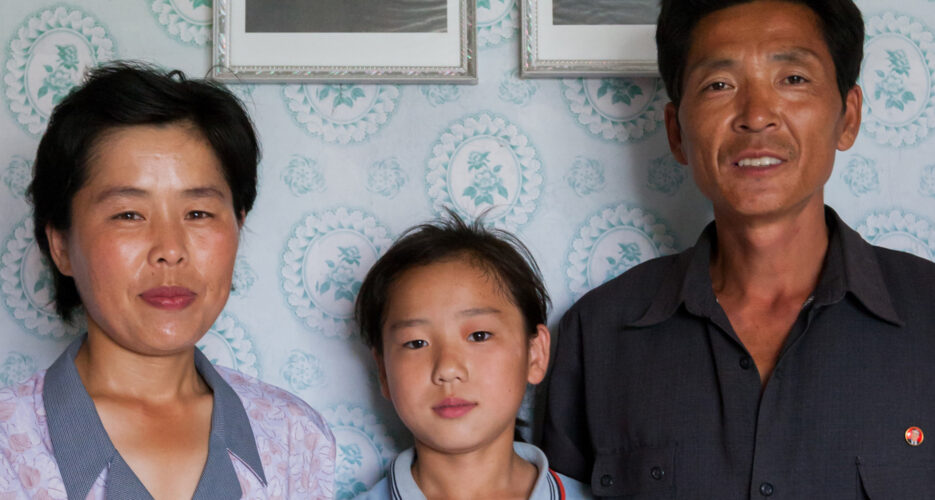
A North Korean family in their house in Kangwon province, Sept. 2008 | Image: Eric Lafforgue


“Settling in Seoul” is a new NK News series in which North Korean defectors share their experiences adapting to life in South Korea.

In this week’s column, Joshua Kim (a pseudonym) — who lived in North Korea until he defected in 2019 — writes about the aspects of his new life in South Korea that he enjoys the most and least.

Almost three years have passed since I came to South Korea, and the spring season is once again reviving everything and shaking living things awake as it did when I defected. Facing the Demilitarized Zone at that time, I was determined to overcome anything I would experience in South Korea.

At that time, as I prepared myself for death, I stared at the iron fence that cuts across the Korean Peninsula and sent all my solitude into the dark night on the other side, embarking on a new journey. I am now surrounded by good friends and companions, and that loneliness and solitude are nothing but a memory.

Nevertheless, in one corner of my heart, there is something painful that won’t go away that always makes me uncomfortable. Perhaps that pain comes from the ease of my life now and the sorrow I feel for my parents and siblings. Of course, living in South Korea is not so easy, but this life is incomparable to the one I had in the North Korean military.

I am not well-off in South Korea, but I feel reassured that I can get close to achieving what I expect when I make up my mind to do something and try my best. The most extreme example of this is that I have the right to decide to do absolutely nothing tomorrow and sleep all day. I think having the right not to do something when you don’t want to do it is just as important as having the right to do whatever you want.

The reason I say this is because in the DPRK, everyone is obliged to work, and even if you complete your work, those in power are the ones who benefit. In North Korea, if you want to quit your job because you weren’t being paid, you would not have the right to do so. Having the freedom to quit your job and not work as one can in South Korea should be considered a privilege. North Korean soldiers carrying wood in the countryside of North Hwanghae province on April 28, 2010 | Image: Eric Lafforgue

Also, people in the South have freedom of movement. While I have not yet traveled abroad, I would have the ability and freedom to take such a trip tomorrow if I decided to do so.

In North Korea, no one can travel abroad at will. Even the richest and most powerful people in the DPRK lack the freedom to go overseas without special permission.

What’s more, no matter what position one holds in North Korea, you have to flatter those in power and cannot speak your mind. But in South Korea, those who think something is unfair can seek to negotiate a compromise, and when a compromise cannot be found, they can take someone to court to adjudicate the dispute.

When it comes to resolving a problem in the DPRK, it doesn’t matter whether the other party is the president or a lawmaker. No matter who they are, citizens can fight for their rights confidently within the legal framework. Of course, South Korean citizens should also respect people in positions of authority, but such people do not have the right to unilaterally force anyone to do something against the law.

Something I was unable to experience in North Korea was food from around the world. But South Korea not only has restaurants serving North Korean dishes like cold noodles, but also foods from Europe, the U.S. and all other parts of the world. In the DPRK, there is nothing but North Korean food, and people are simply relieved if they can eat enough to feel full.

The most important things for human beings are food, clothing and shelter, and in South Korea, I have all these needs met. In fact, some days I only eat one meal, even though I was in the habit of eating three in the North. This too is a luxury that only those with a full stomach and guarantee of food can afford.North Koreans outside a Pyongyang metro station on May 18, 2019 | Image: NK News (file)

THE DOWNSIDES

Behind these endless good things is the painful reality that every memory I made before the age of 20, including of my parents and friends, remains just that — a memory. The only way to meet them again is through the unification of the two Koreas.

At first, I tried to deny it, but my previous life in North Korea has confused my identity and inevitably leaves me feeling disappointed, like a second-class citizen in South Korean society.

Of course, discrimination exists wherever you go, so I don’t overthink it. I tell myself that discrimination is felt by the weak, and that the strong overcome this. But so far, I have seen no change. I think this is the first problem I have to overcome in my life in South Korea.

Another hardship I’ve experienced living here is that it is difficult to communicate with my neighbors. In North Korea, you communicate and exchange things with one another. In the South, people consider themselves fortunate if they live in an apartment and avoid making one another angry with noise.

In addition, while South Koreans have the freedom not to work, everyone works hard in this fiercely competitive society.

When I first came here, I found out that I would have two days off every week and wondered when I would get work done if I rested so much. But time passes so fast in the South that even a week is over in a blink. Vehicles drive through central Seoul | Image: Pixabay
While everyone has the same 24 hours, time felt long in North Korea and feels short in the South. I have a much stronger sense of urgency than I did in the DPRK and feel like I have been robbed of the equality that time provides

Perhaps this is a happy complaint. Sometimes I fantasize in vain about how nice it would be to recover the pace of my life in North Korea. But the life I have in South Korea, while both busy and uncomfortable, fills me with a desire to live and plan for the future.

Edited by Bryan Betts

Why Pyongyang's top elites still cling to visions of a post-money society | NK News

Why Pyongyang's top elites still cling to visions of a post-money society | NK News

Why Pyongyang’s top elites still cling to visions of a post-money society
Public distribution of food and consumer goods entrenches North Korea’s rigid caste system even further
Andrei Lankov May 6, 2022

SHARE
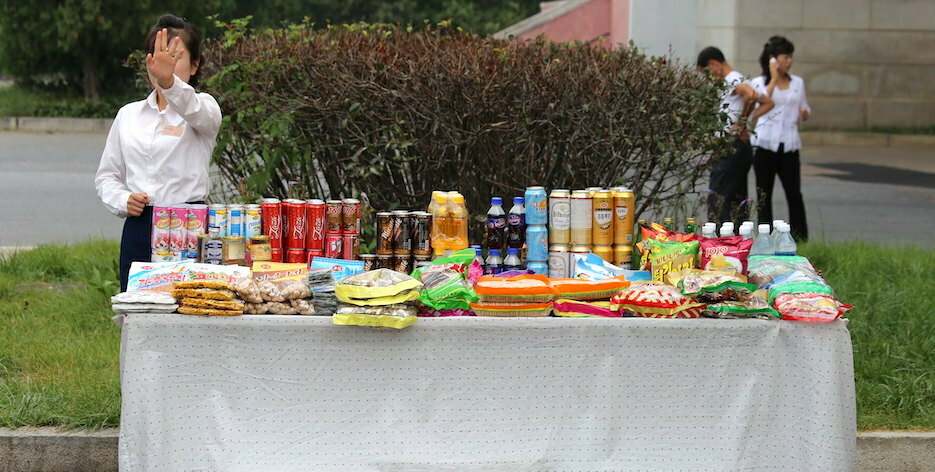
Various confectionaries laid out on a table in Pyongyang, Sept. 2017 | Image: NK News (file)


North Korea’s complicated system of rationing largely collapsed in the 1990s, but powerful factions dream about restoring the system to its former clockwork precision. It seems that now, in 2022, these pro-distribution voices are louder than ever.

The system is seen as fair – and it helps, of course, that the universal distribution greatly facilitated surveillance and control over the population. Thus, we can expect that now, backed with Chinese aid, the Kim Jong Un government might try to revive the old system.

North Korea in the 1960-90 period came closest to the idea of a society where money means little. Retail was to a large degree replaced by the all-embracing system of public distribution.

In English-language literature, this system is usually called PDS (short for “public distribution system”). However, this term is somewhat misleading. Actually, a multitude of mutually independent distribution networks operated in the days of Kim Il Sung.

At the first approximation, these systems can be divided into three groups: the networks dealing with rice and other cereals; networks dealing with foodstuff and consumer goods; networks for the elite.

Let’s see how these systems operated in their heyday – and what they might look like if Kim Jong Un decides to revive them. A North Korean farmer on a rice farm, Sept. 2015 | Image: NK News (file)

RICE (OR CORN) TO THE MASSES

There were (and still are) three rationing systems that delivered rice, corn, wheat flour, and other kinds of cereals to the North Koreans. They were subordinated to different government agencies and targeted different groups.

One system provided cereals for farmers, another dealt with military personnel and their families and the last and largest dealt with everybody else — the entire civilian urban population. All three networks, however, were based on similar principles.

Cereal rations for urban dwellers were first introduced in 1946, and in 1957, the DPRK banned all private trade in rice and other cereals. Authorities ceased to enforce this ban around 1990, but it has never been formally lifted, even though in the early 2000s there was a certain ambiguity about it.

Every North Korean was eligible to receive a grain ration whose size depended on his or her job and, in some cases, age. There were nine distribution levels, from infants eligible for 100 grams a day to miners eligible for 900 grams a day.

Most adults had a 700-gram daily ration. The rations were reduced downward twice, in the early 1970s and late 1980s, so in practice, people received some 540 grams instead of 700 grams by 1990.

The ration size did not depend on one’s place of residence. However, rations were delivered as a mix of grain and cereal products, and the composition of this mix differed from one region to another.

In more privileged localities, the rations included a higher share of rice, while the inhabitants of the less lucky areas largely subsisted on corn, barley, and wheat flour.

Rations, while technically not free, were sold to customers at token prices. Until the 2002 price reforms, the retail price of rice in the state shops was fixed at 0.08 won, and the price of corn was 0.06 won. This meant a month’s worth of grain rations would cost about 2 won, some 2-3% of the average North Korean salary in the 1980s.Red peppers used to make kimchi dry outside in Kaesong, North Korea, Sept. 2012 | Image: NK News (file)

KIMCHI AND TV SETS

Food other than cereals, as well as the majority of consumer goods, was occasionally sold at state-run shops, but in most cases such items were dispensed through local distribution networks known as the kongkup system (공급) that were not a part of the centralized, nationwide system.

This is how North Koreans could obtain fish, vegetables, underwear, socks, vegetable oil, soap, and tooth powder as well as many other items. In the days of Kim Il Sung, there were few alternatives to relying on these local distribution systems, since markets could not meet demand.

For consumption goods, people were issued distribution cards, where the sales clerks made necessary notes when one made a government-sanctioned purchase. A different type of distribution card was issued for the non-cereal foodstuffs — largely oil, soy sauce, and soybean paste, but also vegetables, fish, meat and eggs. The cabbage for kimchi was distributed as well. Prices were heavily subsidized.

Unlike the stable and nationwide grain rations, distribution norms for those local networks differed from year to year, or even from month to month, and also could vary greatly between localities. Much depended on the political clout of the region as well on its geography and local specifics.

For example, Hyeoryong county had a large state-run chicken farm, so in the 1980s, the eggs were generously distributed there as part of monthly rations, while eggs were not available at all within the kongkup system in nearby counties. Eggs had to be bought at markets at much higher prices.

But in the city of Haeju in the early 1980s, a family of five would receive two bottles of vegetable oil, some sugar, 500 grams of cookies and two liters of soy sauce per month. Footwear, cloth, cutlery, blankets, socks and many other items were occasionally distributed as well.

The so-called gifts from the Great Leader constituted another peculiar but important form of rationing, doubling as propaganda. Within this system, prestigious consumer goods and delicacies were distributed as gifts from Kim Il Sung, and later Kim Jong Il to those who had distinguished themselves with hard work. These gifts could be modest, like apples given to the soldiers, or exceptional, like Swiss watches or Japanese TV sets.A crowd of people watch the opening ceremony of 800 luxury flats to Pyongyang’s upper class from across the Pothong River | Image: Rodong Sinmun (April 14, 2022)
RATIONING FOR THE RICH AND POWERFUL

The privileged few had access to their own exclusive set of distribution networks. There were a number of such networks, available for different elite groups, and providing consumer goods and food of higher quality. However, even quality goods for privileged North Koreans were rationed and delivered according to state-approved norms. The rations in these networks depended on the recipient’s position within the hierarchy.

The top elite were issued special packages which would be delivered to their houses. Depending on how frequently such packages arrived, there were grades in this system as well. The Politburo members, Central Committee departmental heads and others at these high levels received such packages daily, while people lower on the pecking order were eligible for one package once a week, every other week or every month.

The content of these packages also differed, depending on the position of the recipient in the state/party hierarchy. They included quality meat, fresh vegetables and fruits, some alcohol (beer, brandy and other spirits). Imported consumption goods were delivered as well.

These daily/weekly/monthly packages were available to less than 0.1% of the country’s population. The mid-ranking elite, the top 1% or so, had access to special shops, known as “#65 distribution centers.” The privileged who had access to these shops, off-limits for the commoners, could buy medium-quality clothes and consumer goods, as well as some food.

Last but not least, the rich and powerful had access to the hard currency shops which were opened in major cities in the late 1970s. There have been persistent rumors that in the 1980s the top officials receive a part of their salaries in hard currency, but so far I have not found firm evidence which would confirm or disprove such rumors. However, many powerful people had access to hard currency anyway, via bribes or foreign trips.

IS IT THE PAST?

In communist countries rationing was used frequently, but still seen as an emergency policy, to be used only at the time of crisis. In North Korea, however, rationing came to be seen as the norm, even an ideal, superior to regular money-driven retail. This view has been aired a number of times, among others, by Kim Il Sung himself.

In April 1978 he said: “Some officials frequently expressed the view that we should abolish the rice rationing system and start selling rice [freely] at regular prices … But I told [them] that the rice rationing system, which is implemented in our country, is a good system since it ensures that all people live well, without worrying about food, so we should not think about abolishing it.”

So, it should come as no surprise if and when his grandson Kim Jong Un – ever-cognizant of emulating the founding leader – tries to recentralize food distribution inside North Korea.

Edited by Arius Derr and Bryan Betts

Monday, May 2, 2022

Patriots, Traitors and Empires: The Story of Korea's Struggle for Freedom - Stephen Gowans | 9781771861359 | Amazon.com.au | Books

Patriots, Traitors and Empires: The Story of Korea's Struggle for Freedom - Stephen Gowans | 9781771861359 | Amazon.com.au | Books

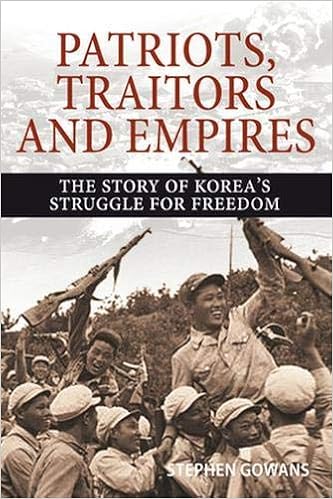
Patriots, Traitors and Empires: The Story of Korea's Struggle for Freedom


Patriots, Traitors and Empires: The Story of Korea's Struggle for Freedom Paperback – 30 June 2018
by Stephen Gowans (Author)
4.8 out of 5 stars 12 ratings


See all formats and editions


Kindle
$14.90
Read with Our Free App

Patriots, Traitors and Empires is an account of modern Korean history, written from the point of view of those who fought to free their country from the domination of foreign empires. It traces the history of Korea’s struggle for freedom from opposition to Japanese colonialism starting in 1905 to North Korea’s current efforts to deter the threat of invasion by the United States or anybody else by having nuclear weapons. Koreans have been fighting a civil war since 1932, when Kim Il Sung, founder of the Democratic People’s Republic of Korea, along with other Korean patriots, launched a guerrilla war against Japanese colonial domination. Other Koreans, traitors to the cause of Korea’s freedom, including a future South Korean president, joined the side of Japan’s Empire, becoming officers in the Japanese army or enlisting in the hated colonial police force. From early in the 20th century when Japan incorporated Korea into its burgeoning empire, Koreans have struggled against foreign domination, first by Japan then by the United States. Some protests were peaceful; others involved riots, insurrection and sustained guerrilla war. After the US engineered political partition of their country in 1945, the Koreans fought a conventional war, from 1950-1953. Three million gave their lives. When the Japanese Empire collapsed in 1945, Koreans erupted in joy, quickly organizing an independent state, the Korean People’s Republic. Joy turned to bitterness when the US refused to recognize the new republic, and soon declared war on it. Hungering for self-determination, land reform, and an economy directed to local needs, Koreans turned to communists as leaders, who had established great moral authority in the anti-colonial struggle for freedom. They looked to the Soviet Union for inspiration. But a communist Korea, a Korea that handed control of the country’s land, resources, and factories to farmers, cooperatives and state-owned enterprises, clashed with the aspirations of US policy planners, mainly Wall Street lawyers and bankers. The latter sought a world in which US corporations and investors would be free to scour the globe in search of lucrative trade and investment opportunities. Patriots, Traitors and Empires, The Story of Korea’s Struggle for Freedom is a much-needed antidote to the jingoist clamor spewing from all quarters whenever Korea is discussed.
Read less

30 June 2018


Product description

Review
"A highly recommended read for armchair historians and history scholars alike. Very informative and worth a 5-star rating. Patriots, Traitors and Empires goes on my 2018 longlist for a "The Very Best Book Award for Non-Fiction." --James Fisher, The Miramichi Reader

"Stephen Gowans is not a writer to mince words or to defer to mainstream distortions. He makes no concessions to the standard self-serving Western narrative, and this is one of the reasons his work is so consistently refreshing. Gowans is also noted for his careful research and masterly knack for deploying information in support of logical analysis. Patriots, Traitors and Empires is no different in those respects. His book is an impassioned call for justice, imbued with a deeply felt sympathy for the Korean people and their struggle for freedom." --Gregory Elich, Zoom in Korea, Critical News and Analysis of the Korean Peninsula

"It is always refreshing to read Stephen Gowans. ... he does his homework and his writing is well-documented and far from the well-intentioned fluff that litter too many websites. He is careful to situate his subject within its context and he has a good eye for discerning what is important and what is of lesser consequence. These virtues are exemplified by his latest book... Stephen Gowans has written a marvellous and incisive study of modern Korea." --Tim Beal, author of Crisis in Korea (Pluto Press, 2011)

"Washington's Long War on Syria is a well-researched and deeply considered analysis of the tragedy that has befallen Syria. Stephen Gowans reveals the political and economic interests that are motivating Washington's intervention in Syria. No praise is too high for this much-needed corrective to Western propaganda. This fascinating book is a must-read for anyone seeking a deeper understanding of the war in Syria." Gregory Elich is on the Board of Directors of the Jasenovac Research Institute and the Advisory Board of the Korea Policy Institute.
Review
“Washington’s Long War on Syria is a well-researched and deeply considered analysis of the tragedy that has befallen Syria. Stephen Gowans reveals the political and economic interests that are motivating Washington’s intervention in Syria. No praise is too high for this much-needed corrective to Western propaganda. This fascinating book is a must-read for anyone seeking a deeper understanding of the war in Syria.” Gregory Elich is on the Board of Directors of the Jasenovac Research Institute and the Advisory Board of the Korea Policy Institute.

“It is always refreshing to read Stephen Gowans. … he does his homework and his writing is well-documented and far from the well-intentioned fluff that litter too many websites. He is careful to situate his subject within its context and he has a good eye for discerning what is important and what is of lesser consequence. These virtues are exemplified by his latest book… Stephen Gowans has written a marvellous and incisive study of modern Korea.” —Tim Beal, author of Crisis in Korea (Pluto Press, 2011)
Read more
Paperback ‏ : ‎ 290 pages

Customer reviews
4.8 out of 5 stars

Top reviews from Australia

There are 0 reviews and 0 ratings from Australia


Top reviews from other countries

Leigh Darnton
4.0 out of 5 stars From a different angleReviewed in the United Kingdom on 8 December 2018
Verified Purchase

We have become so used to being told how evil North Korea is over decades it is quite difficult to see the situation from a different perspective. The author somewhat overemphasises the point that there is an alternative view but this is justified to some degree. The North has suffered over the decades from isolation, especially since the demise of the USSR & the strangulation by the US (& us) in terms of trade - witness the banning of coal exports from the country so making life much harder for the people of the DPKR. Well worth a read in my opinion.

One person found this helpfulReport abuse

Chris Remington
5.0 out of 5 stars Long title for an excellent bookReviewed in the United Kingdom on 18 March 2022
Verified Purchase

Succinct, refreshing, introducing a great deal of not widely available and new material on the origins and history of the Korean War. Highly recommended.
Report abuse

Ottawa observer
4.0 out of 5 stars Informative historyReviewed in Canada on 15 November 2020
Verified Purchase

I appreciated reading this book. I learned a lot about the history of Korea and the background to the current N v S Korea issue.
I did feel that the author was a bit too strong in his defence of North Korea and its social project. But it made me interested in going to see for myself.
Report abuse

Babak
5.0 out of 5 stars An Indispensable work, should be required readingReviewed in the United States on 2 April 2021
Verified Purchase

Stephen Gowans tells the remarkable story of the true history of North Korea that cuts through a lot of sensationalized propaganda and gets to the core of what the struggle between north and South Korea is really all about. It’s rare to get a perspective that actually tells the perspective of history from the perspective of the north, but Gowans is also balanced in his approach to the history and politics from east Korean history to present day. Very valuable work , easily one of the most important books I’ve read
Report abuse